

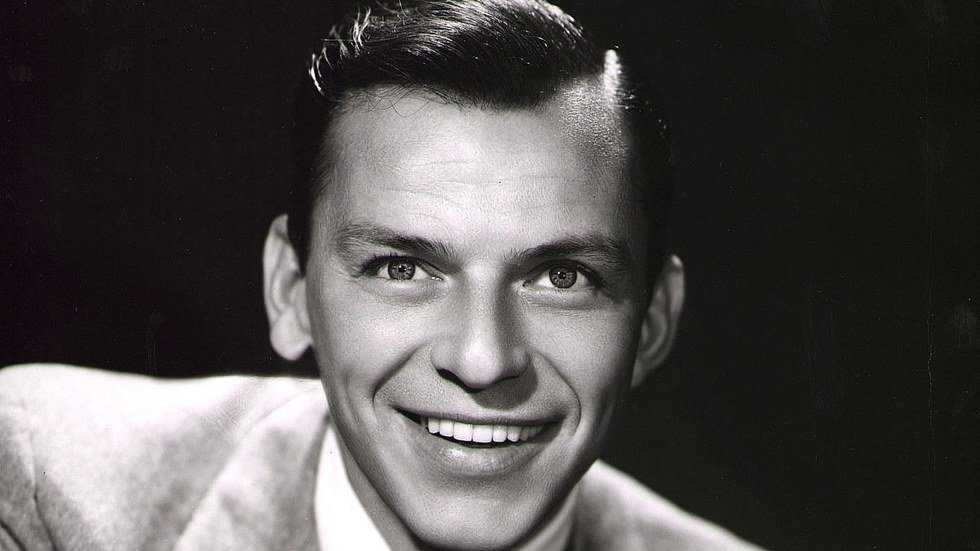
One of my favorite jazz singers is Frank Sinatra. He was an only child of two Italian immigrants; his father's names was Anthony, and his mother's name was Natalie. I bet his parents never thought his life would turn out the way it did.
Francis Sinatra had a stable and comfortable childhood as a child. After Japan attacked Pearl Harbor, he tried to enlist in the armed forces at the age of 26 but was pronounced unfit for service because of a punctured eardrum he sustained during birth. Many people believe his failure to enlist caused him to put great emphasis on his career as an entertainer.
With his mother's help, Sinatra found work singing in a group called The Three Flashers. One of his first gigs was at the Hoboken Union Club in 1935. It was here that his first big break happened. The group was approached by a talent scout, Edward Bowes. He offered Sinatra work in many promotional films for his series, 'Amateur Hour.'
In that same year, Frank participated in a talent contest organized by the talent scout; of course, he won first prize. It led to a national tour; when that was over Sinatra's life went back to normal, singing in restaurants and venues. His pay was only $15 a week; luckily, his venues were broadcast over a radio station. His voice was heard by a huge audience from New York. During 1939, the wife of Harry James heard Frank singing on the radio and pleaded with her husband to give him a job. As a result, he was hired and paid $75 dollars a week. In July of that year, they had published a recording together.
It was a great experience for Sinatra to be working with Harry James, even though the band never made to the big time; they recorded ten songs together. Later, he was offered a job working in the Tommy Dorsey Orchestra and that was where he made his mark as a ballad singer. 'I'll Never Smile Again' was the first and biggest hit with his new band; it was also the first Number One on Billboard magazine's brand-new chart of America's best-selling records. He was an instant hit with the teenage girls across the nation, which gave him nickname "bobby-soxers."
During 1941, Frank cut a total 29 singles with Tommy Dorsey; this led to him being named the Male Vocalist of the Year by Billboard Magazine. When August 1942 came around, he left the band to pursue a solo recording artist career.
A year later, Columbia Records contracted Sinatra and was instantly successful. The musicians' strike was cause of this. There was several hits recorded during the strike. He also starred on radio shows during the 1940s.
Between 1940 and early 1943, it was "Sinatra-Mania." He had 23 top ten singles, and his fans gave nicknamed him "The Voice." Sinatra made his debut at Madison Square Garden in 1943. At the Hollywood Bowl, he played to an audience over 10,000 people and resolved its financial difficulties in one concert. This attracted producers to knock on his door; a seven year contract was signed, and he appeared in a string of light musical films. A man named Louis B. Mayer bought Sinatra's contract and then signed him to MGM for a $1.5 million dollar contract. He was now a famous movie star; when he did a concert in New York's Paramount, where there was a crowd 35,000 fans.
Sinatra's golden decades was in the 1940s because towards the end of 1948, he felt his career slipping. It showed by the fact that he only reach No. 5 on Down Beat's annual poll of most popular singers. His record sales were slipping even when he tried to bring them back up, but everything went back to normal when Frank co-starred with Gene Kelly in 'Take Me Out To The Ball Game.'
In 1950, Frank hemorrhaged his vocal cords, but later on in July, he had sold-out concert at the London Palladium. In 1951, he did a performance at the Desert Inn in Las Vegas, but his popularity with teenagers was waning. He did not give up; he worked extensively in radio, cabaret, and television.
The slump at the beginning of the 1950s was a temporary slip. 'From Here To Eternity' in 1953 was Sinatra's most successful movie; he won an Oscar as Best Supporting Actor, marking the beginning of his revival in his fortunes. He was in multiple movies after this and received the nickname "One-Take Charlie."
Frank Sinatra's relationships were well known and colorful. He was married multiple times and had girlfriends while he was married. His relationships were often the object of tabloid attention. He only fathered three children, and they did not like his last wife, Barbara Marx; even though, she stayed with him until he died.
His public image often had rumors of being associated with the mafia; these allegations began as early as the 1940s. The FBI investigated Frank Sinatra for involvement with the mafia, but nothing was ever proven. Some people believe 'The Godfather' was based on Sinatra and his mafia connections.
Sinatra's career had many ups and downs. He recorded numerous singles that made it to No. 1 and the Top Ten. He made comebacks with his singing and acting career. He was even given a Lifetime Achievement Award at the Grammy Awards in 1994. His failing health is what kept him out of the public eye after his 80th birthday. He died after suffering through one stroke and three heart attacks in May of 1998. His funeral was in Beverly Hills.

















