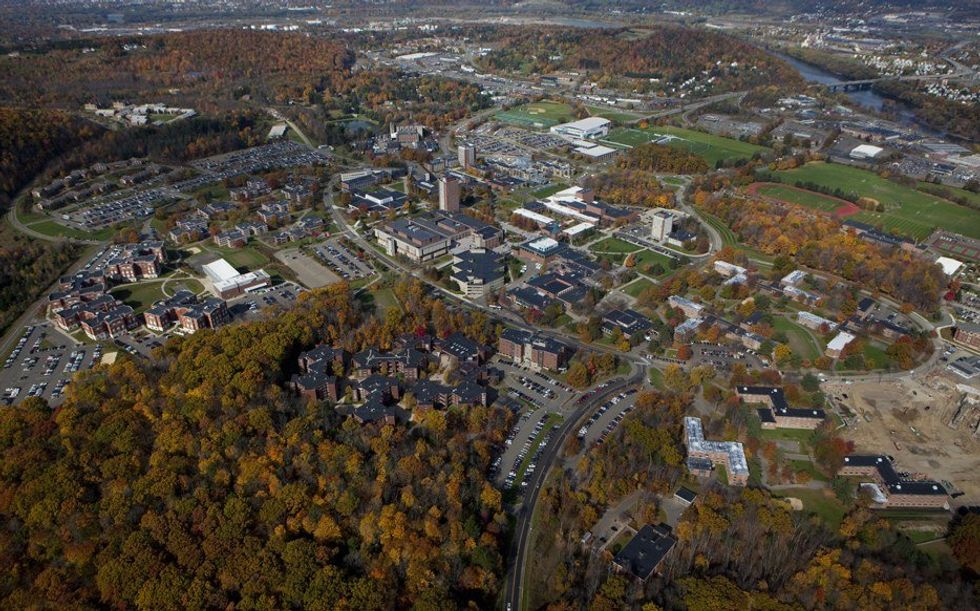
One may encounter about ten people he knows when walking to class every day. He may have a large group of friends or seem to know everyone around him. Most of us might be able to name all the people on our dorm floor or in our weekly discussion class. This does not mean we know nearly everyone on campus. Binghamton University has close to seventeen thousand students. If we include professors, administration, and other staff members, Binghamton’s population far exceeds this number. By 2020, the University may surpass twenty thousand students.
Each year, student enrollment increases and each year, we question how the University has the resources to accommodate such a large number of individuals. The current expansion plan underway may not affect any of the current undergraduates, although each academic year, the University takes a step in this direction. Many ask why they should care about Binghamton following graduation. We ask ourselves why should we concern ourselves with future consequences when such policy does not affect us. Simply, expansion has been happening for years and maybe, we haven't noticed the impact just yet.
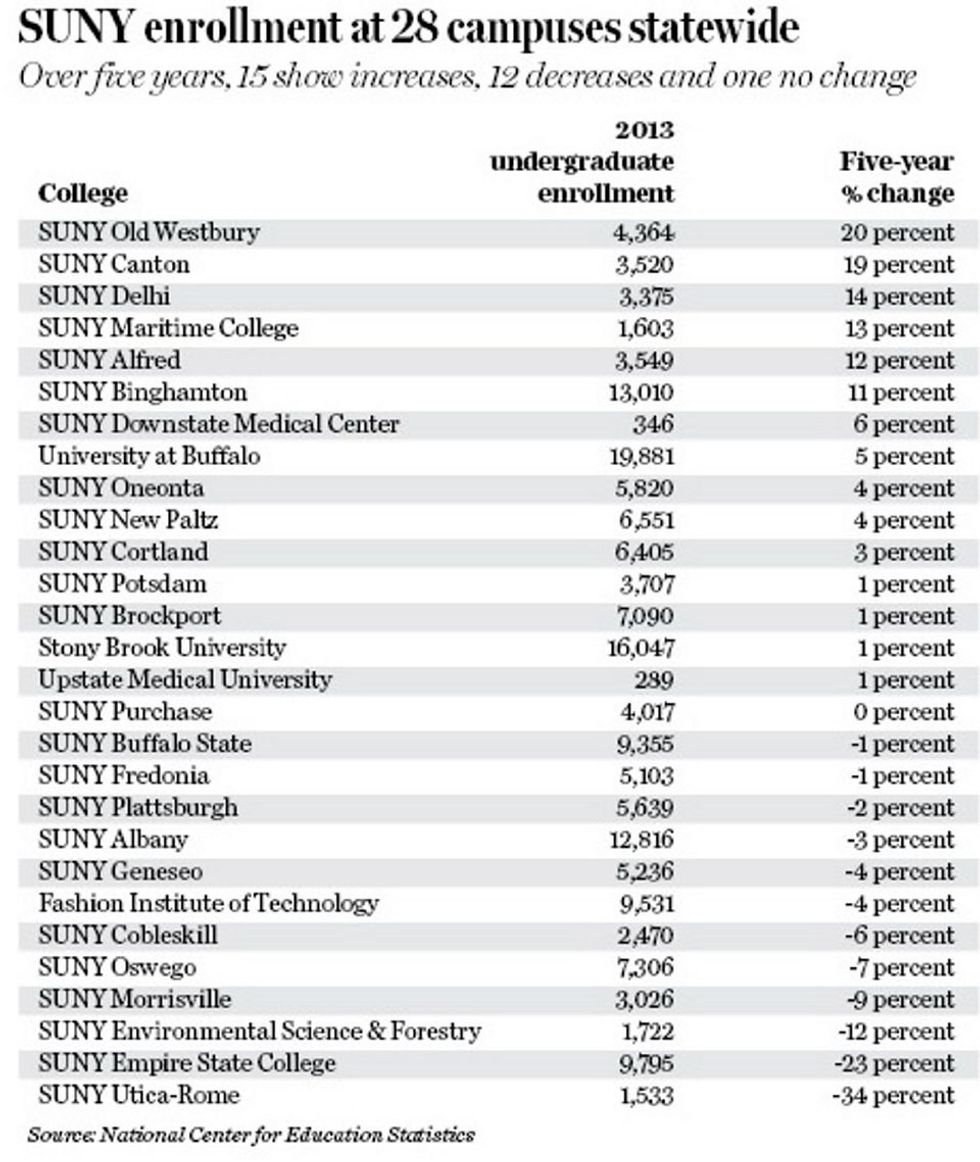
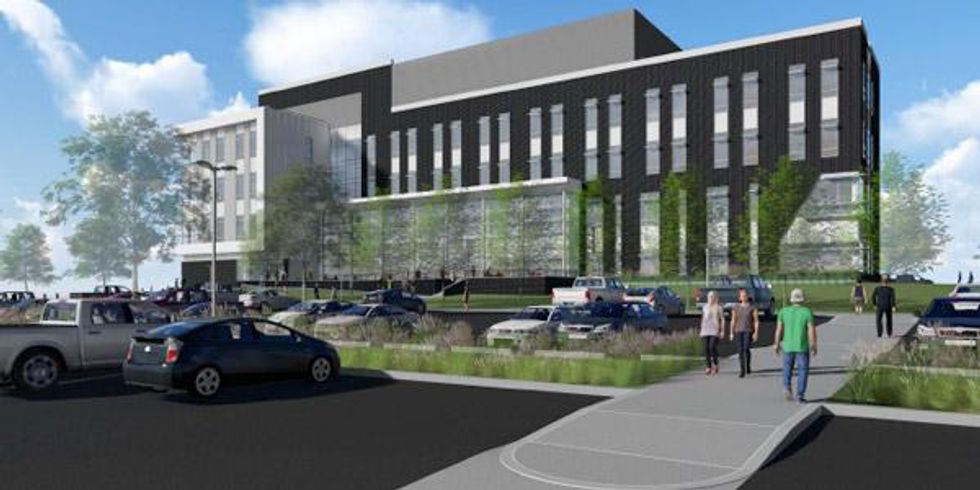
According to the Binghamton University website, as of 2014, the campus accommodated 13,412 undergraduate students and 3,283 graduate students, totaling 16,695 students. Recently, President Harvey Stenger proposed plans to increase enrollment to 20,000 students, distributed amongst 14,000 undergraduates and 6,000 graduate students. This may be plausible if plans follow through regarding a graduate pharmacy school. The University expects this School of Pharmacy and Pharmaceutical Sciences to be completed in 2018, located in Johnson City, with an objective to admit the first class in August 2017.
For freshmen, incoming students, or other undergrads pursuing such a degree, they have a website up and running to browse at your own leisure. I applaud the dedication for expansion in this sense, for graduate degrees have become almost as necessary as an undergraduate degree. People argued against the law school proposals, stating that a vast number of opportunities exist across the Northeast for Pre-Law students. Maybe I would have considered spending another three years acquiring my J.D. at Binghamton University if these plans developed further. However, a new graduate program for Pre-Health students should bring just as favorable results.
Many argue that increased enrollment will bring prosperity to Binghamton’s economy. Now, almost doubling the graduate population seems like a possibility, as this will not interfere with on-campus parking or housing. According to a news release, Stenger stated, “Can we hit 20,000 by 2020? You bet.” Responses to this statement indicate support and acceptance. This remains probable due to the growing rate of additional students. Statistically speaking, adding a little over three thousand students, mostly graduate students, does not seem impossible. However, the phrase, “positive impact,” remains up for debate, mostly pertaining to the proposed undergraduate increase to our student population.
The roughly six hundred people added to enrollment numbers may seem insignificant, yet, this proposes two great dilemmas. Firstly, housing has already become an issue with the housing sign-ups beginning in October. I give all the freshmen an immense amount of credit for deciding who they wish to live with for the upcoming year after less than two months of knowing one another. Looking back on my freshman year, I would not have been able to make such a choice and if obligated to decide, housing could have taken a turn for the worst.
As of the 2015-2016 academic year, we have another year with forced triples across campus. These rooms, which are designed for two individuals, usually have a third bed and a desk thrown inside a double. Despite a cheaper rate, these students did not agree upon their living arrangements prior to arrival. Unless under certain circumstances, no student should have a space designed for two people for one person. Singles exist for a group of students, most commonly found in Dickinson community, for resident assistants, and other exceptions, which has been deemed justifiable for a number of reasons. Including on-campus apartments, seven housing communities exist and we may have to discuss creating more accommodations as we discuss increasing enrollment. Maybe Binghamton has allocated space for these prospective students and perhaps more people will live off-campus.

Undeniably, the transport system has become one of Binghamton University’s greatest attributes. Imagine spending money on a cab every time you wanted to go to the mall or needed more groceries. In the same light, filling up your car with gas can easily deplete your savings. Although, a relatively equal distribution must exist between those that choose the bus over their car or else, we may have to start paying for the buses to run every five minutes. Therefore, increasing the number of students will result in the commuters needing more places to park other than the far ends of campus. SUNY College grant proposal, this support will affect approximately 4,000 students. We all hope the millions gained from such expansion will have a direct effect on our education, which seems possible if the University continues according to such plan. This strategy seems plausible, potentially with a substantial outcome. However, housing accommodations and increased parking must be taken into consideration. At this point one student will be one of 20,000 individuals but do not let that discourage you, because Binghamton University’s expansion plan has not been designed to hinder our education and success.