


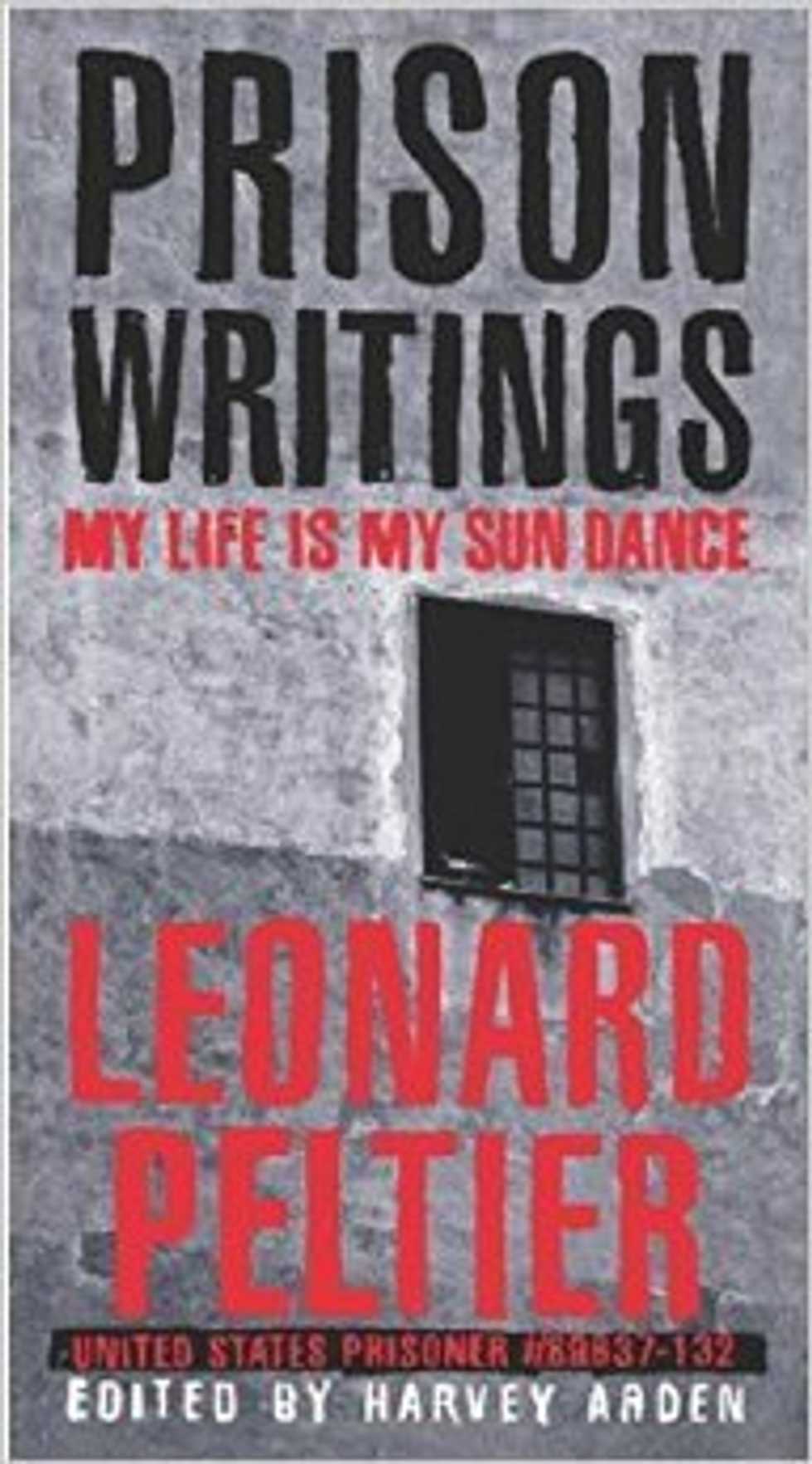

In Leonard Peltier’s memoir and manifesto, Prison Writings:My Life is My Sun Dance, he discusses the prison-industrial complex by exploring topics of social, economic, and political issues of the prison system and the community concerning American Indians.
He also builds upon the American Dream and how Indians are excluded and ostracized from such dream. He says, “When you grow up Indian…the so-called American Dream isn't for you. For you, that dream is a nightmare” and it is precisely this unpleasant experience of a dream that he feverishly investigates.
The American Dream, Peltier explains, does not concern or involve Indians. Therefore, it is not a dream at all, but rather a myth that preys upon them. I find it interesting how he is in fact, alluding to the misconceptions one has of the American Dream, that everyone is welcomed to pursue this ideal of equal opportunity, success, and prosperity when in reality, it can be quite the opposite.

To understand this, Peltier tells his readers how Indians could be wandering on the street, minding their business, and suddenly they are stopped by white cops and treated unfairly. He says that white cops wouldn't do that to “white kids, just Indians.” In fact, when you grow up as an Indian, you are already seen as a criminal. You are labeled a criminal.
The nightmare of the unattainable American Dream along with the criminal justice system exemplifies the very relationship between racism and incarceration. There is some truth to that, given that there are instances where the correlation between racism, discrimination, and prison associate with each other in negative ways. Individuals who experience racism, are often times discriminated against and thus find themselves easier targets for incarceration and further away from achieving the American Dream.
I mostly agree with the whole criminal label concept because in my experience, I have witnessed it happening. Someone could be arrested for a minor thing such as selling drugs on the corner and automatically, people are going to say so and so is a criminal. If this person is a person of color , this individual rarely gets the benefit of the doubt. Yes they committed a crime, but there is more depth to the situation to explore. Everything about them is forgotten and they are deemed merely as a criminal. This person is often times mislabeled and then seen as a spokesperson for their community further solidifying the prejudice and racism. Let’s not even talk about those people who are wrongfully accused of a crime because of discrimination and prejudice…

As for Peltier, he expresses another concern —the relationship between being an American Indian and being a prisoner. He says, “The truth is, they actually need us…who else would fill up their jails?…We keep the system going.” Peltier questions who would cops imprison if Indians didn't exist. In order for the police to fulfill their police duties, they need to arrest and incarcerate Native Americans —that’s the truth (according to him).
In his poem, “I Am Everyone,” he represents everyone particularly the Native Americans, American Indians, and anyone who’s regarded as the ‘Other.’ By capitalizing the word, ‘Other,’ Peltier is giving such people a voice and showing them that they’re just as important because they’ve hoped, longed, and experienced anguish one way or another and should not be regarded as less than.
I like how he does not only speak for himself or his people, but for everyone, of every race and color. He makes it very clear that everyone is equal - especially anyone who has been mistreated, misrepresented, or looked down upon. He says, “I am everyone who has suffered…for being human, free, and for being committed.”
The words, ‘human’ and ‘free’ are strongly stated here and certainly spoke out to me because although these people (Indians and Others) are human and free, they are confined to a world that does not understand that they are. He places emphasis on the idea that Americans don't see them as their equal or treat them as they would treat other Americans. The word, ‘committed’ sounds like they’re obligated to do something, which is questioning are they really free?
Peltier, however, is making a difference. He is fostering change. He is breaking the cycle of the voiceless. He is speaking for everyone. He knows what it is to be Indian, to be someone from another land, to be considered an outsider, and to be treated like one. This is why this poem caught my attention because he is speaking for the underrepresented. He is giving everyone significance because everyone matters.

















