


In Shakespeare's plays, the fools and clowns are often the characters most abounding in wit and satiric wisdom. Interestingly, in our society we have seen our modern-day “fools,” or comedians as they prefer to be called, taking on more journalistic roles. Oftentimes, these comedians hold great influence and exhibit bravery that the “real” prime-time journalists have not been able to hold a candle to.
With the current state of our political landscape, we could all benefit from some honest, hard-hitting journalism. More and more, it seems that comedians are the people most likely to serve up some steaming hot truth. While many journalists seem to shy away from exhibiting favoritism or critiquing the media (which they help make up), and while late-night comedy is still where many people go to see their favorite celebrities jamming out to their own lyrics with James Corden chauffeuring them through the streets of L.A., playing Pictionary with Jimmy Fallon and reading mean tweets about themselves on Jimmy Kimmel's show, many late-night shows have also exerted their influence in the realm of politics.
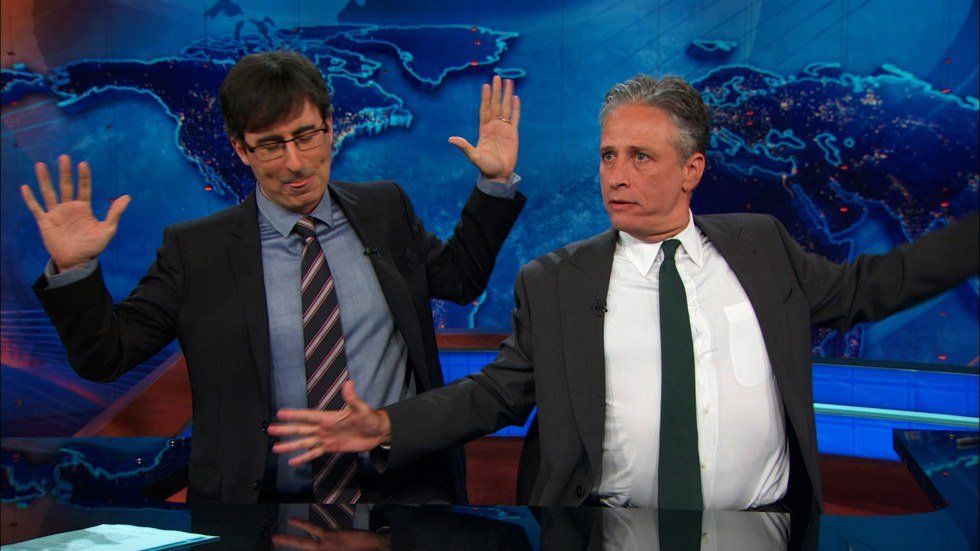
I believe that this dualism in the role of the late-night comic stems from Jon Stewart’s 16-year run on "The Daily Show." When he began hosting the show, Stewart was just a stand-up comic. However, he soon created a new role for himself, a persona that blurred the lines between activist, journalist and funny host. He became known for his blunt attacks on the media, declaring what he deemed the “War on Bullsh*t.” From CNN to Fox News, Stewart never held back when calling out hypocrisy in the media, regardless of the outlet's political opinion.
Despite his stance against stupidity and dishonesty, the show wasn’t aggressively confrontational or negative. It was this way because Stewart used comedy as the channel through which he made his points. The show could be both silly and poignant, but the two were not mutually exclusive. Jon Stewart was a bold force to be reckoned with -- employing humor, journalistic integrity and honesty.
There are many comedians today who have continued Stewart’s legacy by combining wit and poignancy. John Oliver serves as a great example, as he started as a contributor on "The Daily Show" during Stewart’s reinvention of late night. His HBO show, "Last Week Tonight," is primarily comedic according to Oliver, with its fondness for singing and actors dressed up as large plush characters. However, he has combined humor with activism, oftentimes using his platform to make a real difference in policy.
In 2014, for example, Oliver did a segment breaking down the complex concept of net neutrality and compelled his viewers to contact the Federal Communications Commission to express their support for keeping the internet free. Oliver told his audience, “Seize your moment, my lovely trolls.” The response was immense. The FCC received over 45,000 comments, which caused its website to crash. Just a few months later the FCC adopted the net neutrality regulations Oliver advocated for in the episode.
Oliver took an issue that he felt was of great importance and advocated for it in front of his massive audience. In doing this, he took a cue from Jon Stewart, who in 2010 played a large role in pushing forward a bill to provide free medical care for 9/11 first responders by bringing it to national attention on his show. Both Stewart and Oliver were praised for their activism and credited with giving these issues the push into the national conversation that they needed. John Oliver's continued attempts to educate his audience and provide resources to make meaningful change embody the influence that a late-night comedy show can have.
In only the past few weeks, comedians have continued to prove their journalistic relevance. Hasan Minhaj, a stand-up comedian and correspondent for "The Daily Show," gave a speech at the 72nd Annual Radio and Television Correspondents Association Dinner. While the first 20 minutes of his speech were littered with the typical light-yet-witty jokes, Minhaj used his last few minutes to speak directly to his audience, a room full of congresspeople, asking them, “Is this what you want your legacy to be? That you were a could’ve-done-something Congress but you didn’t because of outside lobbying? That you were complicit in the deaths of thousands of Americans?” Minhaj was asked to speak to make the audience laugh. While he certainly completed that task with his sharp comedic timing and wit, he did much more, directly confronting an inefficient Congress about their inaction with regard to gun control following the recent Orlando shootings.
These comedians seem to be exhibiting courage and bluntness that cannot be seen from most mainstream journalists. A reason for that might be the comedy itself. Perhaps in utilizing humor, comedians are able to appeal to the emotions and morals of their audience, making their criticism easier to stomach. As evidenced by the influence of shows like "The Daily Show" and "Last Week Tonight," satire seems to be a powerful device that, when used correctly, can incite action.
There are still many late-night comedians who stay away from appearing overtly political or driven by any particular agenda. With the exception of "Late Night with Seth Meyers," a show which has regularly taken bold political stances and provided sharp commentary, most network late-night shows seem to have more of a focus on celebrities and benevolently humorous bits.
While there is nothing wrong with producing feel-good entertainment, humor has proven itself to be an effective appeal for reform, something many people are fighting for right now. With the stellar comedic journalism of people like Trevor Noah, Samantha Bee and John Oliver, it seems to me that some late-night comedians are throwing away their chance to educate and make a difference in order to not sacrifice their funniness and entertainment value.

















