“You know you talk like a white girl.”
“Lets be honest, you’re not a real Latina, you’re basically white.”
These are statements I’ve heard my entire life. Not only are these statements hurtful, but it never fails to show how little people know me. There is no right way to be Latina. There are no good Latinos and there are no bad Latinos. There are just Latinos.
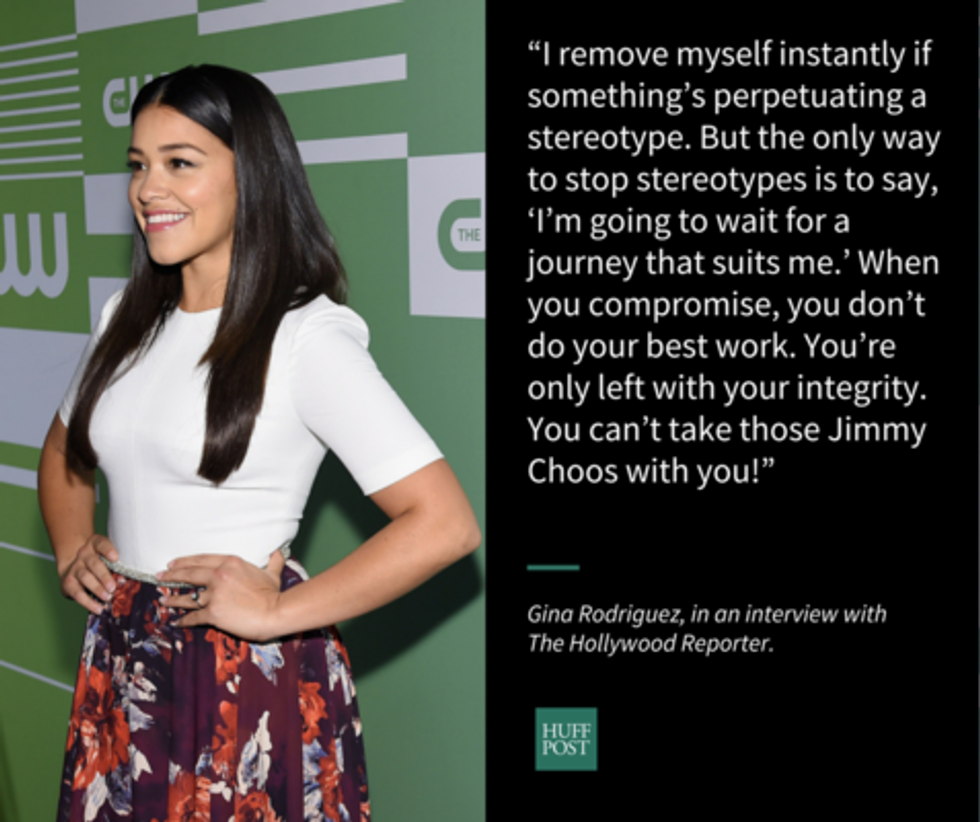
Gina Rodriguez, star of CW show Jane the Virgin, fell victim to this stereotype this past summer. During a Huffington Post interview, she discussed an instance in which some Instagram followers attacked her “Latina-ness.” Rodriguez does not speak Spanish fluently and was thus criticized. These critics, however, are not aware that her parents were “terrified” she and her sisters would grow up with accents. Her parents were made fun of for their accents their entire lives and thus wanted to spare their daughters the same humiliation. This ties into the stereotype, both Latinos and non-Latinos hold, that if you’re Latino then you must be able to speak Spanish. This is the stereotype that claims there is only one way to be Latino. You must look, act and dress a certain way.
During the Huffington Post interview Rodriguez said, “I’m going to be reprimanded by a culture that I’m supposed to support and is supposed to support me because of the way I was raised?”
I went to a private school in Greenwich, CT and then came to Fairfield University. I have spent the majority of my life in white, prep-nation. I love J-Crew and Lilly Pulitzer. My Jack Rogers are my best friends. I don’t have an accent when I speak English because I grew up in Westchester County, NY. People look at me and assume that I’m disconnected from my Latin roots.
What they don’t know, however, is that both of my parents came over from Dominican Republic and Spanish is my second language. My dad and I exclusively speak Spanish. I go to Dominican Republic every year. I love Latin music and I come from a very stereotypical Latin family.
No, I don’t walk around shouting that I’m Latina. That does not mean that I am hiding my culture, or that I am in any way ashamed. I have been around my crazy Dominican family for too long to even think about being ashamed.
As Rodriguez said, “I am as Latina as they come. And I am not defined by anybody’s definition of Latina. I don’t actually sit in definition. I walk in my world, happily and confidently.”
My version of being Latina is not any less correct than someone else’s. I have to create my own definition of being Latina. It has to be the version that is most fitting to me.