
I know people get tired of hearing study abroad stories, but bear with me on this one.
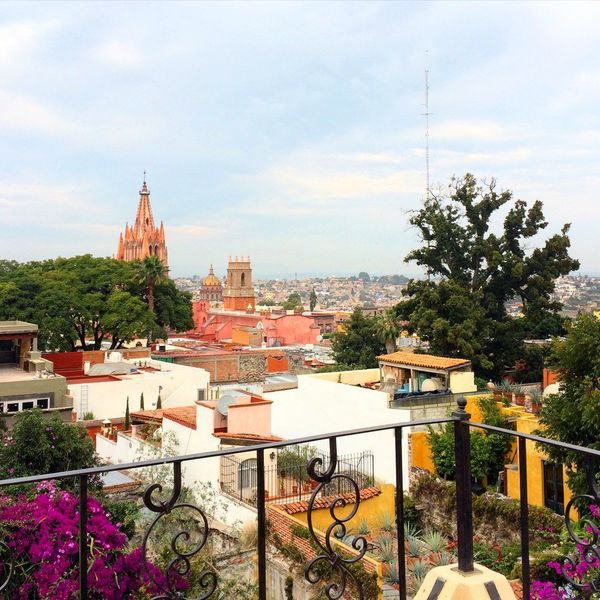
This past summer, I had the experience of a lifetime when I studied abroad in Salamanca, Spain. It was about 90 degrees Fahrenheit (32 degrees Celsius) nearly every day. I would sweat in places I didn’t know I could sweat. I ate food I had never even heard of, and I talked with people from all over the world. I had never even heard of Salamanca before I discovered Centro Fray Luis de León (the program I went on), but what I never could have guessed was how global a city it is. And it was beautiful, from the Plaza Mayor to the Cathedral to the people playing the accordion and Spanish guitar in the streets.
But it wasn’t all fun and games. It was hard work, speaking Spanish all the time, learning to talk around the words you didn’t know. I was used to Spanish classes where if you couldn’t say the word in Spanish, you said it in English and the teacher understood you and moved on.
That was not the case in Salamanca, and I learned it day one when I asked the owner of our dorm what the Wi-Fi password was, and he replied with, “espeak eSpanish!” Javier, while somewhat grouchy at times, had a sense of humor about him, and even though our first conversation was a little awkward, I found out he was a cool person and grew to really like him.
But Spanish classes, for all they do in getting you to practice Spanish, never prepare you for being thrust into a new culture. They never prepare you for all the new words you have to learn when you get there. (What is an alimentación? What does pájaro de mal agüero mean?) You learn something new every day, and while you get more comfortable speaking the language all the time and gain confidence every time you use it, it doesn’t get easier.
So why am I recommending this? Why is it so important to study abroad?
Because I would never have broken out of my shell had I not been forced to. Now that I’ve returned to the United States and I’m sitting in my Spanish classes, I see students that have never been put in those situations. There are long pauses when they speak. We’re required to speak Spanish even with each other, but when they don’t know how to form their thoughts into Spanish words, they give up and speak English to me.
And that’s the main problem with studying language only in school: you can use English as a crutch. What do you do when you encounter a native speaker? What do you do if you go to another country? They don’t speak English; you can’t use it.
It’s not easy. It was an adjustment for me too, and I find myself struggling now that I’m back and getting into bad habits again.
But studying abroad changed me. I know it’s a stereotype, that people get the thirst for traveling everywhere, that they want to go back immediately, etc. But it’s not that for me. I gained a cultural and linguistic awareness that I would never had known had I not stepped out of my comfort zone that way.
It’s not for lack of trying. Spanish classes have cultural topics they discuss, and something I really value about Spanish 401 was we were required to listen to podcasts about news happening in Latin America. I learned that the government is pretty much run by gangs in El Salvador, something I never would have known otherwise. That sort of global ignorance stems from the way culture and history are taught in school here in the United States, but that’s another topic entirely. And it really does change the way you receive the information when it’s in another language.
But it’s one thing to see images on a projector and hear people talk about their experiences. It’s another thing to experience it yourself. I never could have imagined the way studying abroad would change me, how it would broaden my horizons and my capacity for empathy.
Even if you never use the language ever again, even if you graduate from college and forget it entirely two years later, you will never forget how it felt to live in a place where you had think really hard about everything you said. You will never forget the culture and the environment you were in, the friendships you made while you were there.
It’s not all about bragging rights, about posting all the fun pictures on Facebook, though that is nice. And yes, it’s about the language; the language really helps. But it’s also about the global experience, and about stepping out of your comfort zone and a culture you are accustomed to. It’s what you do with that information that matters.
While it had its ups and downs (for me it was homesickness and the intense stomach problems I had while I was there), studying abroad was the best possible decision I could have made for my education. I think every student should experience this, and it should be easily accessible and affordable.
To students who are thinking of studying abroad, that’s really awesome and I think you should go. My only advice would be to research where you’re going carefully, and to understand the challenges you will face before you go.