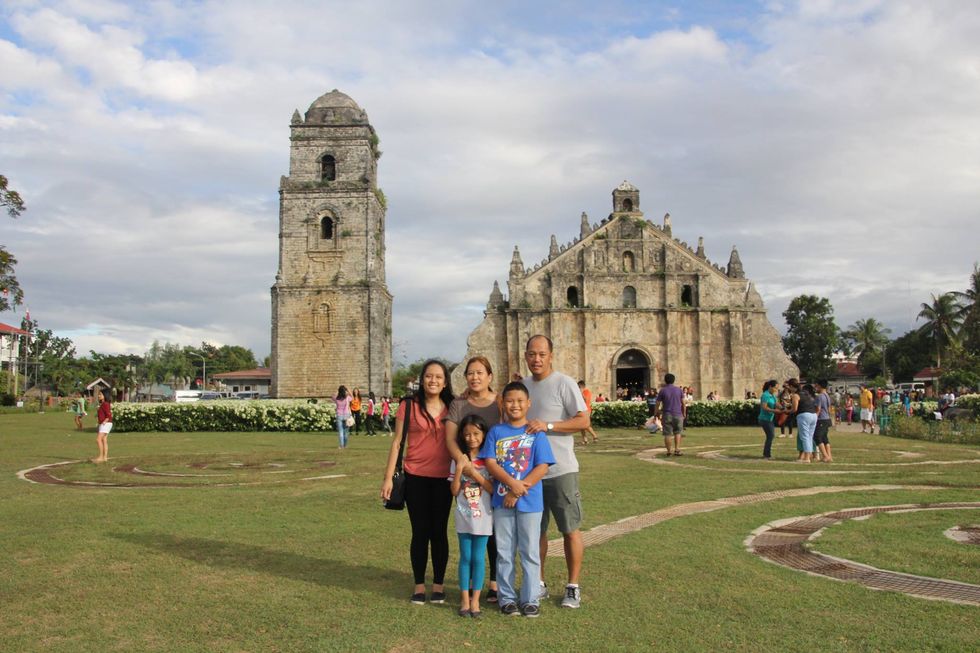
One can say that I am your typical Filipina with hints of Chinese and Spanish blood, dark hair, and below average height. Though true, I would say that I am your typical Filipina who was born and raised here in America. My parents both immigrated to the United States long before I was born in hopes of a better life for themselves and their children. I am extremely grateful for all the hard work they have experienced for the benefit of my siblings and me, but because of this, I am disappointed in myself for not willingly learning the Filipino culture.
Don’t get me wrong: I love the Filipino culture with all my heart. I love the “small” gatherings we have with our seemingly endless amount of family members, our never-ending desire to eat (especially Filipino food), our devout belief in Roman Catholicism, and of course many more. I have a grasp at most of my family’s culture, but I have not greatly mastered the greatest aspect of our culture, the two Filipino dialects used by my family: Tagalog and Ilocano.

My parents and grandparents first taught me these languages along with English. When my pediatrician found out about their doing, she encouraged my parents to avoid teaching me the language alongside English. At that time, it was believed that I would be unable to distinguish each of the languages as I grew older. I do not blame the doctor for preventing my parents from consistently teaching me the language as a child; it made sense then.
Though this may seem like an easy transition for my guardians, I believe that it may have been difficult for them as well. Keep in mind that they were born and raised in the Philippines and therefore they were not the best at English grammar. Because of their lack of English skills, they did speak to me from time to time in their native language, and I am extremely thankful for this. This allowed me to become fluent in understanding the languages. To this day, I am able to understand my Tagalog and Ilocano speaking family members.
The hardest part of my situation is how I am unable to speak fluently. Yes, I understand fluently, but I cannot return the conversation without speaking in English. I am able to formulate sentences in my mind, but I become too insecure with my lack of a Filipino accent that I end up speaking in English. This inability for me to return with a sentence in Tagalog or Ilocano usually just leads to a dead-end sentence spoken in English, and it hurts me. I would love to make conversation with my family, but it is just difficult for myself to come around speaking it and it is difficult for them to return in English.

This insecurity shames me. I have other cousins in my family who have grown up here in America and are able to spit sentences easily, so why is it impossible for me to get over this fear? When I was younger, I assumed that I would overcome this insecurity eventually, but I am a soon-to-be college sophomore and I am still here. It does not help that I no longer live in my parent’s household to practice. Though I am able to practice when I visit home, I find that my parents and grandparents are speaking the Filipino languages less frequently and turning to English.
Though that is alright, I fear that these languages will not be passed down to the future generations of my family. I am still able to understand, but my younger siblings barely do. Once I master the material, I could hopefully bring back the frequent conversations in my home to further expose my siblings. This I hope. I just wish to master Tagalog and Ilocano so I could finally break the language barrier between my family and I.