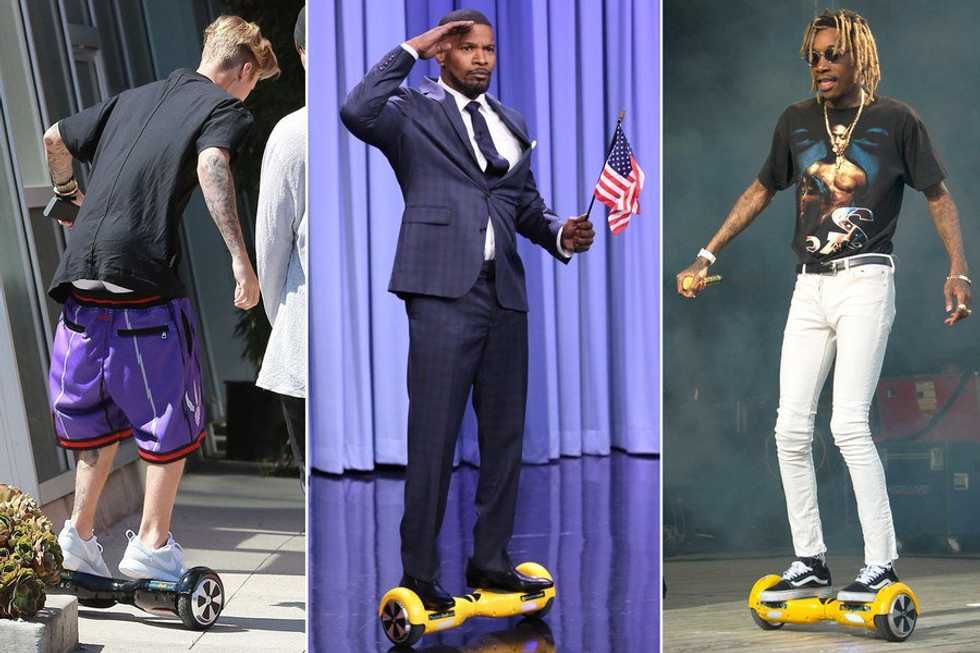
Kennesaw State University issued a ban on “hoverboards” via a campus wide email on January 14th, citing safety concerns for students and visitors alike. The email stated, “Because of fire concerns, the use, possession and/or storage of hoverboards are prohibited in and on university-owned or managed buildings and grounds, to include the Sports and Entertainment Park and 5/3 Bank Stadium.”
Kennesaw isn’t the first college to ban “hoverboards,” and it probably won’t be the last. The U.S. Consumer Product Safety Commission (CPSC) released a statement on the devices in December. Since the statement, atleast a dozen colleges have issued either temporary or permanent bans on the popular holiday season item. The CPSC is still investigating and periodically posts updates on their research to its twitter account. The CPSC’s most recent posting states it’s investigating, “37 fires in 19 states,” and is testing both new and damaged “hoverboards.“
Multiple news stories and video examples of “hoverboards” blowing up or catching on fire can be found online. If you’re not seeing the products in the news for fire hazards, you’re seeing fail video compilations of injuries. The biggest question that consumers need answered is: what is causing the “hoverboards” to do this? How quickly the CPSC will come to a conclusion can’t be known, but either way, I wouldn’t bet on college campuses lifting the bans.
It’s going to be difficult for the CPSC to pinpoint the actual reason why so many different brands of “hoverboard” are duplicating the same actions. You would think it’s happening when people leave them to charge overnight, but that isn’t the case with every incident. Sometimes the board is plugged in, other times it occurs while being ridden or just sitting still.
It’s fairly obvious that the problem is more than likely the quality of the board itself. The reality is you get what you pay for. More than likely you’re getting a substandard quality lithium ion battery in that cost effective board. Lithium ion batteries, which are used in smart phones, aren’t meant to take the damage that can be inflicted on them during "hoverboard" use, so use your board with caution.
By definition a hoverboard is, “a means of transport resembling a skateboard that travels above the surface of the ground, ridden in a standing position.” Let’s be real folks, these items aren’t hoverboards. Lexus and other companies, such as Hendo, have made great strides toward bringing the hoverboard that we know and love from the “Back to the Future” series to fruition.
However, both companies’ hoverboards still need to be used on magnetic materials in order to maintain an actual hover for an extended period of time. This would present a problem for the average user considering sidewalks aren’t magnetic. The Lexus Slide is also powered via high temperature super conducting blocks surrounded by liquid nitrogen reservoirs. Although Hendo has Tony Hawk as a test rider, I would say that Lexus is currently closer to what we’re all looking for in a hoverboard.
What are your thoughts on the “hoverboard” ban? Do you think there will be actual hoverboards available anytime soon?