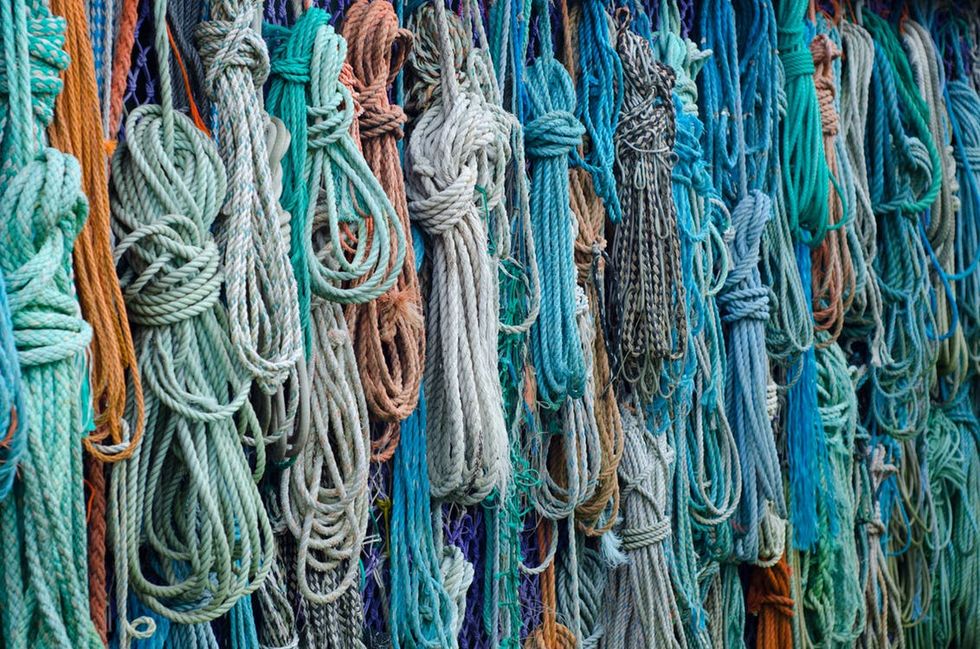
“When will I ever actually use any of this?” “I don't tie knots in my everyday life.” These are word I have heard from numerous Boy Scouts to whom I have taught knots. But the truth is that you do, and will, use knots in your life. Perhaps not often, but you do use them. Like when you are riding in someone’s boat (unless you are lucky enough to have your own, in which case you definitely need to know knots). But for the rest of us, say you pull up to a dock and the driver asks you to tie the boat up, and then you have struggled to tie a knot that will hold the boat (we all have been there). Or you are tying something to the roof of your car, wouldn't it be nice to know how to tie a knot you could cinch down and trust to stay cinched?
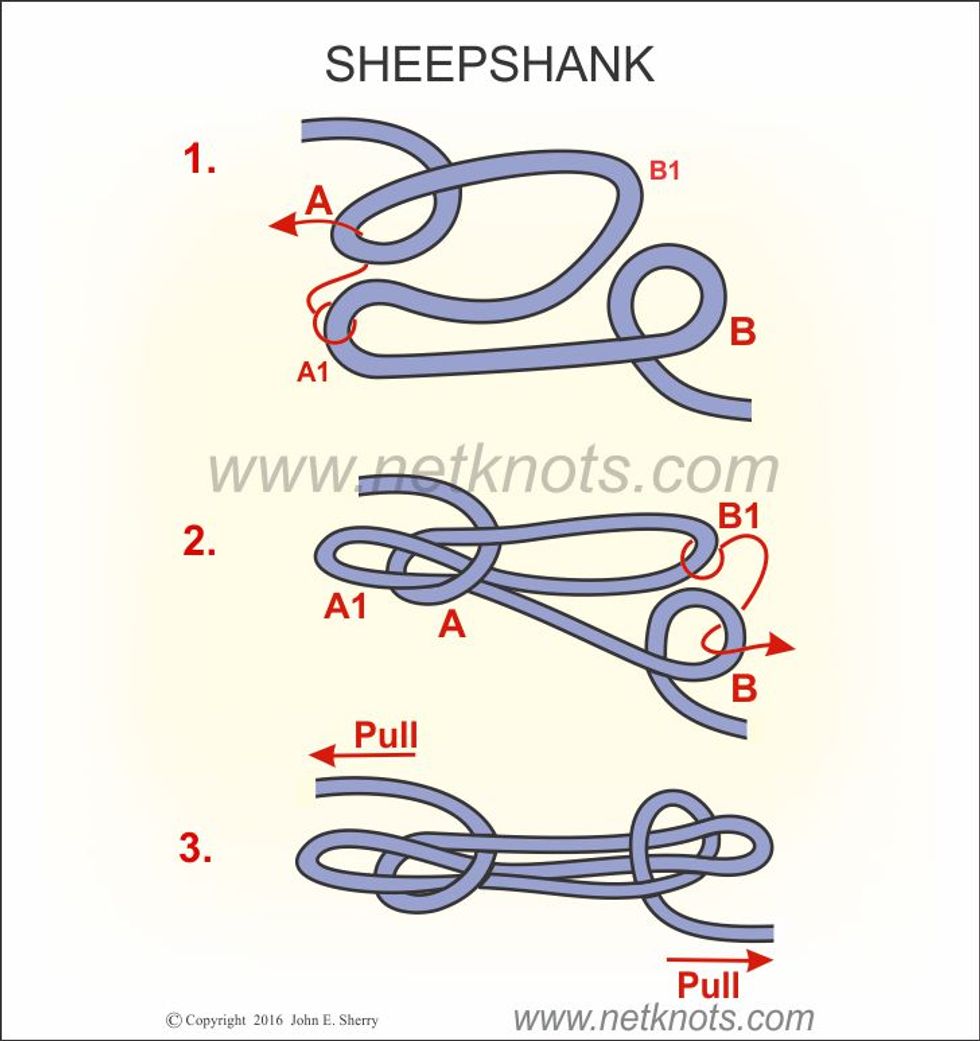
Knots are useful to know, but we all probably do not need to know all of them. When are most people ever going to use the sheepshank (a knot solely used to shorten rope, provided there is tension on the rope)?
So I have assembled 4 basic knots that will get you though almost every situation that everyone should know how to tie.
There are 4 basic common purposes for knots:
- An anchor knot, to tie a fixed loop in a rope.
- An adjustable knot, for cinching a rope tight around something.
- A joining knot, to tie two ropes together.
- A quick release knot, to quickly tie and untie.
Here are my recommendations for each category and where and why someone might use them.
1. Anchor Knot
I would recommend the bowline, it is quick to tie, very secure, trustworthy, can hold a large amount of weight, and easy to untie.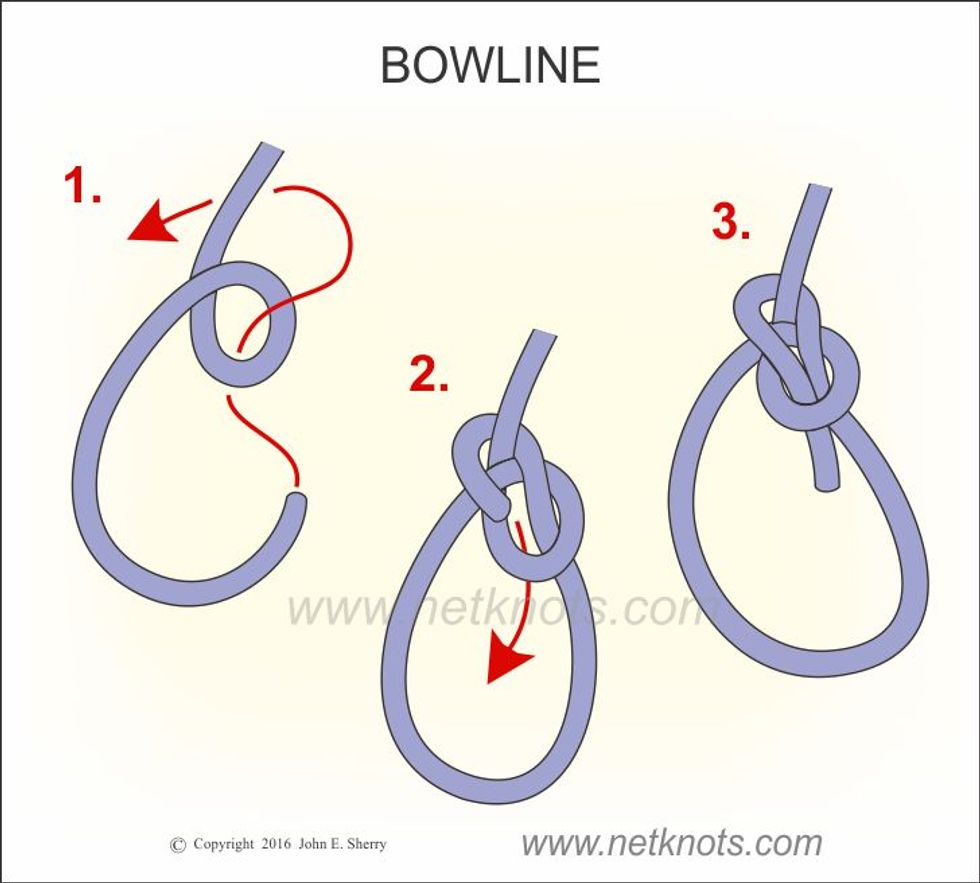 But when would I use a bowline? Any time you need a fixed loop. If you need to attach rope to another object chances are there is a hole in the object you are feeding the rope through, tie a bowline around the hole and you now have rope firmly attached to your object. Examples might include a boat (so you can tie it to a dock), a tarp (to hang between trees or to cover your grill in the winter), a wagon (as a handle), the options are limitless.
2. Adjustable Knot
I would recommend the tautline hitch, the amazing part of this knot is that you can slide it along itself, adjusting the size of the loop, but when you put tension on the loop it will not slip. 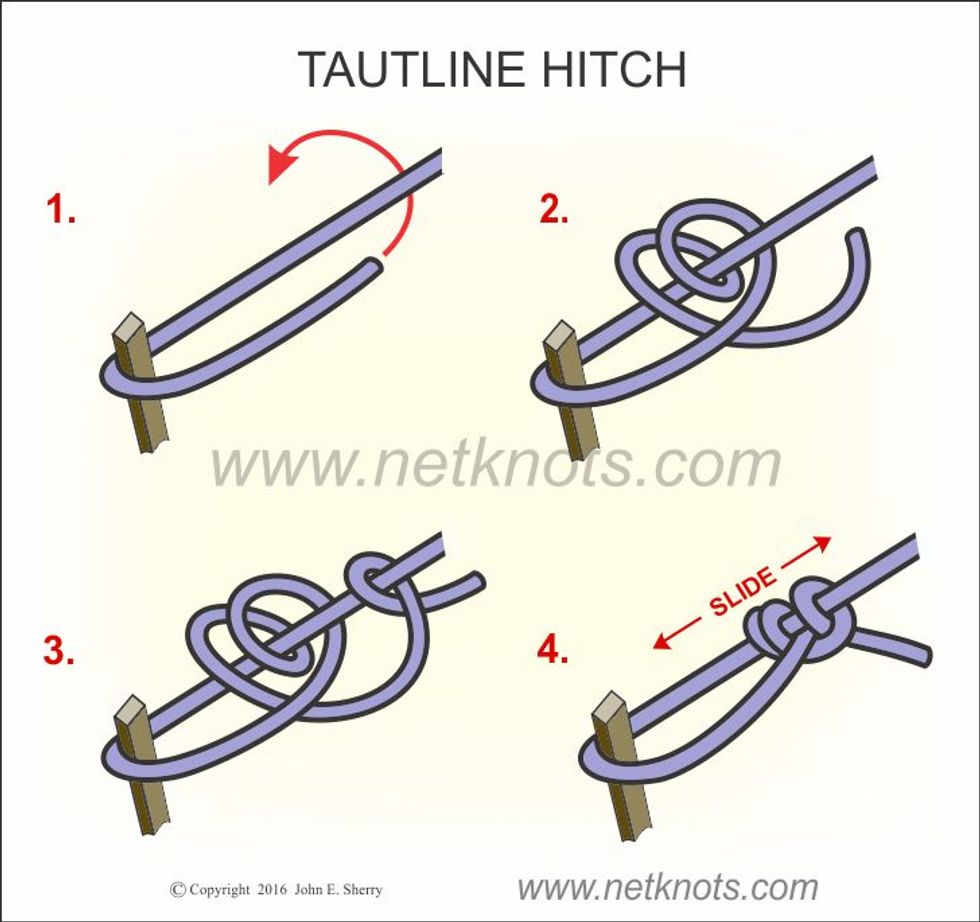 This knot is best used for tensioning a rope, in other words you put the loop of the rope around a pole or fixed object and then make the loop bigger. The loop is staying on the pole, stake, or fixed object due to tension, and you are in essence, by making the loop bigger, shortening the amount of rope between your fixed object and whatever you are tying to it. This works because you are doubling over the rope when you make the loop bigger, so more rope in now doubled back on itself then before when it was all stretching out.
You could use this knot to tie out a tarp to make a shelter (tie a bowline to a grommet on the tarp, and a tautline around a stake or tree), you could use it to tie any large object to the top of your car (tie one end of the rope to your car with a bowline, then wrap the rope around the object to attach to the car several times, perhaps also looping it around your roof rack or under the ceiling of your car (be sure to open the door before you do this so you can still open them when the object is tied down). When you feel the object is securely wrapped up tie a taught line hitch to an anchor point on the car and then tighten it up to make sure the rope stays nice and tight around your object.
3. Joining Knot
I would recommend the sheet bend. Most of us, is we know more knots then a bow to tie our shoes, know the square knot. Well the square knot is not that useful of a knot. It is very easy to untie, which can be handy in some situations. But that also means it will easily come untied, which is bad if you want your knot to be secure. A sheet bend, however, is similarly easy to tie, is much more secure, and can still be untied with ease, It is also much better at securing rope of two different sizes.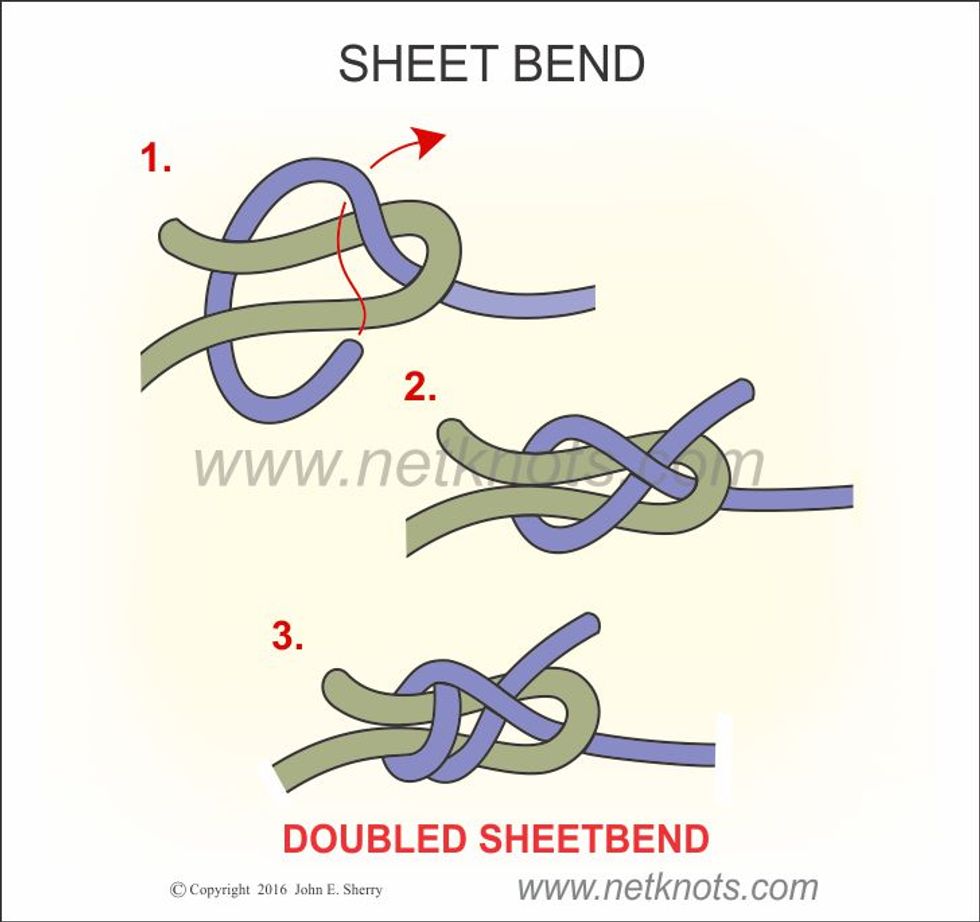 You would use a sheet bend anytime you want to tie two pieces of rope together. If you have two short pieces of rope and you want to make one longer rope, use the sheet bend. If you want to tie a large, loose, un-adjustable loop, use the sheet bend. If you are tying a parcel closed and you want it more secure then a bow, tie a sheet bend.
4. Quick Release Knot
I would recommend a slippery half hitch/slip knot. All quick release knots are variations on the slip knot, they can be very secure and with the pull of one string the whole knot comes apart. Yes when you tie your shoes in the morning, you are tying a variation of a slip knot.
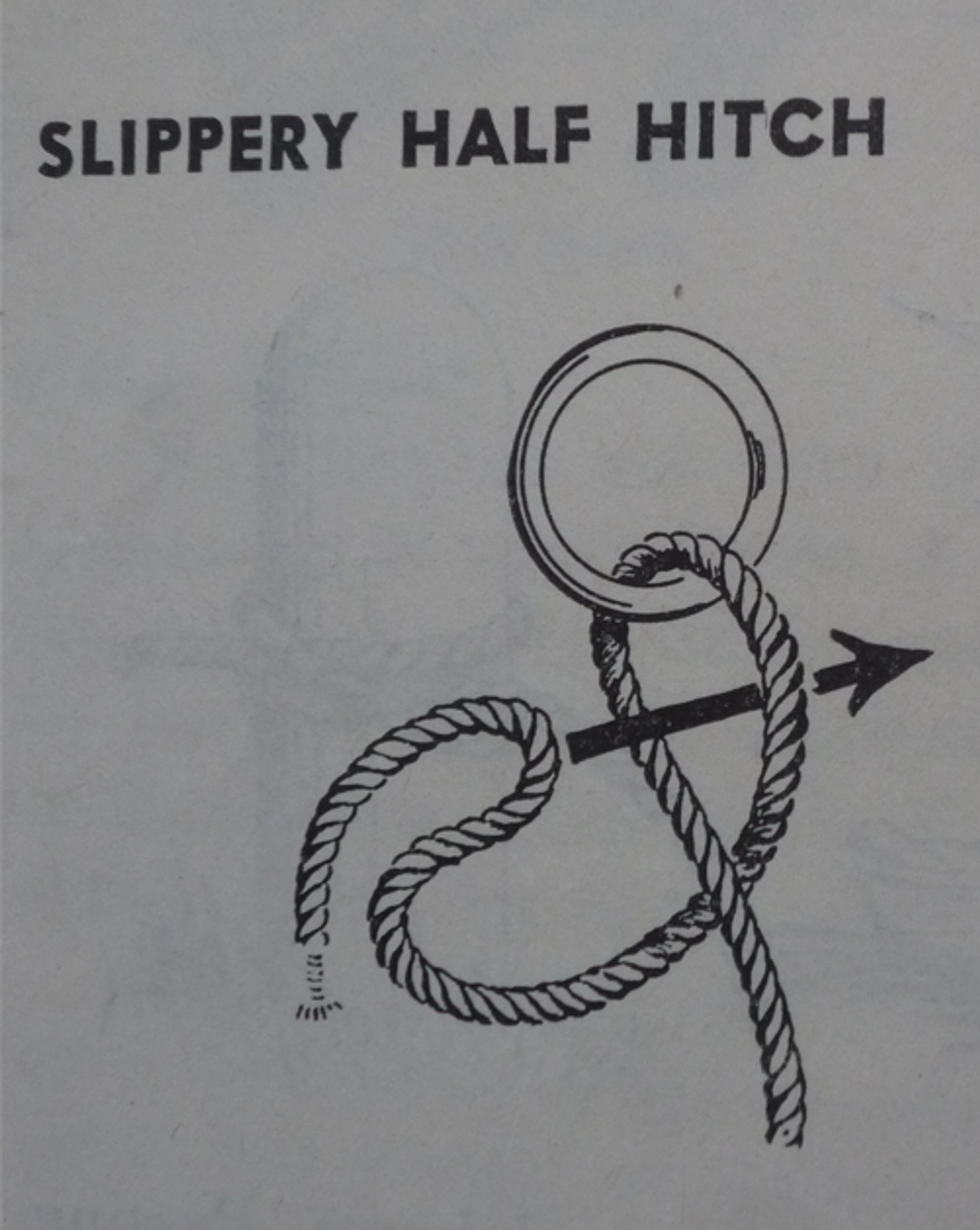
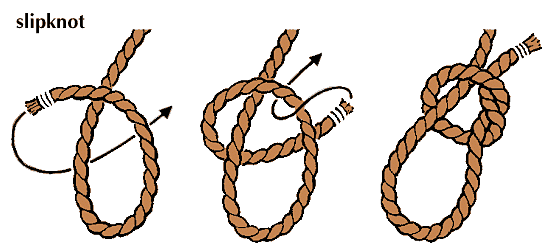
The slippery half hitch is a variation on this and is used to tie against something. So anytime you would just tie and regular granny knot (A granny knot is two basic over hand knots, if you are not tying a bow, chances are you tied a granny knot)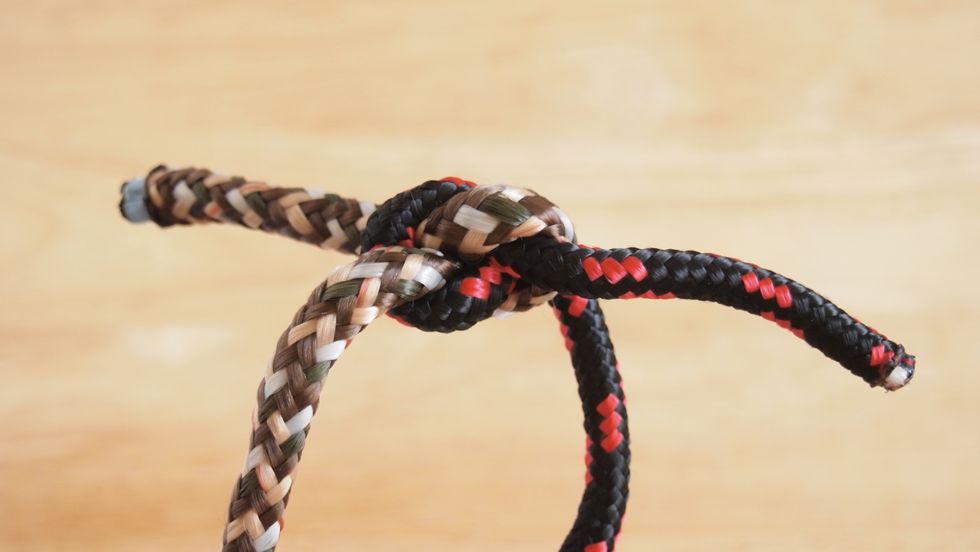 Instead of pulling the rope all the way through itself on the second overhand knot stop part way, you have still pulled through some but it is folding back on itself, and you can tighten the knot like you normally would, but not you just pull on end and the whole knot comes undone. This can be used all over the place and will probably save you several minutes of frustrated pulling at knots trying to get them undone.