

Warning: within this piece there will be discussion of triggering material that involves (sexual) brutality against women and injustice against disabled individuals.
In 1988, DC Comics released "The Killing Joke," an already controversial one-shot origin story of the nefarious Joker and his relationship with the famed Batman. The comic focused on significantly dark themes, in which the Joker escapes once again from his asylum cell and tries to prove a point to Batman. That all it takes is "one bad day" to make a man go as insane as he is. In order to do so, he shoots and paralyzes Barbara Gordon, rapes her and documents it to parade in front of her father, Jim Gordon. The old cop's counter to the Joker's claims is to have Batman take the Joker in "by the book" to prove that he isn't right, and in the end, after a bad joke and an awkward moment of laughter between the hero and the villain, we aren't even sure if that happens or not.
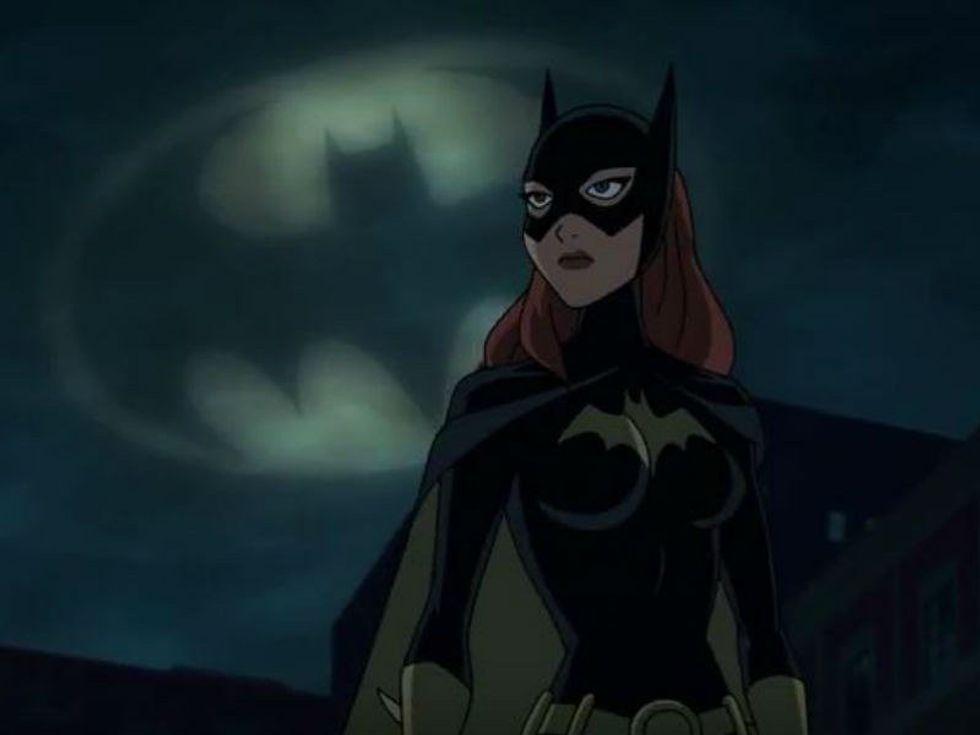
And then at this year's San Diego Comic Con, DC Entertainment decided to reveal the animated, feature-length film of this literal torture. The panel discussion at the convention was a travesty in and of itself, to be discussed shortly, but the film was just about 10 times worse. Producer Bruce Timm told Empire that they were expanding the story to add Batgirl backstory and lore, knowing that the story of the original comic wouldn't be able to expand to feature length. Barbara Gordon's Batgirl is a beloved character, one of Batman's many young apprentices throughout his run, and "The Killing Joke" depicts the injury that paralyzes her and leads to her eventual career as the Oracle, where she's just as loved.
And if she's not shoved deep enough into the fridge for you at this point, the writers of the "The Killing Joke" film turn Barbara Gordon into Batman's illicit love interest after she's used and tricked at the hand of a sociopath crime boss (not the Joker) for the first half hour of the movie. They don't even allow her righteous fury at Batman's cold shoulder before she beats him down and sleeps with him on a rooftop. Barbara Gordon, who's more than half his age, his student, and has spent the entire film thus far telling her coworkers that she's secretly involved with a secret yoga instructor. She spends the next 15minutes or so pining before nearly beating the sociopath to death and hanging up her utility belt, leaving Batman forever because of it.
And that's when the familiar old "The Killing Joke" material comes back in. The part where the Joker shoots, paralyzes and sexually assaults her for her friends to find and to torment her father.
As if it wasn't bad enough, on top of the scenes of Jim Gordon's long, drawn-out torture is the Joker's song about how being "loony" is the cure to being traumatized. Accompanying him are the carnival workers — differently abled individuals who have thus far been depicted as villainous individuals because of their disability. But this isn't new for DC — historically, mentally and physically disabled characters have been handled poorly. Shut into the outdated Asylum without further care or rehabilitation, ignored until they break out again. It's nothing new for DC, but "The Killing Joke's" particular brand of demonization of disabled characters glorifies and encourages ostracization of them from our society.
The previously mentioned Comic Con panel was a catastrophe to behold. At one point, screenwriter Brian Azzarello called an audience member a pussy after the man shouted out some pretty justified, though poorly delivered, criticism of the film. Bruce Timm and Azzarello proceeded to justify the preparation of Barbara's fridging by saying that she'd always been attracted to Batman in her earlier lore, and that she wasn't pining after him but controlling him like she controlled the other men in her life. Which is, apparently, by having ill-thought out sex with them on the rooftop and then promptly actually pining over them for the next week.
"The Killing Joke" animated film started out with the promise of a Batgirl story that promptly ended when she was used to fuel Batman's usual rage at the Joker, halfway through the film. The performances were mundane, the animation seemed dated, the script was boring — and frankly, offensive — and when the writers actually included the original source material, most viewers, myself included, were ready for it to just be over. Getting through "The Killing Joke" was like chewing anchovy flavored glass. Painful, disgusting, and before you're even halfway finished, you're wondering why you started in the first place.
If you're as tired as I am of historical abuse against women in comics, we can take solace — and a few ounces of hope — in the new Wonder Woman movie and the upcoming season of Supergirl on the CW, where pure-hearted actress Melissa Benoist has started to give young girls the idea that their comic book dreams don't belong in the fridge.















