

I hate admitting this considering how emphatic I was about not liking Justin Bieber until his last album, but I am a Belieber. Bieber's latest album, "Purpose," was released in November of 2015 and it features several hits including "Sorry," "Love Yourself," and "Where Are Ü Now," along with my personal favorites, "Company" and "No Sense." I am not kidding when I say that I went from making fun of my friends for listening to Beiber's music to asking for concert tickets for his 2016 summer tour, which was why I was so disappointed when Justin Beiber debuted his newest hairstyle: dreadlocks.

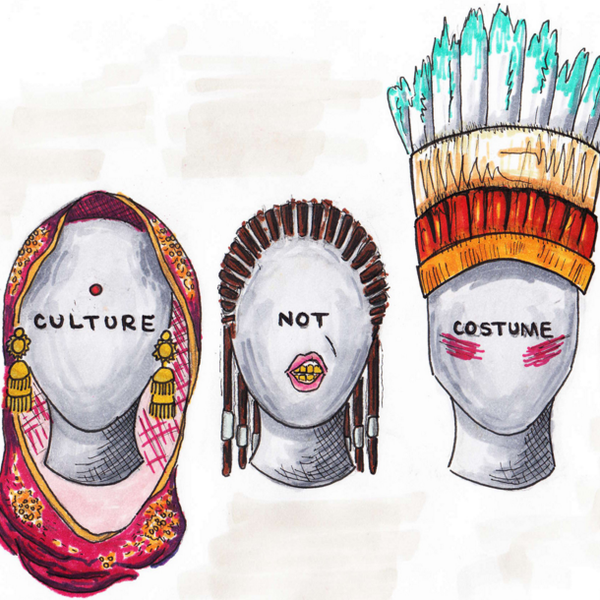
Don't be fooled, this is cultural appropriation, just as some on Twitter have pointed out.
Justin Bieber got dreadlocks.... someone collect this Cultural Appropriating child plz pic.twitter.com/j0nRsRIeoO
— Ajdriana (@JadeHoneymoon) April">https://twitter.com/JadeHoneymoon/status/716484846... 3, 2016
Zendaya gets dreadlocks gets told she looks smelly & homeless but Justin Bieber gets dreads and gets told he's hot. Hmm.
— E$AP (@halfmoonelham) April">https://twitter.com/halfmoonelham/status/716815353... 4, 2016
justin bieber needs to get rid of those problematic dreadlocks— kalysta (@kalyybatman) April">https://twitter.com/kalyybatman/status/71681307761... 4, 2016
Cultural appropriation has been defined in several ways, but the most complete definition that I have come across in my time researching the subject comes from race relations expert Nadra Kareem Nittle. Cultural appropriation can be defined, according to Nittle, as “taking intellectual property, traditional knowledge, cultural expressions, or artifacts from someone else's culture without permission. This can include unauthorized use of another culture's dance, dress, music, language, folklore, cuisine, traditional medicine, religious symbols, etc. It's most likely to be harmful when the source community is a minority group that has been oppressed or exploited in other ways or when the object of appropriation is particularly sensitive, e.g. sacred objects.”
The history of dreadlocks is rich and it can be traced all the way back to 2,500 BCE. For example, according to Dr. Bert Ashe, professor of English and American studies at the University of Richmond, the first known written evidence of the style is "in what is now India's Vedic scriptures, which show the deity Shiva wearing the style."

Rastafarians and African Americans have long held this style as their own. Rastafarians believe that energy exits the body through the top of the head and that having knotted hair prevents the escape of energy, making one stronger. Bob Marley is credited with increasing the popularity of Rastafarian culture and dreadlocks in the 1970s.
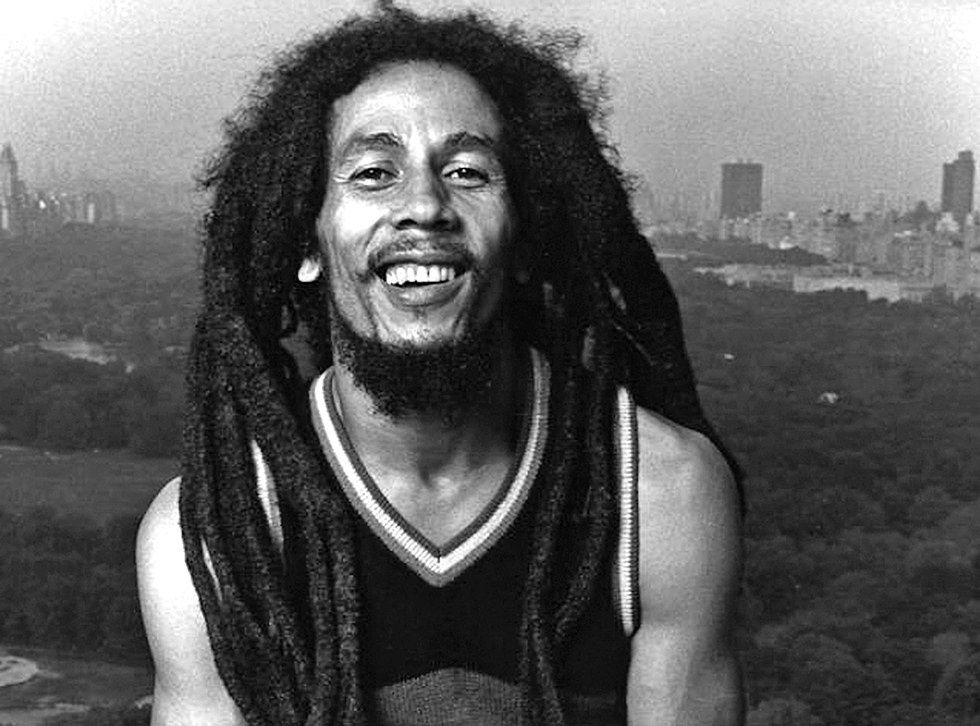
For many African-Americans, the wearing of dreadlocks is an acceptance of who they are and of the tightly textured hair that they were given according to what I have gathered from friends and independent research.
The last that I checked, Beiber is not Indian, Rastafarian, or African-American. All three are minority groups and Justin Beiber is, imagine that, white.
It has not been until recently that celebrities have sported this hairstyle as a trend.
Kylie Jenner received similar criticism for cultural appropriation and even racism after she debuted cornrows on her Instagram page. Beiber quickly came to her defense. “Guys leave her alone, we’re all trying to figure it out and she happens to be under a microscope!” Bieber wrote, according to the photos of his comment. “I’m the first to know this. But saying she’s being racist because she wants her hair in braids is ridiculous. Let’s focus on the bigger picture and instead of fighting over something stupid let’s do something about equality, but it doesn’t start here blasting a 17-year-old kid for wearing braids smh.”
I'm not really sure how Kylie's cornrows are going to help equality. In fact, I'm sure that it would help to inhibit it. I digress.
I am all for creative minds, trying new things, and trying to find yourself, but not at the exploitation of someone else's culture.