
There are a few things you should know before you start reading:
1. People tell me I'm over-dramatic and overly emotional.
2. I change my mind. A lot.
3. I've been hurt by Christians and, as a Christian, I've been hurtful.
4. I cried for an hour when I found out Margaret Thatcher died. Yet, I think Christianity makes a good case for democratic socialism.
5. Men can be feminists, too.
6. I tend to get riled up when people insist non-hetero-normative sexuality to be a choice.
7. I tend to be judgmental of people who I think are judgmental.
8. At 22-years-old, I am probably way too young to be writing memoir-like articles.
9. I almost always root for the underdog and I have a feeling God does, too.
I guess what I'm trying to say is that if you are looking for an impartial observation of things like faith, spirituality and religion, I am not your person. Everything — from my gender, sexuality and skin color to my hopes, dreams and experiences — paints a picture of my view of the world.
I'm a lot of things, but impartial and objective: I am not.
In fact, if you find anyone or anything objective, please let me know as I am currently under the assumption that there is no such thing as pure objectivity.
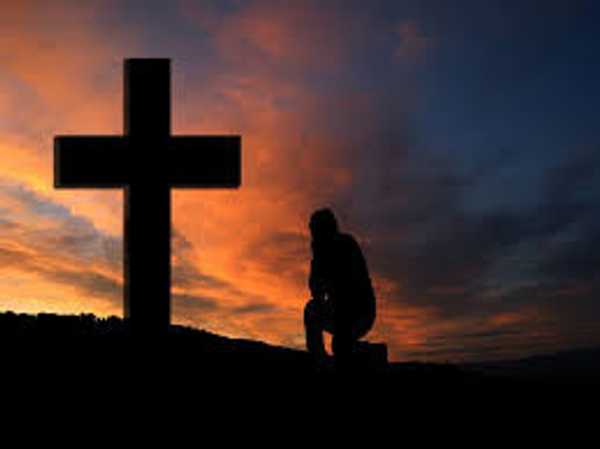
Now that you know this, I think I should just go ahead and say it: Maybe it's time to leave the Church. Here I am, a Christian, telling you to take a good look around, a good look at yourself, and decide if it's worth journeying into the wilderness. (Side note: There are some who say that I am not or cannot be a Christian. I beg to differ. To be honest, I don't think my life experiences give me much of a choice in the matter.)
In her book, "The Great Emergence," Phyllis Tickle describes a worldwide phenomenon that occurs in the world of Christianity, something that happens every 500 years. Every 500 years, the worldwide Church (and, arguably, the whole world) goes through a "rummage sale." Every aspect of our lives (religiously, politically, socially, economically, etc.) are reconfigured. We call into question many things: dogma, the natural sciences, governments and philosophies.
It makes sense. If you go back 500 years from now, you have the Protestant Reformation staring right back at us. Five-hundred years before that, you have the Great Schism where lines were drawn in the sand, distinguishing Eastern Orthodox Christianity and Western (Latin) Christianity. Five-hundred years before that, you have the Great Rise and Fall of the Roman Empire and 500 years before that, we have a "rummage sale" so cataclysmic and so overwhelming that we call it "The Great Transformation."
The Great Transformation was that period that laid the foundation of almost everything Western and was the period where our "calendar" went from "before common era" to "common era." It's also worth noting that the Great Transformation also gave us Christianity to begin with, coming out of the tradition of Judaism to give reason to almost everything about us in the West, whether we are religious or not.
Phyllis Tickle writes that we are experiencing something like that rummage sale called "The Great Emergence." I don't know whether or not we are in the midst of another phenomenon, but I think I can take this one step further and say that in every human life, there comes a point where we host our own personal "rummage sale."
Yes, once upon a time, you thought you knew everything. Now, you don't.
Maybe for you it was a sense of curiosity that catapulted you into the wilderness. For many of us, including myself, our desire to go out into the wilderness was driven by things like fear, unwelcome, exclusion or hurtful experiences.
There were things that happened and things that were said that made me eventually realize that I had to leave the Church. As I got older, and as the reality of the human experience ran into me with the force of a train, I became spiritually, emotionally and physically drained and weary whenever I left Church.
So I packed up all of my shit in spiritual rags and I journeyed out of the Church. Away from comfort.
Away from home.
I questioned everything: Is God real? Is Christ, if he was even a thing, really God personified in person? Is there a heaven? What kind of loving God throws his children into hell? With war and strife, is God actually merciful? Are faith and grace really enough?
I've pondered and continue to ponder, the Great Mysteries: The origins of creation, the purpose of life, theology, all of it.
I am not the only one that has done this, as the mantra of Millennials is "I'm spiritual but not religious."
The Church just takes this to mean "non-Christian." This sentiment cannot be further from the truth. Certainly, the "spiritual" label embodies the seductive appeal of being just beyond the limits of tradition and dogma. But, in using the definition of "spiritual," what is often meant might more clearly be defined as "unchurched." This describes the person with no official membership or even casual attendance in established places of worship.
Being someone who has been in the wilderness (and who, more often than not, spends a lot of time there), I can tell you that the world defined by "spirituality" is a simple gathering of friends and family who talk about the spiritual life as one knows it, typically in the context of Christ and/or God.
In the wilderness, I see simple gatherings and large gatherings. I see participation in green causes and social justice. In the wilderness, I have seen prayer like never before. I have seen interfaith dialogue. I have seen the breaking of bread and the pouring of wine. This is spirituality that can be more clearly defined as "spiritual Christ-knowing," not religion.
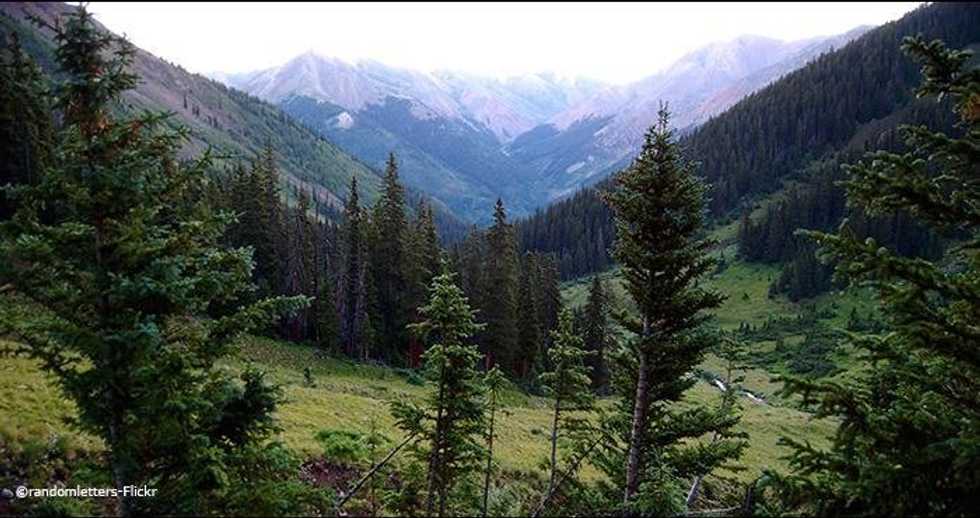
And, let me tell you, God meets us here. Yes, my friend, I will tell you something the Church will never tell you: God is out here in the wilderness, too.
I never want to sound like this is the only way one can experience God. I am a passionate believer in that one can indeed experience and know God in a church, at the altar or on a mission trip. But, my experience tells me that God is out here in the wilderness, too.
Being in the wilderness, being away from the Church, being on this spiritual detox, I found God on accident. Whenever I felt or experience the love and presence of God, it is almost never based on my intentions or how bad I wanted it.
In the wilderness, I've found God in all the "wrong" people and in all the "wrong" place. I might be intent in growing spiritually through prayer or meditating on scripture, and there's nothing wrong with that. However, all of the profound changes within myself and my thinking of faith, religion and spirituality have always happened when I've bumped up into people I wouldn't even choose out of a magazine or people I was trying to avoid. These same people end up being bearers of grace or love to me in a really particular way.
In a community of friends, family and even strangers, I've felt God move more in living rooms, dining rooms and over restaurant tables than I have in any tax-approved building.
I've learned to breath through my nose and find God in the small things: the stray dog that runs up to me and chooses to be pet by me rather than anyone else in a crowd of people, or in the slow nod of the beautiful stranger who waits for the train in a Dutch train station as she breathes out rings of cigarette smoke.
The wilderness is about faith, doubt and how to follow Christ when you're not even sure where you're going. It's about the wandering and the questioning. It's for those of us who feel disoriented and out of touch with the Church: those who have been sold all of the right answers on how to act like a Christian, but have been left wanting more.
At the same time, the wilderness (just like the Church) is not an easy place to be in. Sometimes it can be dark. It can feel like you're spiraling out of control. It can create an existential crisis within one's self. You make mistakes. You trip and stumble.
Pondering the spiritual life, questioning the long-held authority, living on the spiritual margins, all of it, is not for the faint of heart.
This is where I find the ultimate joy, though.
Because of my experience in the wilderness, I find joy in this one theology: that Christ comes to the places where people can't breathe. Yes, Christ comes to people whose necks are being crushed and He lays right there beside us, pushing and pulling on the weight, too. Christ continues to come to us broken humans in broken communities, broken churches and in the wilderness and continues to fight like hell to put us together and mold us into something else.
This is not just a one-time thing. It is something that happens over and over again as long as we are alive. Life is a series of deaths and resurrections. In our inherent state of brokenness, we are constantly being molded into something new and better.
Here's the bottom line for me: I believe that I am rescued by grace, through faith in Christ. I believe you are too. I believe this is so for all the people in the world who find themselves on the margins: LGBT people, poor people, physically and developmentally disabled people and the bullied kid who is just a little different. I want you to know that you are loved and not alone.
I want you to know that God is just as present in the wandering and the questioning as in anywhere else in "certainty" and that you are really, deeply loved in the midst of it all. There is freedom in this.
I want you to know that sometimes Christ shows up through the people who believe in this, too: Those who fight to push and pull the weight off our necks, those who are willing to fight like hell to help people breathe.
For me personally, I'm starting to dip my feet in the Anglican tradition. But that doesn't mean I can't have both feet in both worlds. Sometimes I want to be in church, to be in community with parish members and to be fed the Eucharist.
Other times, I find myself wanting to travel out into the wilderness. I long for the questions. I long for the strangers and wilderness travelers. I want to tell them that they are so loved. I want to go outside and run with the Christian misfits, with the rebels, the dreamers, the second-chance lovers and the grace lavishers. I want to go outside and dance with the ones whose arms are wide open, the one's who aren't afraid of being left theologically naked and therefore courageously vulnerable.
Maybe I feel such a draw to the wilderness because I feel called to go out, to welcome people, to do my own unconventional version of ministry. I want to break the chains by sharing this one radical idea: There is nothing you could do and nothing you can say that would be able to separate you from the kind of love God has for you. There is freedom in this.
So, come. Sit. Let me pour out a cup of hot tea and you can air out all of your grievances about not knowing as I stir in my tablespoon of honey. Let me hear all about the terrifying idea of uncertainty. Drink this tea and together we can ponder the great questions.
Who knows? At the very bottom of that glass, God may be waiting for you.