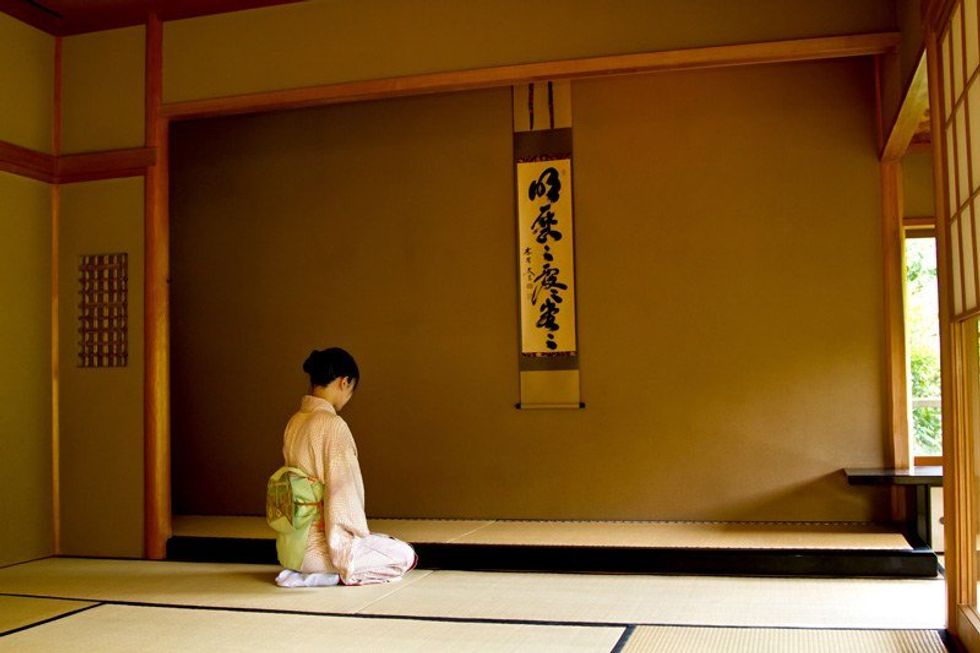
In a rapidly changing and increasingly chaotic world, it's sometimes nice to reflect on what life was like in the past. A part of me wants to steam forward in life, chasing my ambitions in an endless race towards the future. And yet, I find myself experiencing this feeling of ambivalence from time to time--as if someone is telling me to slow down.
When was the last time you went for a stroll at night? When you danced to a song from the 90's or even the 2000's? When you stopped and appreciated the things and times already passed? For me, these five Japanese concepts have helped me from being swept off my feet by the demands of this generation.
1. 物の哀れ (Mono no aware) - The pathos of things
In Japan, there is a concept used to describe the feelings of sorrow, appreciation, and empathy one gets by the inevitable passing and aging of objects. Japanese people find beauty in "evanescence" and the transient nature of all things. That is why cherry blossoms are considered the most beautiful flower in Japan. Though they take a year to blossom, they disperse into the wind and all but disappear in a matter of weeks. The saying, "enjoy it while it lasts" is all too true. This doesn't mean go out and party in college while you can, but refers more to the mundane things in life. This concept teaches us to have a keen awareness of the passing of time, to not take things for granted as they will eventually disappear, and to appreciate the beauty of things while it is still with us.
2. 侘び寂び (Wabi Sabi) - The beauty of simplicity and imperfection
Wabi Sabi is perhaps one of the more famous concepts in Japan, which emphasizes the beauty in imperfection. In Japan, it is the incomplete, impermanent, imperfect nature of things that are said to be most beautiful. Don't be surprised if you enter a traditional soba (noodle) shop, and they bring out cups that are slightly asymmetrical, painted unevenly, and have a rough texture. Wabi Sabi teaches us to celebrate our imperfections and to accept our flaws as the products of a beautiful world.
3. 武士道 (Bushidō) - The way of the samurai
Bushidō is also a fairly well-known traditional Japanese concept, which became wide-spread during the warring eras of Japan. It is a way of life, centered around the values of honor and loyalty--loyalty to your lord and honor to yourself. To be a traitor was to be the lowest form of life, and to lose to an enemy and surrender was thought to be the worst form of embarrassment. The infamous "Seppuku" or "harakiri" in which one cuts open their own stomach and was decapitated by a fellow swordsmen was one way for warriors to regain their honor in death. Many traditional Japanese performing and martial arts have deep roots to the values of Bushidō, and have the same ending with the character 道. For example Judō, Kyudō (way of the arrow), Sadō (way of the tea), Kendō (way of the sword) etc. Though Bushidō is a somewhat outdated code of ethics, it makes us question what our values are, and to what extent we'll go to protect them.
4. 本音と建前 (Honne to Tatemaē) - True feelings and public stance
If you live in Japan long enough, you'll understand what people mean when they say it's a society of "masks". There is a very clear distinction between private and public life, so much so that it's considered borderline rude to share personal problems with people other than your closest friends and family. Though peoples' private lives are distinct and unique, in general, there are certain rules and codes regarding the "appropriate way to act" in public. For example, pretty much everyone is silent on the train and no one talks on their cellphones, and you'll never see anyone crying in public. Public display of emotions is unusual, because that is the Honne--or the part you keep to yourself. If anything, the concept of Honne and Tatemae remind us that we all have struggles unseen by others. Many Japanese people use this fact as motivation to "gaman" persevere and keep moving forward.
5. 生き甲斐/やり甲斐 (Ikigai/Yarigai) - What makes it worth doing
In Japan, the reason for why one does things, rather than the thing itself, is heavily emphasized. The word 生きる means to live, and the word 甲斐 means "worth". Combine this together, and you get "the worth of life". What makes life worth living? Take this to a micro level and you get "yarigai" or "doing" and "worth". What makes what you do worth doing? In Japan, you should always reconsider the motive behind your actions, and think about whether what you're doing is blindly following routines, or whether it has true meaning to you as a individual of society.