
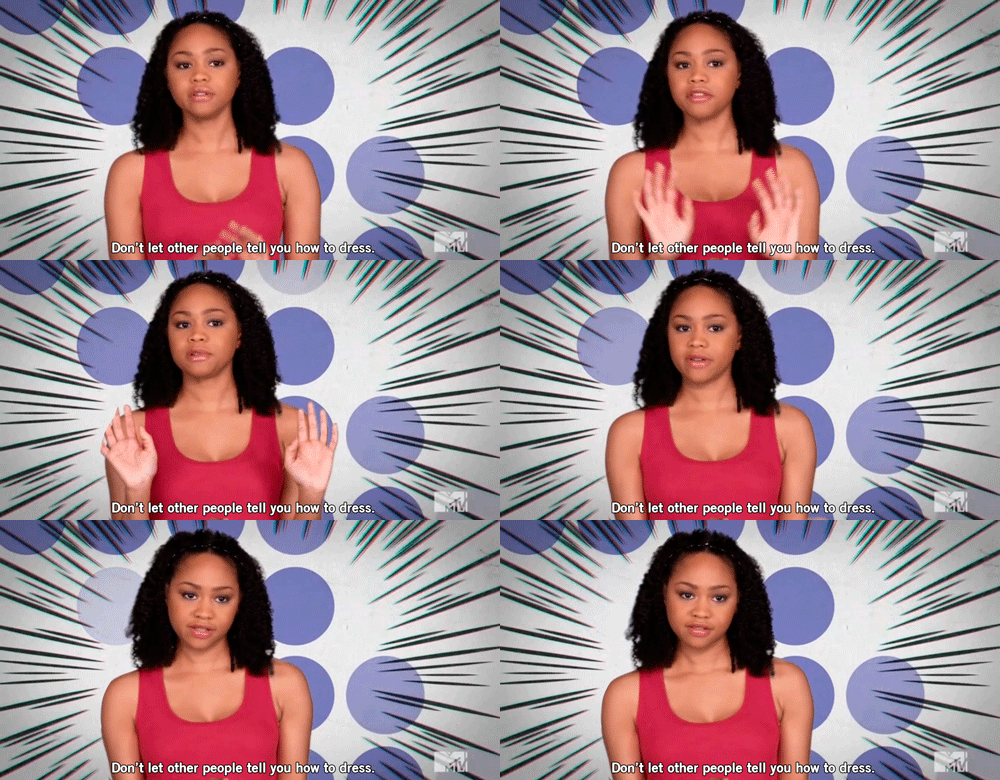

“We’ve been taught a woman’s body will cause men to sin. We’re told that if a woman shows too much of her body men will do stupid things. Let’s be clear: A woman’s body is not dangerous to you. Her body will not cause you harm. It will not make you do stupid things. If you do stupid things, it is because you chose to do stupid things.” --Nate Pyle, "How To See A Woman: A Conversation Between a Father and Son"
Almost 60 percent of schools enforce a strict dress code around the country, according to the latest findings from the National Center for Education Statistics based in Washington, D.C. Requirements, however, vary from school to school. Most of these dress codes have double the standards for girls that they do for boys. How often do we police the body of a young girl? How often do we hear parents whispering to each other in the schoolyard about the kid who has a skirt on too short for their liking, a tank top on that God forbid shows their shoulders, or even has her hair in a certain way that would cause people to say that "she is asking for it"? Also, how often have you been the perpetrator of these comments?
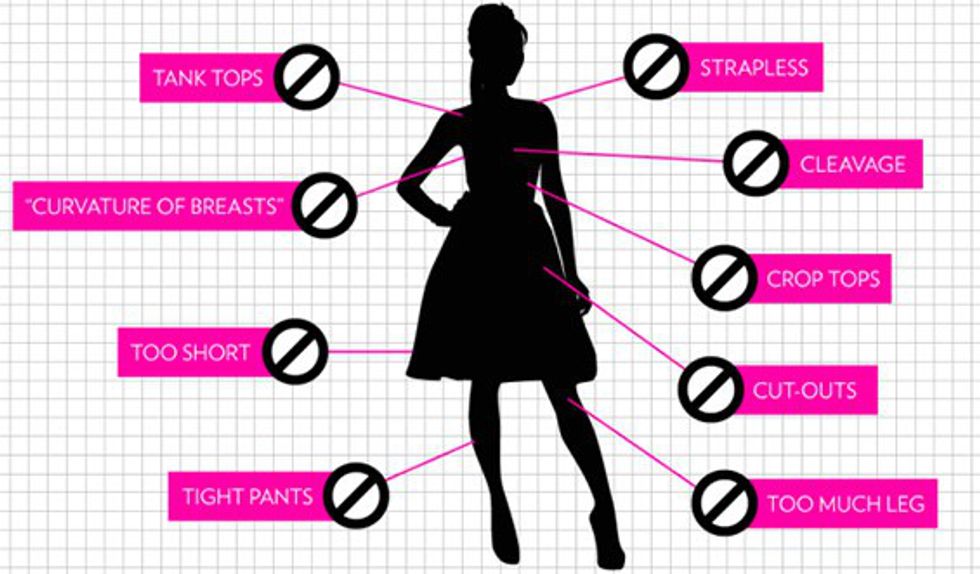
I am the big sister of the three most beautiful young girls in the entire world, and I can't help but worry about the way they see themselves from what they choose to wear every day. With them living in a warm climate, they ultimately need to wear less clothing to stay cool, or they will be roasted and baked alive by the hot Florida sun and humidity. They have this choice in their school district: put on more clothing to be considered rule-abiding and be uncomfortably hot in their schools, or dress comfortably and become objects for boys and men to sexualize them. And these two options should not be the choice, here.
There is no doubt that there need to be some rules on what is allowed and not allowed at schools, because overly young exposed bodies is a concern to watch out for, and it is the duty of adults to protect our children. Society and people who act upon fetishizing girls from a very young age that only seems to get younger and younger cause adults in this world to have to do whatever they can to protect our young women. But, just because my sister wants to wear a strapless dress to school does not mean she is the next object for anybody to fantasize over and objectify instead of allowing her to just be comfortable. How do you explain to a young girl that she cannot wear her pretty new dress because it is against the rules for her arms or her knees to be showing? How do we even begin to explain that she must wear closed-toe shoes because "it's the rule"?
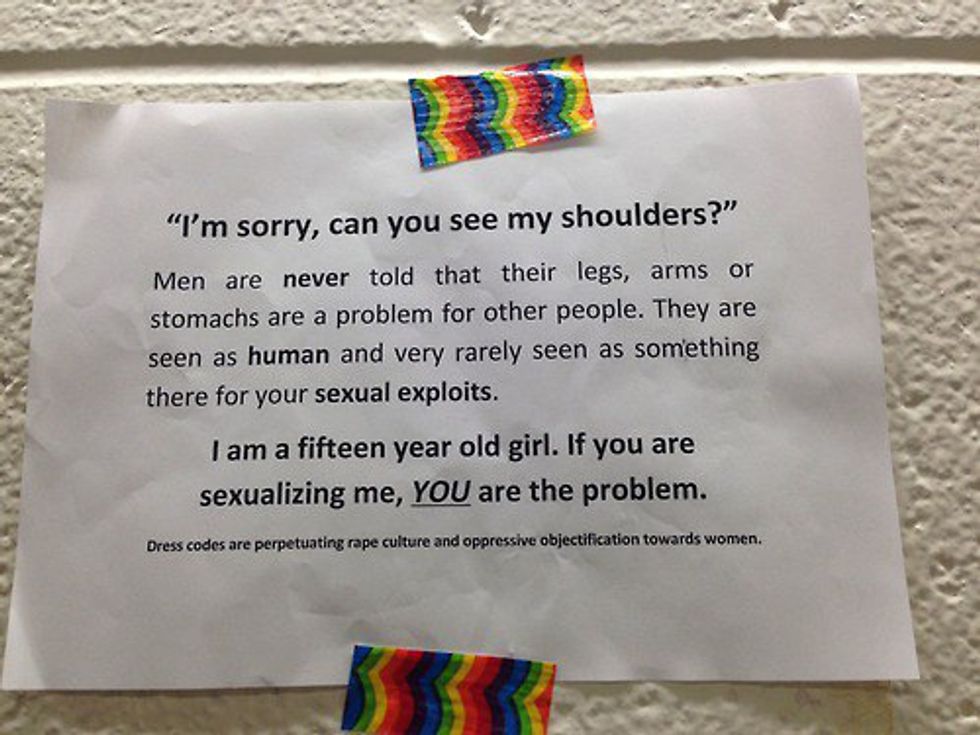
Girls also face the dilemma of self-objectification, or creating an image out of themselves to be seen as an object for use, something to be looked at, and something to be wanted. The truth of this is here: girls feel like they have to do this to gain the attention of others. Instead of boys lusting over girls for their brains, their passion, the way their eyes light up when they talk about the joys in their life, and the way they think about and conceptualize big ideas, boys consider girls a looking object, causing girls to obsess over the way they look. A laundry list of problems can come from obsessing over one’s appearance: eating disorders, depression, low self-worth. Who wouldn’t want to spare her loved little girls from these struggles and help protect them, tell them how important they are, and keep them from these horrible disorders?
The type of dress code that is enforced around the country teaches young women that their bodies are not their own. Using dress code as enforcement on girls teaches them that girls are a sexual threat to humanism that must be contained and kept tightly secured. Dress restrictions in schools contribute to the very problem they aim to solve: the objectification of young girls. When you tell a girl what to wear (or force her to cover up with an oversized t-shirt), the school then controls her body. And when anybody else controls a girl’s body besides herself — even if it is ostensibly for her “own good” — they are taking away her agency. You are then telling her that her body is not her own. When you deem a girl’s dress “inappropriate,” you’re also telling her, “Because your body may distract boys, your body is inappropriate. Cover it up.” You recontextualize her body; she now exists through the male gaze instead of who she is on the inside, and who she really is through what she believes and what she thinks.
A dress code that is enforced upon young women is equally as offensive to the young men as it is to the young women. By telling girls that their skirt length and tightness of their pants must be restricted, we also tell young boys that it is not their fault that they cannot control themselves by seeing some shoulder skin. We encourage young men to grow up without taking responsibility for their emotions, their sexual feelings, and their tendencies as humans. We teach young men that if they act upon their feelings and their human nature, it is not their fault because the young women were obviously tempting them by the way they dressed. By instilling this culture and idealism at the elementary school age, we begin to execute a rape culture, which tells girls that the way they dress is how they ask for sexual disfavors to happen to them, how men do not need to take responsibility for enacting sexual conduct upon a female without consent, and how a man can dominate a sexual situation and use forceful action upon a female to get what they want.
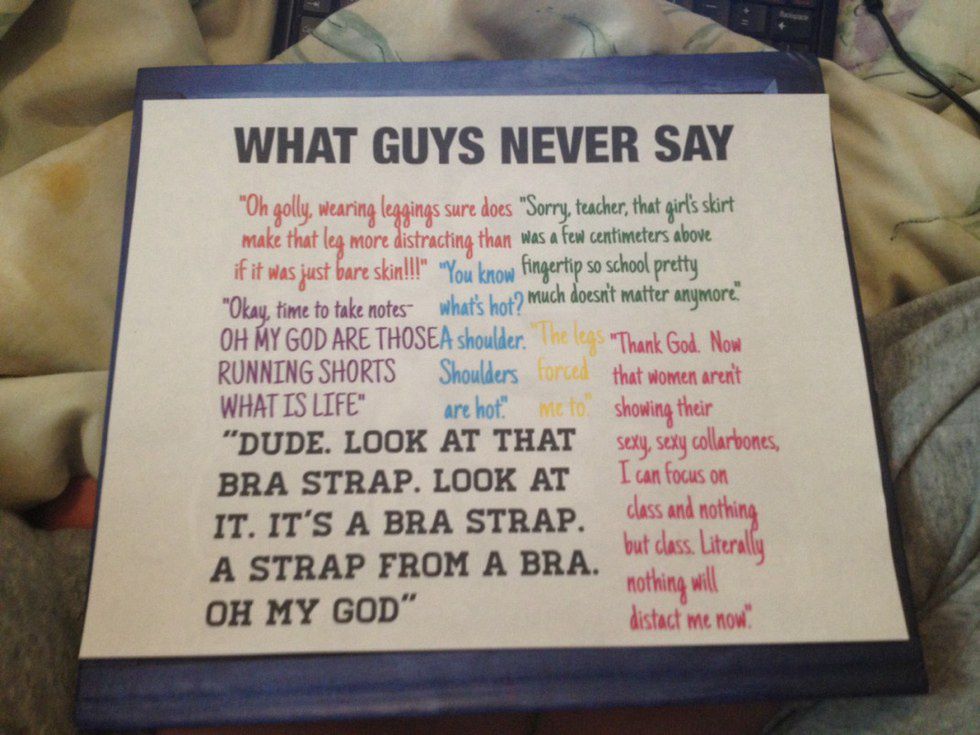
McHenry East and West High Schools in McHenry, Ill. are working together to help reform the dress code, making it allowed for girls to be comfortable in whatever they choose to wear to school as well, and emphasizing that a little extra arm skin showing will not cause a boy to jump out of his desk seat. They published the following message to their Facebook community regarding their dress code reform protest: "We would like to let the school (and all schools that have this rule) know we do not agree with this rule, we believe it is teaching girls at an early age that boys are always looking at their bodies. The dress code is shaming women for being women, that shoulders are in no way sexual. We still believe there should be boundaries, we are not trying to encourage girls to show more skin, but rather to be comfortable in their skin and what they wear. Women should be able to feel good in what they wear, not be shamed for it!" Throughout this peaceful protest, girls wore what made them comfortable and if asked to change, respectfully told administration that they were acting on the peaceful protest, and that they would not change their clothes. This "Show your Shoulders" campaign ultimately led to reform in dress code, and sparked the positive change that many school districts are beginning to act on.
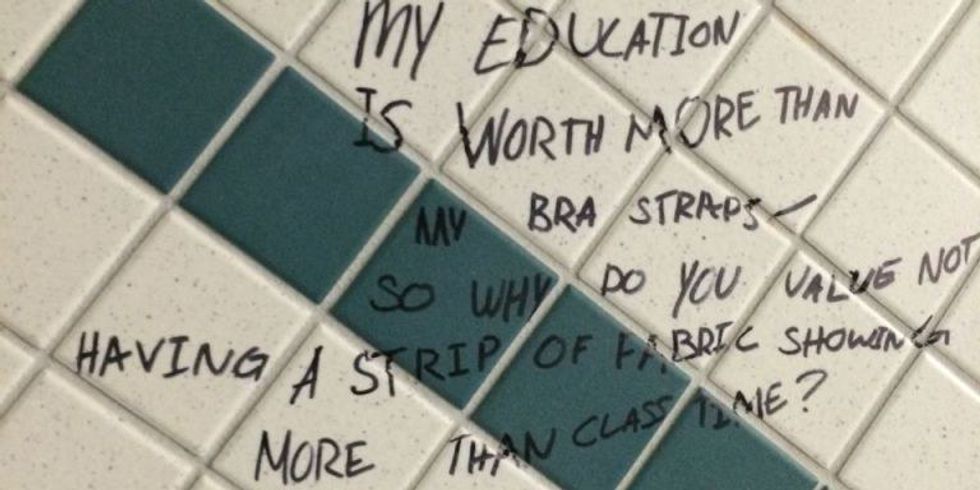
When schools send a girl home because her shorts are too short, because she isn't allowed to show her arms, because her belly is showing, or because her ankles are exposed, schools are implying the idea that hiding her body is more important than her education. Schools pass along the message that making sure the young men have a distraction-free learning environment is more important than the young women being equally educated and having the equal chance to learn in a school environment. In a way, schools are telling these young women that young men are more entitled to opportunity than she is.
We need to remind our schools of these solid standings. These girls are more than their physical appearance. They are more than temptations. They are more than distractions. Young women have the ability to change the world, and are a force to be reckoned with. Stop shaming them because of what they wear, and concentrate on educating them instead.
Now, let them stay in school and learn about history and geometry in their tank tops.
"This is a world where women and girls are constantly reminded that they don’t belong to themselves; that their bodies are not their own, nor their power, or self-determination. I made a promise to endow my little girl with the power to always know that her body, spirit, and her mind are her domain. Even little girls have the right to own themselves."