
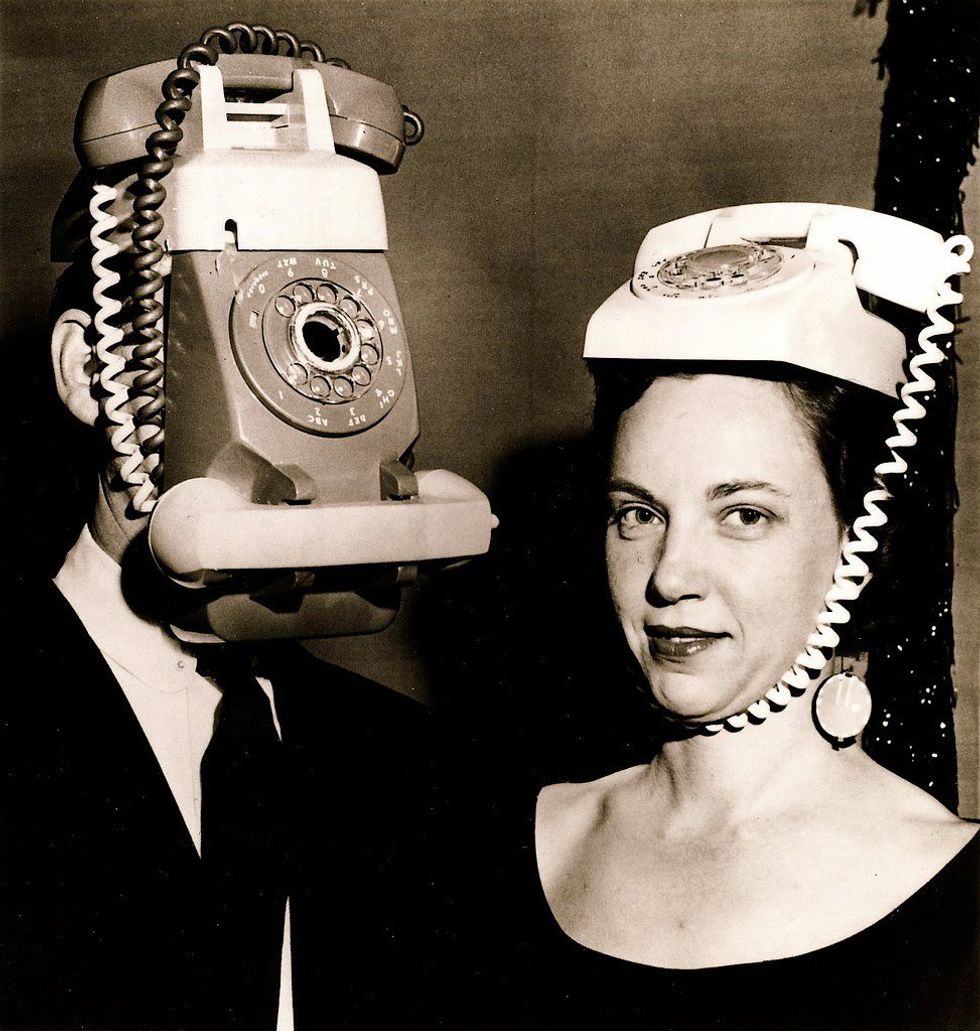
"Weird" is a word that has lost its oomph.
It is used so frequently and so indiscriminately that what it means now is not really what it means in textbook terms. There is a tendency to use "weird" as a dismissive term nowadays, and it is common enough to warrant some analysis.
Instead of its original use, to describe something eerie, uncanny, unnatural or supernatural, we use it to dismiss things that are new, foreign, or just plain different than what we are used to.
For example, just because sushi burritos don't seem appealing to you does not mean they are "weird." Just because somebody has a foreign name, or a name not frequently encountered in the US, like Aengus or Dayana, does not mean it is "weird." If somebody enjoys something you hate, like Sriracha sauce on their mac and cheese, it is not "weird." It is just new to you. It is just different.
Why do we say something is "weird" when we really just mean different? Why is being different such a weird thing? Why don't we discuss how destructive this can be?
When you brush something aside and label it as "weird" you are closing yourself off from learning and you are closing yourself off from new experiences. If your knee-jerk reaction to something new and outside your idea of the norm is to call it "weird," you put a distance between yourself and it whatever that new thing may be.
When you call something or someone "weird" you are being extremely short sighted. This is not a healthy mindset, especially not for us young adults.
Thankfully there are always those outside the norm who are creating new things and who celebrate what average society deems as "weird." This has led to some of the best music, the most profound art, and the craziest, most delicious foods.
Also, as more people from more countries create a life in America, and as they introduce aspects of their culture (like their food, dances, and music) into American culture, we should not dismiss their traditions as "weird," because their traditions will ultimately be integrated into the broader traditions and tastes of American society.
I'm trying not to use "weird" as such a broad, all-defining term anymore. In the past weeks, I have noticed this trend among my coworkers and among friends on social media, and it has sparked a lot of inner exploration.
We need to find a way to better handle new things, different things. America hasn't always been very good at that, as you should very well know.
So next time you want to call something "weird," think about whether or not it is something truly uncanny, eerie, or supernatural, or if it is just something new, something different.