
Today, around 80 percent of households own some sort of gaming device. This could be a console, handheld or PC. The gaming community is large and constantly evolving.
When I was in elementary school, I remember how excited I was when Santa gave me my first gaming device, a Gameboy Advanced with Pokemon Red. In class, I told some of the other students about it. The boys laughed and informed me that video games are for boys. I brushed the comment off and enjoyed catching Pokemon. Shortly after that, I got a Gamecube and a PS2. My love for video games never died but kept growing. I currently own a PS4 and an Xbox One.
Over the years, I have noticed a large number of issues within the gaming community. One of those issues is gender equality in video games. I noticed that most games involved a male lead going on an adventure, saving the world, defeating the bad guys and winning the girl. The number of females in video games seemed lacking. In games that did have female characters, they always seemed over-sexualized, having long legs, big busts, wearing impractical clothing (how are you going to fight a zombie horde in heels and extremely tight booty shorts?) and are rarely ever important to the storyline, other than playing the role of a love interest.
The percentage of female gamers has recently increased; they started speaking out and voicing their opinion on this issue. People want video games to represent females with realistic body portions and with actual character development. Game developers have noticed issues involving gender equality and have been trying to improve.
Ubisoft is a large and well known gaming company. One of their famous series is the “Assassin’s Creed” video game. In 2014, during the development of the video game "Assassin’s Creed Unity," Ubisoft decided to cut development of a playable female protagonist. Many fans were excited to play as a female since all the "Assassin’s Creed" games before Unity involved male leads. Game developers explained that the reason for scrapping development of a female playable character was due to expenses. Animation of a female character model would have been too expensive and time consuming. When the fan-base heard their reasoning, they became outraged. People thought their reasoning was illogical. This created an "Assassin’s Creed" female character controversy that only just recently died.
In 2015, "Assassin’s Creed Chronicles China" was released. People had the option to play as a female protagonist. Sadly, the game was not like other "Assassin’s Creed" games. It had a very different animation, fighting style, art style and did not have the same vibe that the other games gave off. The Chronicles received very poor reviews for its poorly written story and bland environments. It did not do a good job at creating a good side-scrolling form-factor experience.
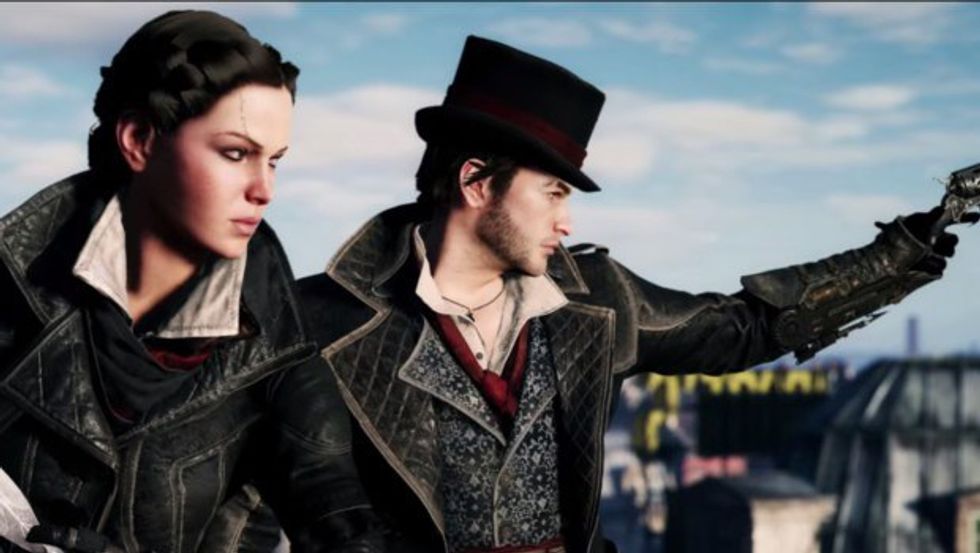
In late 2015, the most recent "Assassin’s Creed" was released. This game was called "Assassin’s Creed Syndicate." This game did very well and fans loved it. People loved the visuals and the main characters. In this game you could play as either one of the Frye twins, Evie Frye and Jacob Frye. They each had very unique personalities and missions. Fans loved Evie Frye. She was a story female protagonist who was very studious and a tactician compared to her brother who was more reckless and jumped into action without thinking. "Assassin’s Creed Syndicate" was also the first "Assassin’s Creed" game that had a playable male protagonist not having a romance. Many fans questioned Jacob Frye’s sexuality because of the fact that no romance was mentioned in the game and how he reacted with one of the antagonists. Game developers later announced that Jacob Frye was bisexual and "figuring himself out."
"Call Of Duty" is a large first-person shooter. Fans have reached out about the issue involving female characters in "Call of Duty" games. There are no female characters at all in the multiplayer or storyline. In "Call of Duty: Ghosts," female characters were introduced into the multiplayer, but they were very bland and poorly designed. The people who played as the females in games were always males trying to mess with people. "Call of Duty" tried again in "Call of Duty: Black Ops III." This time, players were able to play as a female in story mode. The character design was greatly improved compared to Ghost. I was excited to play the game and see how the story went. After a few missions, I started to notice something strange. All the characters around me addressed me as “he” even though the game clearly knew I was a female. I decided to brush it off and keep going. At the end of the game, my character reveals that she had romantic feelings for her teammate who was also a female. I thought game developers had created an LBGT character and a female character in a "Call of Duty" game. I was super amazed by their progress. Then I realized this wasn’t the case. The story and dialogue is the same whether you are a female or a male. This should be a good thing. This should show gender equality, but it doesn’t. The dialogue is not gender-neutral. It has been clearly written as if you were playing as a male. The pronouns were always male ones; your character even said she was a boy scout. "Call of Duty" failed badly.
Not all game developers are bad at female equality. A game that was recently released called “Overwatch” by the company Blizzard allows one to play as 21 different characters. Eight of these characters are females and 13 are male. The characters are very diverse and unique. The characters show a large range of ethnicities and body types. In many games, one would imagine that the female characters would be the healers or magic types and the males would be the tanks and offense classes. This game balances gender among all the classes. The characters are all unique in different ways. Some characters even appear to have physical or mental disabilities, but that doesn’t stop them. One character was even confirmed as being autistic. You can even play as a gorilla.
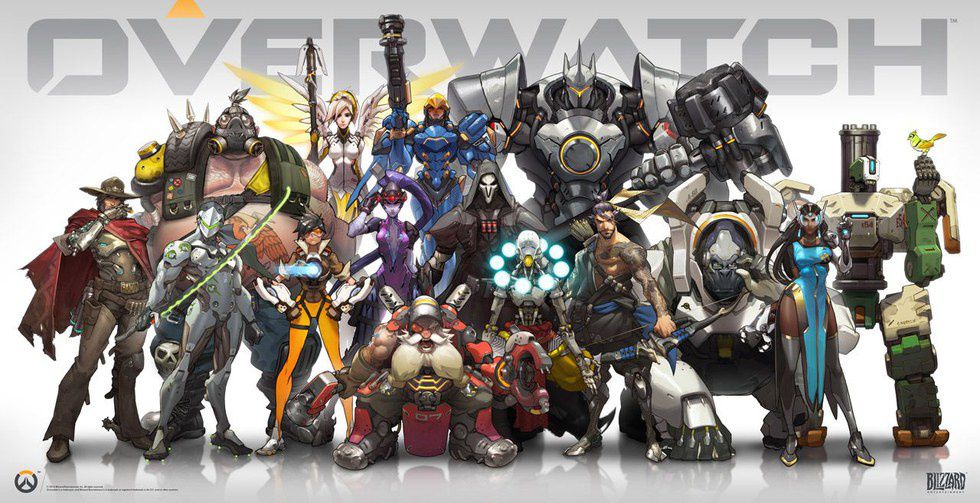
A lecture was given at NYU about the lack of female body type diversity in "Overwatch" female characters. The presenter said that they were all “long legged, slender, wore sexualized outfits and lacked pants." She pointed out how the diversity among male characters was more noticeable since you could play as a short chubby dwarf, a giant armoured man, a male gorilla and many other different types of males. Blizzard discovered this issue regarding the lack of diversity in female body types and shortly after this lecture, they announced a new female character they had in development. She was very different compared to the other ones. She was tall and muscular compared to the small slender characters.
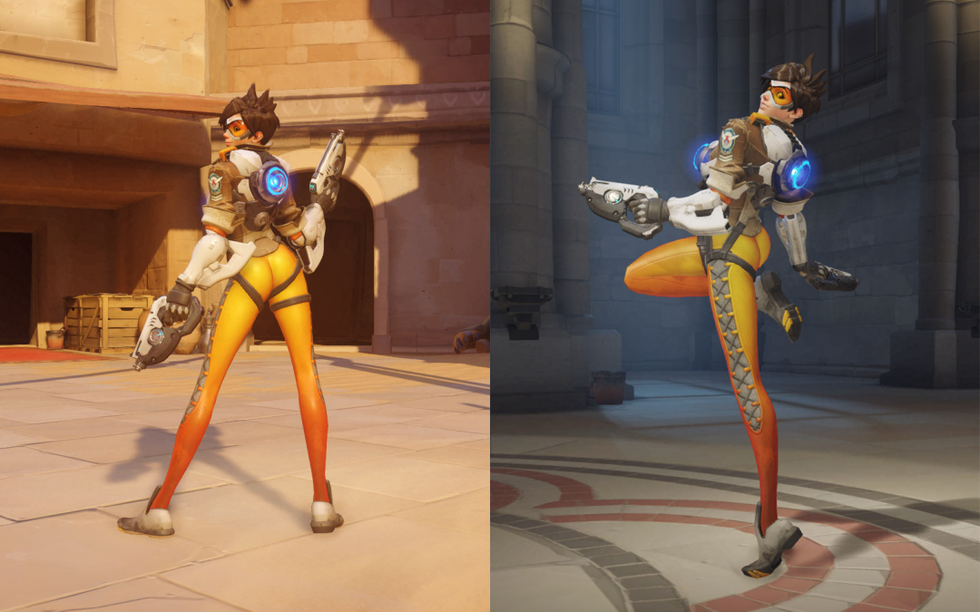
Another controversy regarding female characters in "Overwatch" was addressed shortly after that. Tracer, the main character seen in the advertising for the game, had a victory pose where her back was facing the gamer. Her butt was clearly shown and fans discussed this on forums. Blizzard discovered that the pose was deemed over-sexualized and announced that they were going to get rid of that victory pose. The internet seemed to explode after hearing that news. Tracer's butt exploded on the gaming side of the Internet and everyone was talking about it. People were split on whether they agreed with Blizzards choice regarding the victory pose. Blizzard released a new pose for the character and discussed with fans about how they want to improve gender equality and listen to their fans. I personally love Tracer and agreed with their choice on changing her pose.
Gender equality is an issue that is being addressed, but progress cannot be made over night. Gender equality is still an ongoing issue in reality. Virtual reality still has a long way to go. I think video games have improved greatly regarding gender equality. I still remember what Lara Croft used to look like in the older "Tomb Raider" Games. George Bernard Shaw once said, “Progress is impossible without change, and those who cannot change their minds cannot change anything.” The progress involving gender equality is only possible because of the people who voice their opinion and the developers that listen.