


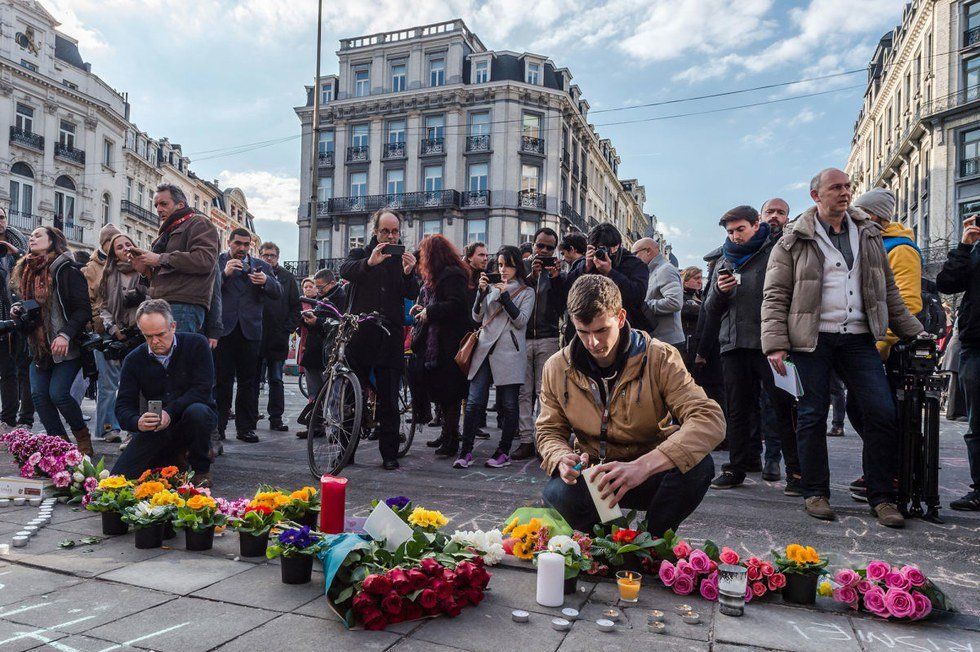
The morning of March 22nd Europe once again woke up to the news of a terrorist attack. At about 8 a.m., two explosions hit the airport outside Brussels, while a third followed in the metro station right after. The death toll was as high as 34, with more than 180 wounded.
The spread of ISIS across the Middle East had a significant impact on Europe. ISIS has been creating fear, concern, hate and vulnerability among Europeans.
But how does a European citizen feel after all of this?
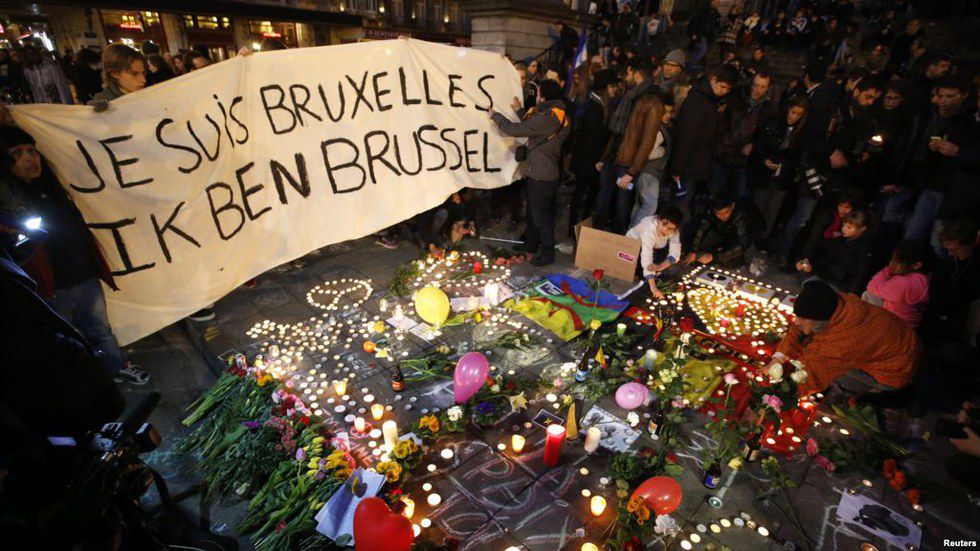
These attacks came five months after the Paris attacks that shocked the world and took the lives of 130 men and women. The European citizen feels very vulnerable, knowing that it’s very easy for ISIS terrorists to hit anywhere they wish, even in a city like Brussels, where the main organs of the European Union are located. That’s right, the group managed to strike at the heart of the European Union. Besides vulnerability, Europe feels a sense of fear and hate towards those people who can kill hundreds of people in name of their religion.
But mostly, what lies behind this situation is the lack of integration among many Islamic people in European countries. They are not well integrated and prosperous within the society. And this share of the population is bound to grow with the recent influx of millions of refugees fleeing violence and poverty in North Africa and the Middle East. Although some Islamic families have integrated in several communities in Europe, others pretend to be European citizens, while plotting against Europe. As a consequence, the European citizen feel distrustful towards the Islamic citizen and tends to discourage their integration.
The Brussels attacks came to confirm what many Europeans suspected after January’s and November’s attacks in Paris. What's scary is that the latest bombings could soon trigger off a chain reaction with unknown political consequences for the future of Europe. After all of these attacks that happened within a very short period of time, European governments have incomplete, fragmented intelligence on the identity and communications of ISIS’s members in Europe.
Europe has on its hands millions of Muslims, many of whom, although certainly not all, identify first as Muslims and second as Europeans. They are loyal, at best, to the local Muslim community with whom they share a sense of solidarity, or in its worst manifestations, to ISIS and its global sense of destiny. This manifests itself in its most extreme in attacking the great evil that is the West—even if it has been their home for their entire lives.Usually a war has the aim to conquer a territory or to subvert the current power into a new regime. However, the attacks that have occurred in Europe do not have either aim. ISIS wants to spread terror to obtain a repressive answer from a country, hoping that this reaction would trigger a disintegration of the same country. The objective is to affect the psychology of the European citizen who has now become part of a psychological war.

















