
The Islamic State in Iraq and Syria is a problem, there is no denying that. However, many are divided on how ISIS should be handled as well as by whom. The belief many seem to hold is that we should continue to bomb ISIS strongholds in the Middle East, and do so with more force frequency in order to completely eliminate the entity that is the Islamic State.
The thing is bombing may not be the answer. To begin, Syria and Iraq are already being bombed, a lot. In fact, as of December 2, 2015 there have been 8,206 US-led coalition confirmed airstrikes and 28,578 bombs dropped in Syria and Iraq combined since the airstrike campaign began on August 8, 2014. That is an average of 17 airstrikes per day during that time span.
After recent voting in Britain the UK are set to join the bombing in the Middle East as well; yet ISIS appear to be as strong as ever. Maybe 10,000 airstrikes is the magic number we must reach in order for ISIS to give up. ISIS have nearly 200,000 militant fighters within their ranks and the Islamic State rules one-third of Syria and one-third of Iraq, an area of nearly 250,000 km (about the size of Britain) with a population of 10-12 million people. This means ISIS have an incredibly large pool of people to recruit from. So if, by a snowball’s chance in Satan’s humble abode, we are able get all 200,000 militants grouped together we should be able to defeat them, right?
Wrong. In fact, the continued bombing of targets in Iraq and Syria may do more harm than good.
First, bombing and war are ways to defeat a nation, to bring them to their knees. Although ISIS are the “Islamic State” and should be viewed as a nation and not another militant “terrorist organization” I mean they have their own weapons, military, spy drones, brilliant plans for their own currency and primary schools, ISIS should also be viewed as an ideology; and it is very difficult to destroy an ideology and a belief with bombs. Especially when that belief isn’t confined to one location.
The attacks that strike fear into the hearts of most of us aren’t carried out in the Middle East or in Africa, but the ones that are carried out in the West like the recent ones in Paris and San Bernardino. The thing about those attacks is that some of the assailants were citizens of the country they attacked. Syed Rizwan Farook, one of the San Bernardino shooters, was a US Citizen and his wife was a permanent resident. The US government is currently monitoring 100 American citizens that travelled to Syria to fight for militant groups there, ISIS among them.
Five of the Paris attack suspects were French nationals. In fact, a poll conducted in July 2014 showed that 1 out of 4 French youth (18-24) had a favorable view of ISIS, even though only 7-8% of the country identify as Muslim. These figures only scratch the surface of the global support that ISIS enjoys as they call those who can’t make physically make the Hijrah (pilgrimmage) to the Islamic State to take up the fight wherever they are. So, relentless bombing of Syria and Iraq won’t stop the problem that is ISIS because ISIS is global problem.
Second, as advanced as modern day military technology is bombs don’t discriminate; they will blow up civilians and the enemy with the same effectiveness. John Cantlie, an English war photographer and correspondent who was kidnapped with James Foley, used to have a column regularly published in the Dabiq (ISIS’ monthly online magazine which you should read if you haven’t). In Dabiq Issue Number 8 Cantlie had this to say, “There was a heavy airstrike some time ago in the dead of night and I promise that you don't sit there thinking, 'Hurray, it's the United States Air Force.' As the doors shake on their hinges and the walls bulge momentarily inward from the shockwaves, you become incandescent with fury. For 20 minutes afterwards there are the sounds of babies crying in fear, mothers trying to soothe their children, and sirens as casualties are taken to hospital. It's a side to 'precision' bombing that you never see back in the West.”
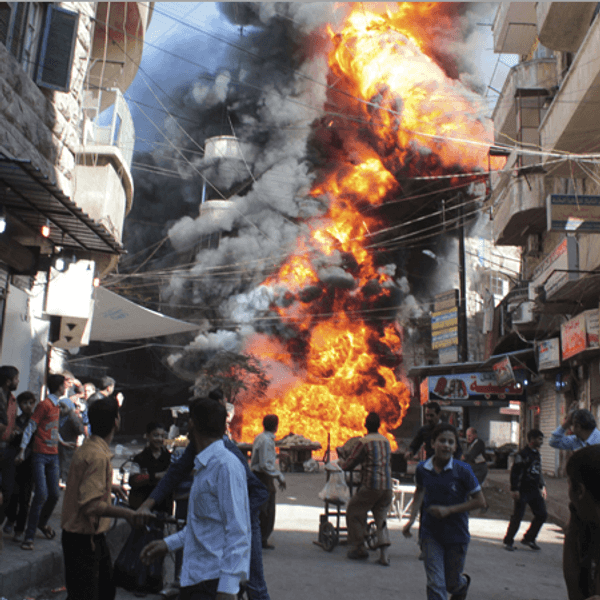
Russia is just two months into their bombing campaign and they’ve already struck a post office, marketplace, and a hospital killing between 255 and 375 civilians. In one of the worst known incidents, an air raid shelter in the village of al Ghantu was reportedly hit in a Russian airstrike on October 15, killing up to 48 people from one extended family, 23 of which were children and nine were women. Are we okay with the certainty of killing civilians as long as there is a chance we inflict marginal damage on ISIS? If ISIS strongholds were in western nations instead of the Middle East would we still call for bombing with the same amount of enthusiasm? These are questions we must ask ourselves.(Oh, and those of us that want less refugees…when you bomb people’s homes and their places of work they become refugees.)
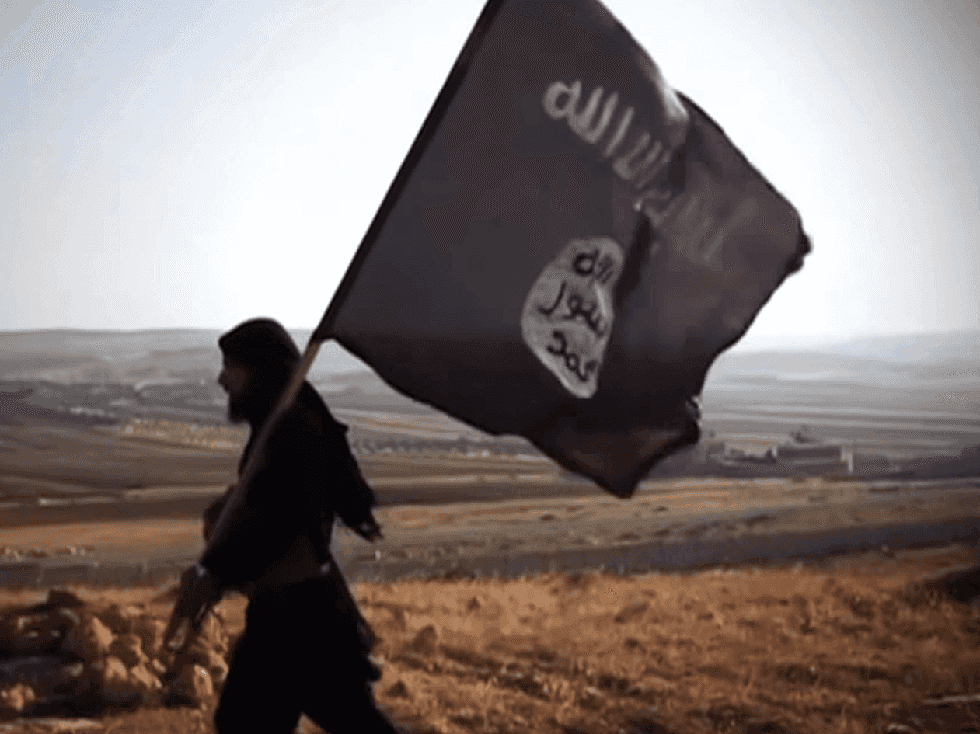
Third, bombing, along with anti-Islamic rhetoric and Islamophobia, helps to destroy the “gray zone” (which ISIS wants) and will drive more recruits towards them. According to the Dabiq Issue Number 7, ISIS views the world as black and white, just like their flag. To ISIS, the world is separated into two parts, the believers of the Islamic State and everyone else whom they have dubbed the “crusaders” the non-believers. In the middle there exists a place called the gray zone, occupied by those Muslims who have not joined the ranks of the “crusaders” but haven’t joined ISIS either. In the Dabiq, ISIS has said they want to eliminate this gray zone, they want the world to become less tolerant and for Muslims living in the gray zone to feel persecuted and ostracized.
So when we, and our politicians, use offensive and anti-Islamic rhetoric, the gray area shrinks. When governors in 30 states say they will refuse to take any refugees from Syria without even more stringent screening, the gray area shrank. When Jeb Bush said that the US should focus its efforts only on helping Christian Syrian refugees, the gray area shrank. When Ted Cruz offered to draft legislation that would ban Muslim Syrian refugees from the United States the gray area shrank. When Ben Carson said he would not advocate that we put any Muslim in charge of this country thus alienating America’s Muslim population, the gray area shrank. When we bomb Middle Eastern countries and kill civilians we diminish the gray zone. We cannot let our fear spawn bigotry and lead to rash decisions because every time the gray zone shrinks, ISIS gains ground. We must be aware of this.
Fourth, bombing will only cause retaliation. In the foreword of Dabiq Issue Number 12 this was written, “The divided crusaders of the East and West thought themselves safe in their jets as they cowardly bombarded the Muslims of the Khilāfah (Caliphate). But Allah decreed that punishment befall the warring crusaders from where they had not expected. Thus, the blessed attacks against the Russians and the French were successfully executed despite the international intelligence war against the Islamic State. Both crusader nations had undoubtedly destroyed their homes with their own hands through their hostilities towards Islam, the Muslims, and the Muslim body of the Khilāfah.” When we bomb Syria and Iraq, ISIS strike back, and when ISIS strike we bomb. Hmm.
Yes, ISIS are an ever-growing problem and the world today and we must find a way to stop them. ISIS should be viewed as a budding nation, not just a terror organization that can be dealt with using the same template used for Al-Qaeda and the Taliban. The narrow-minded, warmonger driven approach of bombing Syria and Iraq isn’t working. It is going to take a combined global effort to sit down, and figure out the best way to stop ISIS. Until then we are able to do that, it seems that the current situation will continue to escalate.