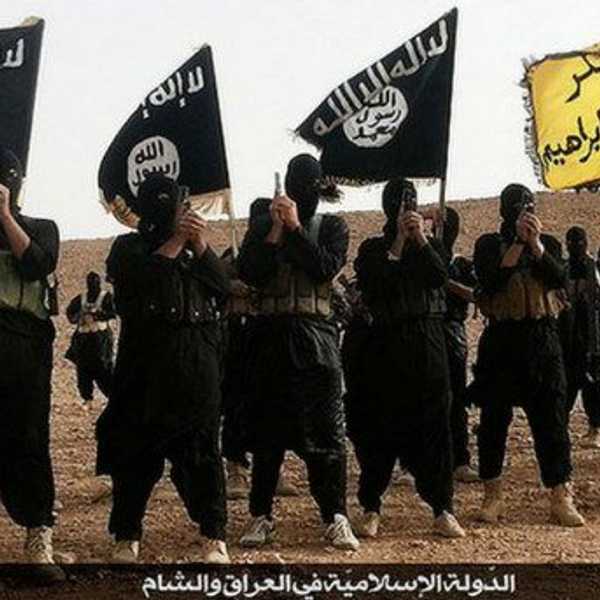
The Islamic State of Iraq and Greater Syria (ISIS), has extended their scope of oppression and violence very far in the past several months. The terrorist group, founded on radical Islamic ideology, spans borders, ethnic identities, and cultures, operating as an unstoppable force, storming across the Arab world, and leaving in their wake the remains of archaic brutality. While the extremist “state” is best known for their atrocious acts of terrorism against people (mostly within the region, though also abroad), there is another, more subtle crime against humanity that the group continues to commit. These acts are remnants of larger, more heartbreaking attacks, though the impact is immeasurable.
Let’s call it the intentional assault on culture. The Arab world has lived under a heavy international stigma for as long as Gen Ys have lived. Consistently, the region is unstable, suffering from economic decay, terrorism, political corruption, civil war, and extreme poverty. Many people around the world, most especially Americans and Westerners, reduce the region’s turmoil to a simple fact: Islam is bad. The truth is, Islam is not bad, and nowhere in the Quran or the hadiths does the religion teach any more hatred or violence than any other world religion. What has caused this generalization is the misconception that radical Islam is an ideology practiced and sustained by the large majority of Muslims.
The Middle East is incredibly diverse. Varying ethnicities in the region are plentiful and difficult to count without general categorization. Religion, language, and culture are aspects of the region that vary not just between borders but within them. The region boasts a mosaic of cultures, all beautiful, widely misunderstood, and, sadly, disappearing.
Culture is synonymous with identity, and so it is no wonder ISIS has adopted a policy of not only disregard for culture and history, but intentional attacks on it. The terrorist group hopes that by destroying the history of the region, they may break the back of any blocks of Mid-East solidarity, thus rendering cultural identity-powered resistance a futile effort.
Of the most recent of ISIS’s assaults on culture is the destruction of the ancient Assyrian city of Nimrud, which stood for 3,000 years until this past April 2015. The artifacts of one of Iraq’s most famously preserved archaeological sites are invaluable: manuscripts and books dating back to 1250 B.C., architectural feats for human kind, early pre- and post-Islamic texts, evidence of innovations in the arts and sciences, and more. Relics of a heritage still alive today in the legacy of Assyrian descendants (In Iraq and beyond) were brutally destroyed, reduced to dust and sand, simply because ISIS felt compelled to threaten the existence of cultural pride.
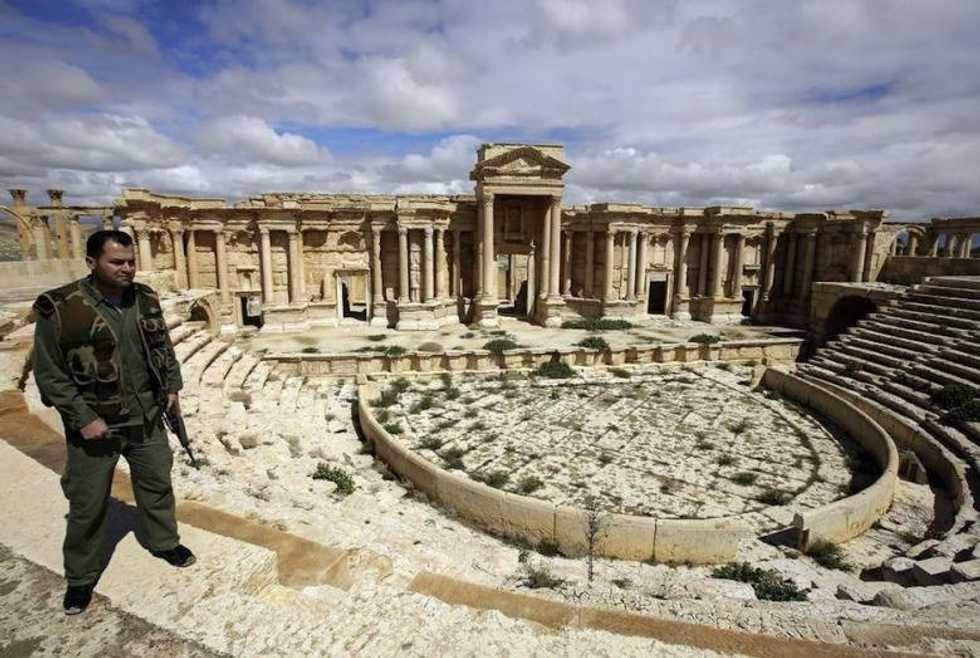
Also, just this month ISIS executed over two dozen men in the ancient amphitheater of Palmyra in Syria. The militants also destroyed two ancient Islamic shrines in the city, which is a UNESCO World Heritage Site. The act is not only murderous and brutal, it also attempts to murder the history of an ancient oasis that thrived at the height of the Byzantine Empire and the Umayyad caliphate.
The question is: why? Is it not terrorism enough to mindlessly murder innocent people, subject entire communities and countries to oppression and unbridled violence, evoke fear in neighbors and world powers alike, and seek to wipe out all who may oppose you? For ISIS, another thread weaves through the fabric of the havoc they’ve caused, and that is the assault on culture. The tricky thing is that culture does not simply perish; you can hang a man and watch him die, but you cannot murder culture in cold blood. The identities and colorful makeup of the region is an obstacle for ISIS to overcome. Each assault is met with stronger resistance (for example, restoration on the Bamiyan Buddha’s in Afghanistan, blown up by the Taliban over a decade ago, has proven effective, and full restoration is promising).
Rhetoric that ISIS-orchestrated attacks on cultural sites are based on Islam, or adhering to strict ideology, is meaningless. The destruction the group has caused across the region boils down to one goal: to inflict fear. If the cultural backbone of the region is broken, struggling to survive under the brute force of ISIS, then the people, empowered by their rich history and complex identities, should, in theory, be easier to control. If their culture is subject to the same violence they themselves are, then perhaps they will surrender.
But this agenda is backwards in so many ways. Fortunately for ISIS, history and culture are not immortal, and they can be violated to extremes. Look at Baghdad; what should be the most historically rich city in the world is a ruin of rock and rubble, subject to frequent war, and therefore constantly difficult to discover and preserve. The secrets of Mesopotamia’s capital area are lost in time, buried beneath thousands of years of volatility. However, culture can never fully be destroyed, because it's existence is not ephemeral like the lifespan of a person or the reign of a great city. Culture is, instead, in constant flux, never still enough to be captured in full and yet always accessible to those willing to dig.
A major fear is that ISIS not only stigmatizes the Muslim stereotype, but also seeks to destroy the rich history that colors the regions’ diverse cultures so intricately. Not only are lives at risk, but complex histories, from which those people most hurt by the terrorist group derive so much pride, are also now being threatened. A serious question is, how many blows can Arab culture weather? While the entirety of the region’s history cannot be murdered with a rifle or blown up with a grenade, history is what the present day makes it. What will come of it if the present day villain is seeking to erase it? A region rich in human history is being reduced to dust before our eyes, and yet its heritage is still plentiful. The duality of the issue is hard to grapple with: does ISIS’s assaults on culturally rich sites threaten the vitality of Mid-East history on a large scale, or will legacy and identity come out champion, capable of enduring even the most brutal offenses?