

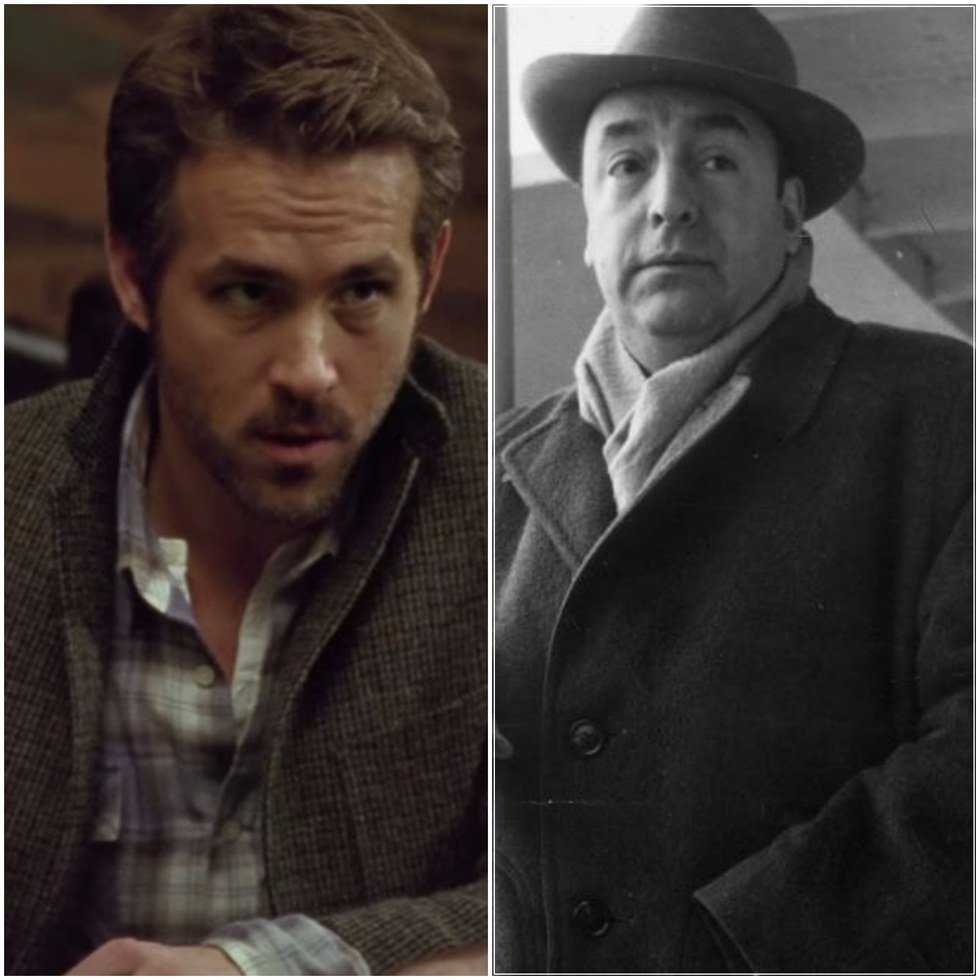
"Mississippi Grind," a road trip-gambling drama starring Ryan Reynolds and Ben Mendelsohn, was released quietly with reasonably positive reviews. A friend insisted I watch it, prompting a midnight jaunt to the Redbox.
Basically, Mendelsohn plays Gerry, a compulsive gambler who has acquired numerous debtors and consequently estranged his wife and daughter. After meeting Reynolds' character, Curtis, he thinks he has found his good-luck charm and persuades his new friend to stake him a couple thousand dollars in order that they might hit all the major casinos and big poker games along the way to New Orleans.
Curtis is hopelessly casual and insists that he doesn't care if he loses or not. Indeed, it becomes increasingly apparent there is very little he can manage to genuinely, consistently care about.
Throughout the story, his rebuttal to those who question the ends to his means is the golden claim: "The journey is the destination."
Variations of this quote have popped up in motivational speeches for as long as my short cognitive journey of life has lasted. It's been attributed to everyone from Emerson to Aerosmith. The idea is that it isn't always meeting one's goal that is most valuable, but the experiences and lessons learned along the way.
I have bought into this my whole life, but it wasn't until watching this movie that it laid its blackened hands on my conscience.
Curtis is a sucker for experience, and this quality leads him into the hearts of many -- which, as it turns out, is a dangerous place for him to be.
The recklessness produced by a destination-less man is not one which provides care for those he encounters.
He lovably swindles Gerry, leads on his girl, and retreats from his mother while operating under the aforementioned worldview.
He is loved by everyone but kept by no one. There is no principle or purpose to tether him.
As the credits rolled, I hung my head. There was a time when Curtis' lifestyle was the one I most coveted.
Curtis shares a joke with several of the characters in the movie that he will one day make his way to Macchu Picchu in Peru. By the end of the movie, Gerry goes his own way leaving Curtis' half of the winnings with an encouragement to make the joke a reality.
Curtis' final line in the film has him inviting a pretty receptionist from the hotel he's staying at to accompany him to the Incan area breaking his previous promises to his longtime love interest.
Famed poet Pablo Neruda famously visited the locale and there he wrote one of his most acclaimed poems, "The Heights of Macchu Picchu." In the first part he writes:
From the air to the air, like an empty net,
I went on through streets and thin air, arriving and
leaving behind
He describes a net which gathers nothing. I think he understood something Curtis could not.
If you live as if the destination is the journey, you will only ever spend your life "arriving and leaving behind." The destination will be, at last, loneliness. You will be very, very alone.