
The Internet is without a doubt one of humanity's greatest inventions. It's legitimately better than the wheel and the printing press while remaining slightly behind instant noodles and the ZipSeam (in all seriousness this thing looks amazing, so go check it out). And anyone can see that the Internet has only ever grown exponentially since its creation in the 1980s, which makes sense because the benefits of instant communication around the world brings way more to the table than anything that had ever come before. But what's even more interesting than the Internet's growth is its evolution of content produced and the way we users consume it.
For example, when the Internet was just starting up many years ago, it was entirely feasible to check out every new website made that day. Can you imagine trying to do that today? I don't even know if there's a website that even tracks that anymore. And while this growth has been somewhat gradual, where we are now is immensely different from where we began. The early days of the Internet required users to filter nearly all of the content by themselves, which wasn't necessarily a bad thing because of two main reasons: there wasn't as much content to filter through in the first place, and manual filtering often led to the discovery of new things that some users might have never been interested in before. But as the internet became more and more mainstream, the content we were so used to became harder and harder to sort through by ourselves. And so entered the modern Internet.
What websites do you find yourself frequenting as of late? Facebook and/or Twitter? YouTube? Maybe Reddit? All of these operate on the premise of "subscribing" or "following" a person, account, or topic. And no matter what your favorite site is, the fact that you even have a favorite site means that you're probably filtering the type of content you view. But there's nothing wrong with that! Convenience is everything nowadays because it can give you more time to be with your family, or to waste more time on their website (same difference). The personalization of content that most websites offer nowadays is great because it does in fact provide you with more content that you want to see. So while the Internet continues to grow into this massive collection of human knowledge and innovation, users everywhere are shrinking it into their own little version of the Internet. But is there anything wrong with this?
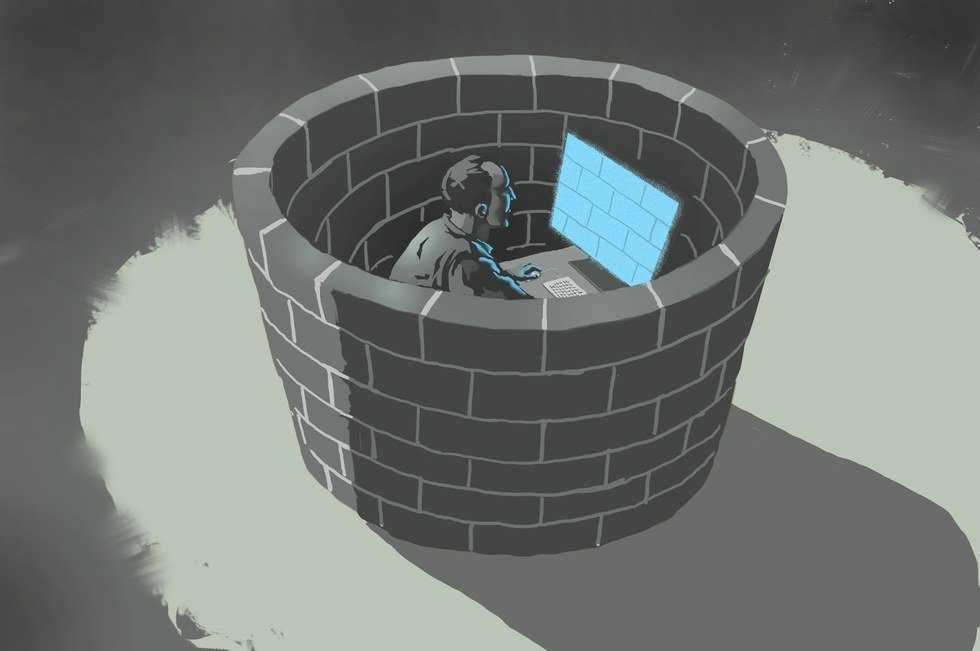
Well, when dealing with information or news media, there's the possibility of what's called an echo chamber. An echo chamber is when "information, ideas, or beliefs are amplified or reinforced by transmission and repetition inside an 'enclosed' system, where different or competing views are censored, disallowed, or otherwise underrepresented" (Wikipedia). And while being in a metaphorical echo chamber feels fun and rewarding, it tends to lead to complacency when it comes to making decisions for yourself. So only ever following people or news outlets on Facebook/Twitter that match your ideas or beliefs might end up hurting you in the long run. I've seen this first hand with people going off to college and having their views challenged for the first time ever, and it's never pretty.
So we've concluded that an echo chamber can be bad and should probably be avoided if possible, but is it even a problem when viewing content outside of news or politics? This is a tough question because entertainment is slightly different than news when it comes to the issue of filtering, but I don't think it's something to worry too much about as long as you keep a few things in mind. First things first, it's always a good idea to know why you enjoy a certain YouTube channel, musician or anything; this keeps you from wasting your time because you'll be able to tell if what you're viewing or listening to is up to par when it comes to what you enjoy from them. Another thing to remember is to keep an eye out for new content from people or groups you've never heard of before. You'll definitely end up finding some hidden gems. A great example of this that I would recommend comes from the music streaming service called Spotify. Everyone who sets up an account with them, whether you pay for premium or not, will automatically be subscribed to a "Discover Weekly" playlist. This playlist is personalized for every user and is updated every Monday with 30 songs that Spotify thinks you'll enjoy and that you've never listened to before. So it's things like this that end up making your entire experience that much more enjoyable.
Overall it's just interesting that we like to think of the Internet as this ever-expanding modern wonder when, in reality, it just ends up shrinking to match our lives anyways.