

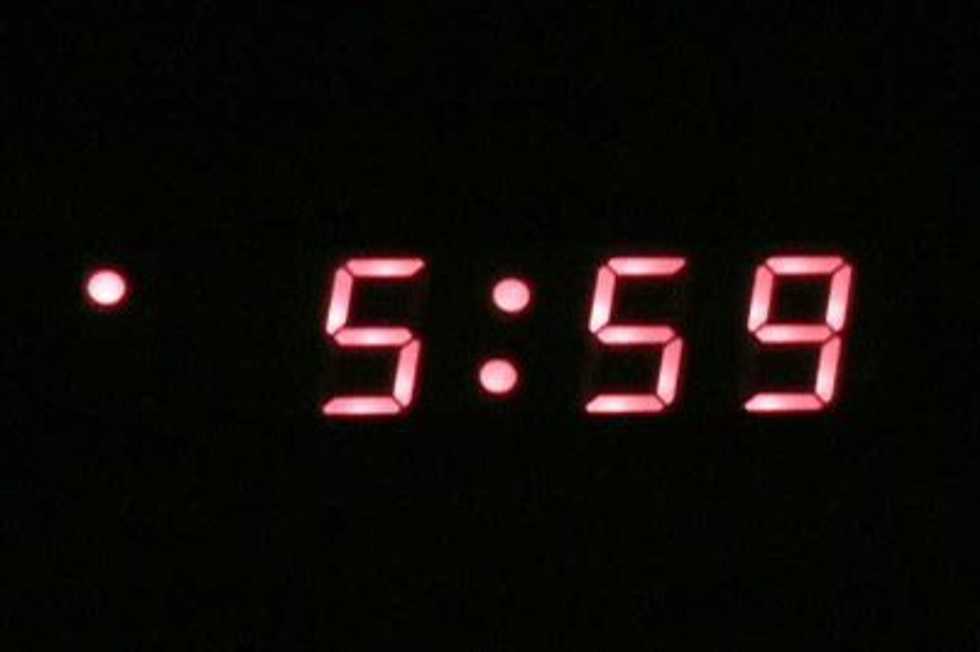
Surely, all of us are intimately familiar with the dreadful, treacherous effort it used to take to get out of bed in the morning for high school. Personally, I have years worth of memories of forcing my heavy eyelids to open at 5:45, in order to have enough time to shower, get dressed, and eat breakfast before the bus came at 6:45. My alarm clock became my mortal enemy. On those cold February mornings, it took serious convincing to bid adieu to my plushy, warm bed in order to face a seven hour day of tests and work at school.
This week, a CDC study was published that reinforced the importance of a later start time to the school day for older students in middle and high school. It’s widely understood that in a perfect world, teenagers should be getting between eight and a half and nine and a half hours of sleep every night to be the healthiest they can be. Achieving this much sleep promotes growth, focus, and stability. Despite this, the study found that less than 20 percent of middle and high schools across the country start at 8:30 or later. For an 8:30 start time, if we factor in approximately one hour necessary for transportation and morning preparation for the day, an average high school student would have to go to bed at 10:00 every night in order to meet the recommended sleep amount.
I literally cannot remember if I ever got to go to bed by 10:00 in high school. If anything, 10:00 was a time to take a momentary break from homework, a brief reprieve from a study session that would frequently last until midnight or 1:00. This was the only time I had to complete my work—most days of the week, I wouldn’t get home from school until 5:30 or 6:00, due to after-school club meetings or AP study groups. After dinner with my parents, the marathon would begin; when half of your classes are AP’s, your teachers certainly don’t skimp on the workload. To cite my own experience is not to say I had the worst of it—some of my friends who were student athletes and also held leadership roles in clubs had it even worse.
For high school students, who feel endless pressure to take the most challenging classes they can (and excel above and beyond their peers), be well-rounded and active in clubs, sports, and community service, and also balance family life and friends, sleep is often the first commodity to cross off the list—sure, running on four hours of sleep isn’t pleasant, but the body gets used to it with time. Fielding this pressure from all angles can obscure a student’s access to the reality of a situation. Yes, getting into college is important, of course—but I remember being so caught up in the rat race that I genuinely feared that one less-than-perfect grade would cost me all my hopes and dreams. Taking away valuable time from studying or from a project that could benefit from one extra hour of tinkering seemed nonsensical to my overworked brain. The reality of the situation is that, with students as driven as they are, starting school later would perhaps miss its intended goal, instead just granting a student the permission to work one more hour into the night.
The thought of starting school later—at a luxurious 8:30 a.m. or even 9:00 a.m.—is a lovely pipe dream. It’s a fun thought to entertain, but at the end of the day I can’t support it because of the reality that I know exists behind the high school experience. If school were to start that much later, a student’s entire schedule for an average day would also have to shift later in order to accommodate the change. Clubs and sports wouldn’t end until 7:30, and kids would be up until 2:30 in the morning instead of 1. No extra sleep would be gained, rendering the whole shift pointless. Plus, waking up that early for high school prepared me for the early work times that I would face in college and for internships. The real world doesn't always wait for 8:30 to get started, and high school is an important time to learn that.
I never enjoyed those 5:45 mornings, and the memories of them will always make me appreciate my 9 a.m. lectures now. But I stand by the old adage—“the early bird gets the worm”— even if that bird has to have a few cups of coffee to start his day.