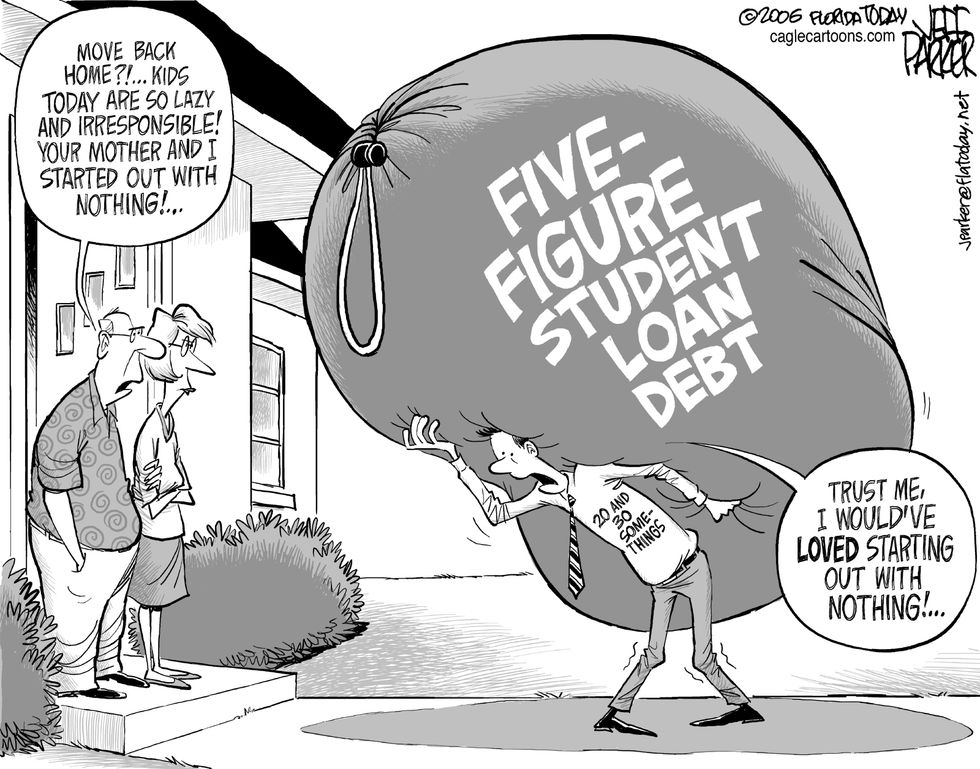
Recently, roughly $5 billion dollars worth of student loan debt was effectively lost in paperwork through the actions of the National Collegiate Student Loan Trust. What this means is that almost all of this student debt might just be wiped away because the managers of the student debts at the Trust lost the necessary paperwork to prove who owes what. While holders of student debt may rejoice, this news is hardly cause for celebration. If debt is wiped away or forgiven it means the same as if those debts were defaulted on, almost triggering the same effect as the subprime crisis of 2008. What is strikingly similar, however is the process of redistributing and holding student loan debt. The 2008 crisis came to fruition largely because of a significant default on loans through securitized mortgages that were linked to housing prices. The way student loans are handled is very same in which the banking practice of bundling and repackaging debt is utilized. It seems as if banking practices have not changed since the financial crisis of 2008 in the sense that there is still a policy of originate and redistribute.
To recap, securitization and the banking practice of originate and redistribute follows the doctrine of taking a debt owed to a bank and repackaging that debt with other debts and selling it to a third party. The system works well once it isn't linked directly to the prices of a single commodity. In the instance of the subprime mortgage crisis, these securities were tightly linked to the prices of houses and collapsed once prices fell. In this case the original banks who sold these loans to students in debt repackaged several student loan debts together in securities and sold them off to other trusts and financial institutions that now own these debts. In this instance the owners of roughly $12 billion worth of student loans is the National Collegiate Student Loan Trust. In this case, the value and worth of these student loans is not contingent on a commodity, however it is contingent on whether each student can afford to pay off their student loans.
Currently, student loans have created a roughly $108 billion market, which has made investors eager to engage. Although it is nowhere near the size of the $2 trillion mortgage market, it is still a large amount. In addition, as I wrote in a previous article on the similarities and differences between the subprime crisis and the 1930's Great Depression was that those crises were triggered by large-scale banking runs based on information asymmetries. These information asymmetries resulted from the fear of whether or not individual depositors' banks were affected by the crises, triggering a banking panic and subsequently a financial crisis. Although student loan debts amount to a fraction of the mortgage market that triggered the financial crisis, I would argue that the monetary value of the student loan market meets the threshold that may create a banking panic.