


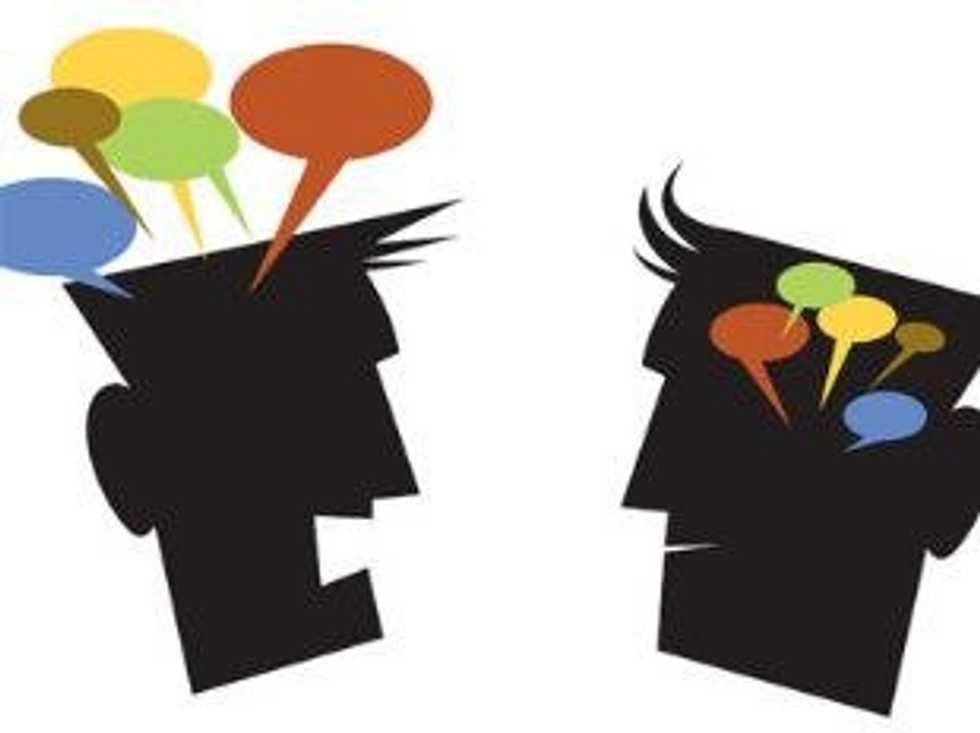
Choosing to spend a night out with friends or staying in, curled up watching a movie? For some people the answer might be one or the other, but for others, they would rather find something somewhere in the middle. Instead of these terms defining how shy or outgoing we are, it has to do with where we get our energy from.
The terms introvert and extrovert became popular thanks to Carl Jung in the 20th century.
"There is no such thing as a pure introvert or extrovert. Such a person would be in the lunatic asylum." -Carl Jung
When someone says that they are introverted, it means that they thrive off of doing things alone. They enjoy independence and aren't known for loving the idea of a big crowd. They tend to lose energy and become tired if they are around people for an extended amount of time.
Extroverts, on the other hand, gain energy from being around people. They like being in different social settings and interacting with a lot of different people, then become tired once they are alone.
According to psychologist Hans Eysenck, the difference between introverts and extroverts are that they have different levels of arousal, meaning the extent in which our minds and bodies are alert and responsive to different stimulation. Hans' theory was that extroverts require a lower rate of arousal, which means that they need to work harder to get their bodies and minds to the same 'normal' arousal state that an introvert can reach quite easily. This is why extroverts need to be around other people and seek adventure to achieve the same energy level that introverts get from being alone.
For introverts, the kind of stimulation that extroverts need can be overwhelming since introverts have a higher level of arousal, thus it is much easier for them to be stimulated. Things such as one-on-one conversations and time alone are more pleasant for introverts since they are sensitive to external stimulation.
What Makes Someone An Introvert?
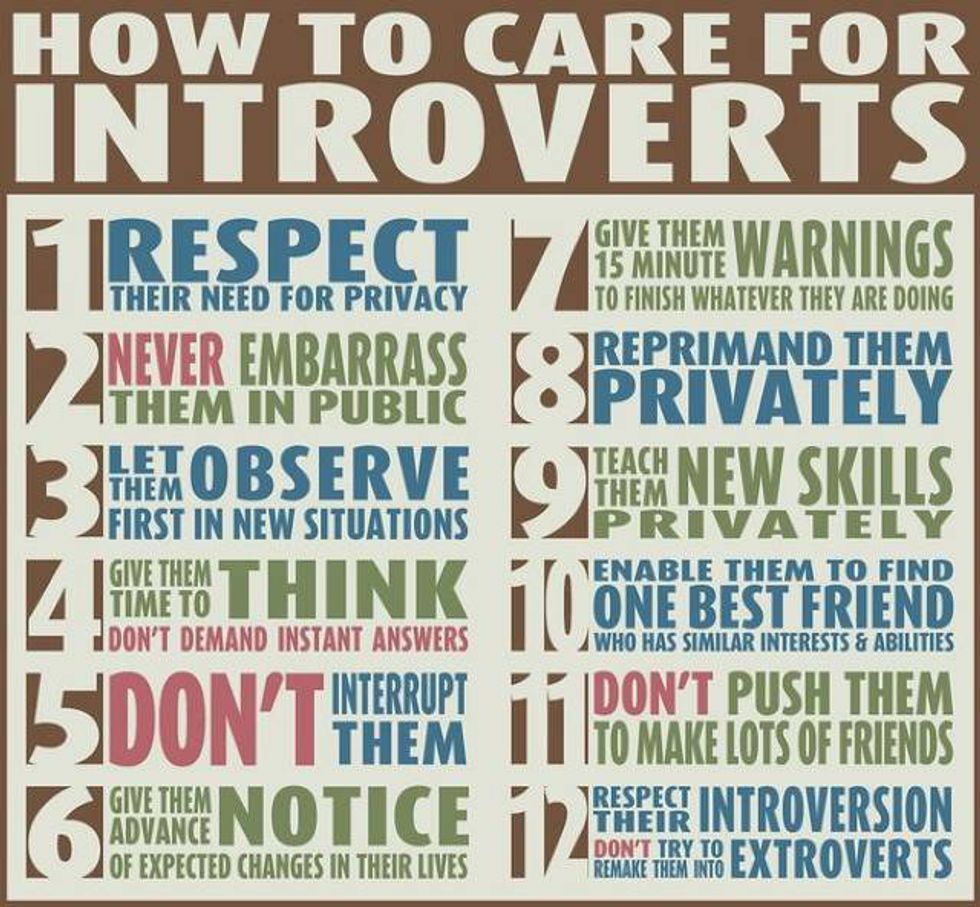
In the world today, many people point fingers at the quiet and shy ones and scream "Introvert!" when in fact it's not that at all. Introverts simply find it tiring to be around other people.
"For introverts, to be alone with our thoughts is as restorative as sleeping, as nourishing as eating."
Introverted people are those who think through what they are going to say before they say it and enjoy small, close groups of friends and often like one-on-one conversations with someone. If they do spend time with a large crowd of people they often need some alone time or time with close friends or family to "recharge."
What Makes Someone An Extrovert?
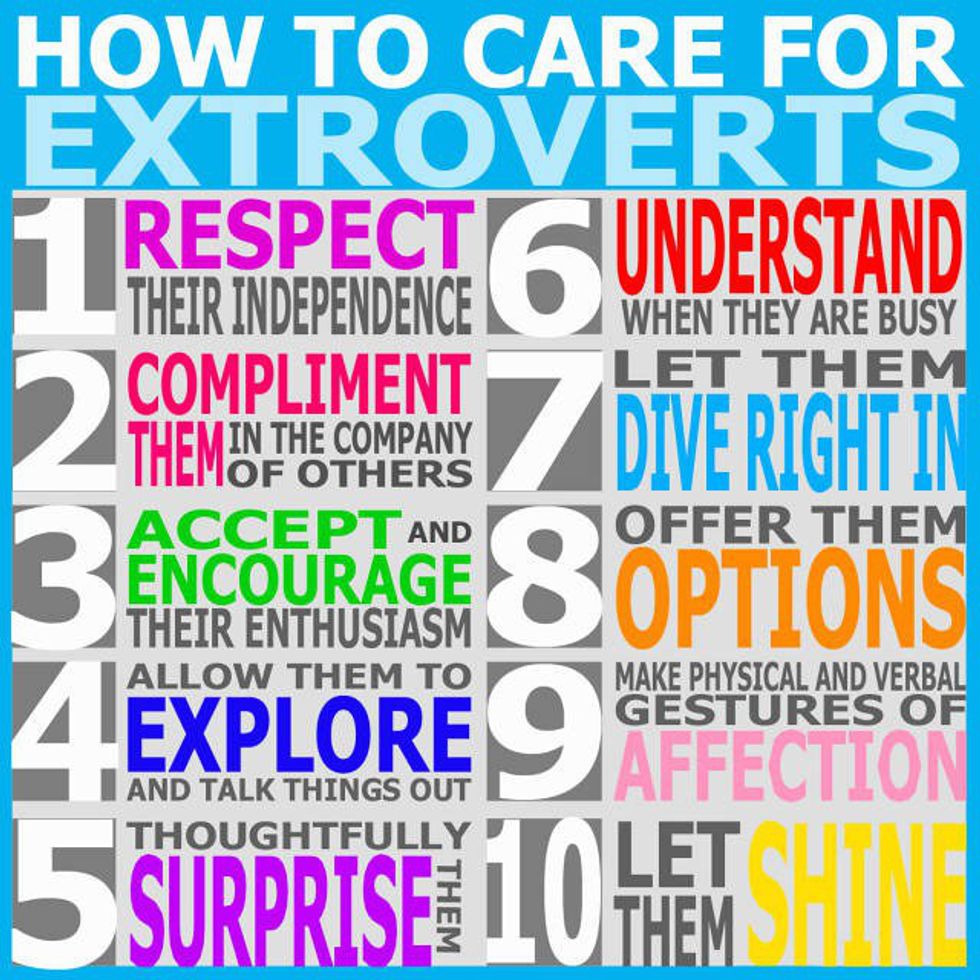
On the opposite side, we have those that are extroverted. These people are energized by others. They enjoy spending time with others, such as friends and family, which is how they "recharge" from spending time alone.
Extroverts are spontaneous and enjoy adventure. Anything that gets them out and about in the world while interacting with others.
Besides the difference in preferable social settings, research has also found that there is a difference in the way that brains of extroverted and introverted people process rewards, meaning what makes us content and happy, and how we are genetically made up.
The chemical that plays a crucial role in the brain circuits which control reward, learning, and responses to novelty, is called dopamine. Recently, a theory has linked extroversion to the function of dopamine. Does this mean that extroverts differ in how active their dopamine systems are?
Researchers at the University of Amsterdam were able to test these ideas in a paper that was published in 2005. The researchers asked participants to perform a gambling task while in something called a brain scanner. Before beginning the task, participants were asked to fill out a personality profile and had mouth swabs taken for a genetic analysis. After the task was done, the images were analyzed and showed that the brain activity differed between the extroverted volunteers and the introverted volunteers. When the gambles that they took during the task were successful, the more extroverted group showed a stronger response in two important brain regions; the nucleus accumbens and the amygdala. The amygdala is known for processing emotional stimuli, and the nucleus accumbens is an important part of the brain's reward circuit and part of the dopamine system. The results thus confirmed the theory which means that extroverts process surprising rewards differently than introverts do.
So in conclusion, an extroverts brain responds more strongly when gambles pay off, which means that they are going to enjoy adventures, risks, and social activities more. Part of this difference is in the genetic makeup of our brain. The path of the stimuli to the brain for extroverts is much shorter and runs through the area where taste, touch, and visual and auditory sensory processing take place. This explains why extroverts enjoy going out and experiencing new things and meeting new people and being spontaneous. For introverts, the path is much lengthier and runs through the area of the brain associated with remembering, planning, and solving problems. Which explains why for introverts, everything is thought out and they are meticulous with planning.

Websites:
https://mindhacks.com/2013/07/22/what-makes-an-ext...
http://www.fastcompany.com/3016031/leadership-now/...