Think about the "weirdest" job someone could have, or someone you know has. How did you react to this person's career choice? Could you ever do it yourself? Have you ever wanted to ask them a question about their job, but were afraid it was too strange or personal of a question? There are certain jobs that people often don't think about, and when they do, they are met with varying reactions.
One of my close friends, who wishes to remain anonymous out of respect for her workplace, receives these reactions every time someone asks her about her line of work. In my quest to begin a series revolving around interviewing those with jobs that may seem unconventional to the general public, I chose to interview my friend, an embalmer. For convenience, I will mark her answers with an E and mine with an M.
M: Tell us a little bit about yourself.
E: I'm a 21-year-old Mexican woman. I enjoy watching youtube documentaries, listening to music (her favorite band is Gorillaz) and I have been involved in working with the dead for a little under a year.
M: What brought you to this career path? Did you always know you wanted to become an embalmer?
E: Oh god no, I didn't always know. This was the last thing on my mind when I began pursuing careers. Initially, I wanted to become a nurse. After taking some nursing courses, I realized that the career wasn't for me.
I decided to start pursuing careers that didn't involve as much contact with people, and I began to look into Forensics. I wanted to pursue becoming an autopsy technician, but when I found embalming, I realized that was the career for me.
M: How do people react when you tell them this is your job?
E: Horrified, 90% of the time. Then they ask me ridiculous questions, like "Do they move?" (she laughs.) Most of the people who ask me are religious, and they ask me questions about how can I deal with so much death around me. T
hen the other 10% are very interested and general reactions from them are usually that it's unconventional but cool.
M: What does your job generally entail?
E: I essentially work as an Embalmer's assistant/apprentice at the moment, so I work side by side with a trained Embalmer before I go to school to be able to work on my own. I usually pick up bodies, from numerous places. Depending on the family's wishes, we will begin the embalming process.
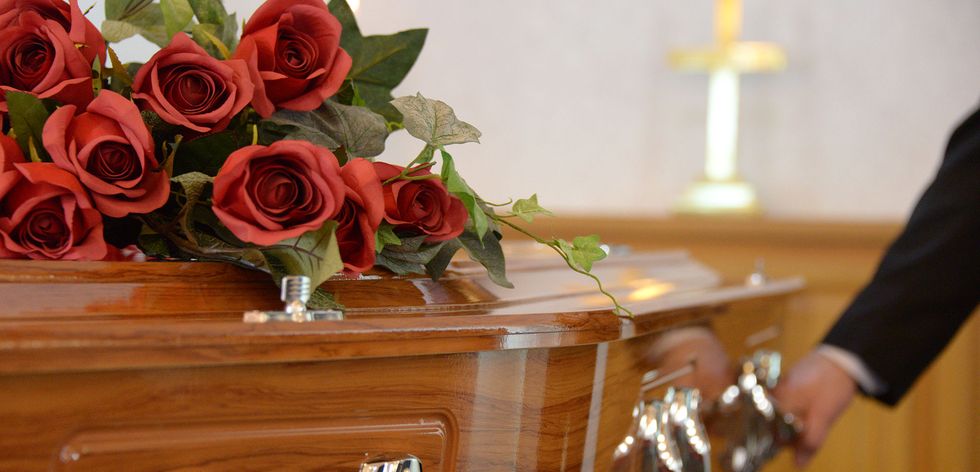
We prepare the body for viewing, which includes cleaning them, applying makeup, and dressing them. I place them in their casket, and I clean and prepare the chapels for the services, which include setting out flowers, preparing the music, and ensuring the deceased is presentable.
M: Are there any general misconceptions about your job that you wish to address/clear up?
E: Our job is much harder than it looks, and a lot of people don't understand the extensive process we go through to ensure that the deceased look the way they did before their death. We don't like death, and usually, these are family businesses. Many take this profession as an art form, trying to reverse the changes that death brings and make them look as best as they did before death.
I, personally, consider this an art form. On that same note, we are not morbid people. We still have feelings, and we are able to separate ourselves from death in some circumstances, but when it becomes more personal, we do still have to deal with the emotions and pain that comes when families deal with a loved one's death.
Many cases do stay with me, but I believe that, despite the sadness and difficulty, these experiences make me a better Embalmer, as I am able to bring comfort to the family in such a difficult time.
M: What advice would you give someone wishing to pursue this career?
E: Do it. People will tell you no and that the job is many things: disgusting, morbid, depressing, or weird. Many people are afraid of death and won't understand the desire to pursue the career, but it is worth it in the long run.
Some funeral homes will allow you to volunteer, and I would start there, to allow you to gain more of a feel whether or not this is the job for you. It is definitely not an easy job, physically, and most of the time, mentally.
M: Has having this career changed your perspective on life and death at all? Have you learned anything from career personally?
E: I know it's cliche, but you learn to appreciate life a little more. You meet many people, all sorts of ages, and you see how they die; you see the person and how they lived and how their body represents that life. When you meet the families, it becomes a very real fact that death is imminent, and can happen at any time, to anyone.
For me, it made me a more tender and understanding person, and more aware of the way I live my life and the way I am with my loved ones. You just never know, and it's a fact you become very, very aware of.
M: Are there any risks with this job, mentally and physically?
E: Mentally, I would say that many get exhausted with having to deal with so many cases and so much death. For embalmers, a lot of it is about the physical exhaustion. We work with chemicals and fumes that can be dangerous or uncomfortable to work with. We do get physical problems that cause us to sometimes retire early because we are very hands on. We lift, carry, hold bodies. It's a decision to be in this field, and it can affect you and be dangerous for you, depending on the circumstances.
M: What is your favorite part of having this job?
E: My favorite part of the job is being able to bring comfort and happiness to the families. When I can replicate a treasured photo and have the family be able to say goodbye to the loved one in the same way they looked when they lived, it's very gratifying.
This is an art form, and while it's not for everyone, it can be very beautiful to create send-offs for people that leave families feeling more comforted that their loved one was in good hands.
M: Is there anything else you would like to add?
E: We know what we are doing, and people can trust us that we will care for your loved one.
M: What are your goals for the future?
E: Hopefully, to complete my apprenticeship, go to mortuary school, and one day find a full-time job as an Embalmer at a funeral home.