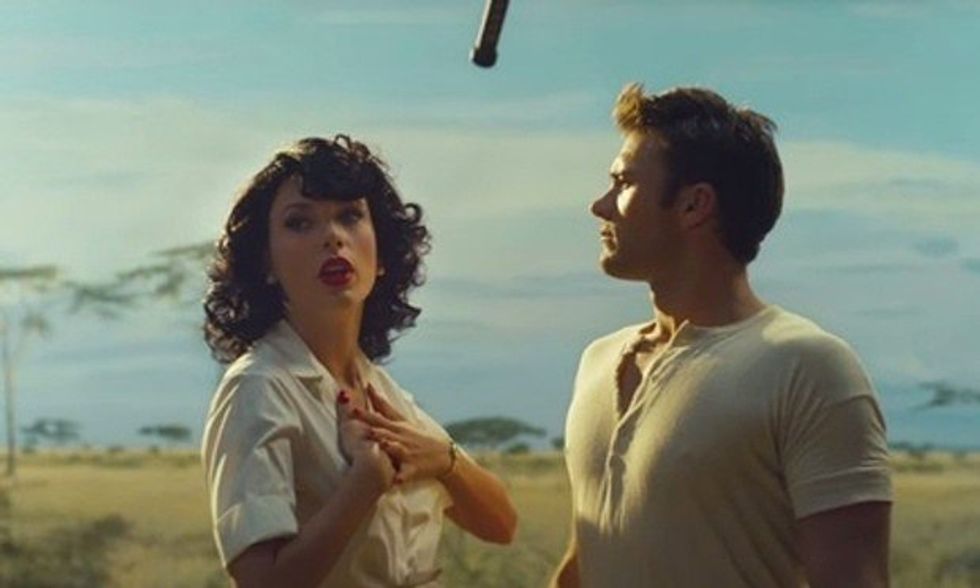
Taylor Swift’s latest music video for “Wildest Dreams,” directed by “Bad Blood” and “Blank Space” director Joseph Kahn, continues Swift’s streak of high-budget, cinematic music videos accompanying the singles off her multi-platinum album 1989. It tells the story of a 1940s movie actress (a very Elizabeth Taylor-esque Taylor Swift) and her affair with her costar (Scott Eastwood) as they film a romance set in Africa. When the premiere rolls around, Swift is taken out of her fantasy world and forced to acknowledge that her costar is engaged to another woman and therefore could never love her the way she imagined. This video offers the audience a surreal perspective of the voice and character that narrates “Wildest Dreams": a woman held hostage and ultimately heartbroken by her own romanticizing of a relationship that could never live up to her expectations. In the end, it was all in her head.
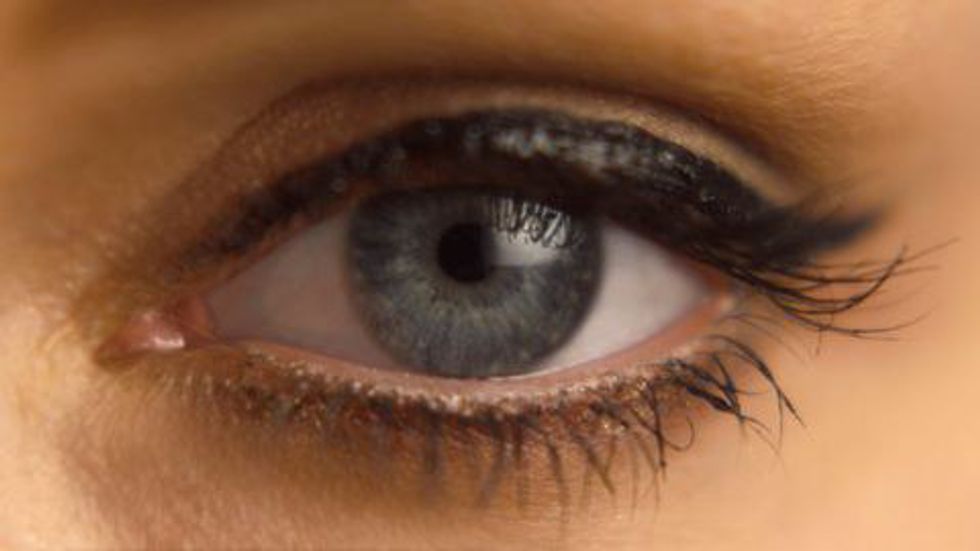
For the first part of the video, Swift is in control of the story. Her perspective is established in the first few shots: the sun fading to a large set light and a close-up of Swift’s eye communicate that Swift’s character exists in a world whose light source is artificial; the love is scripted.
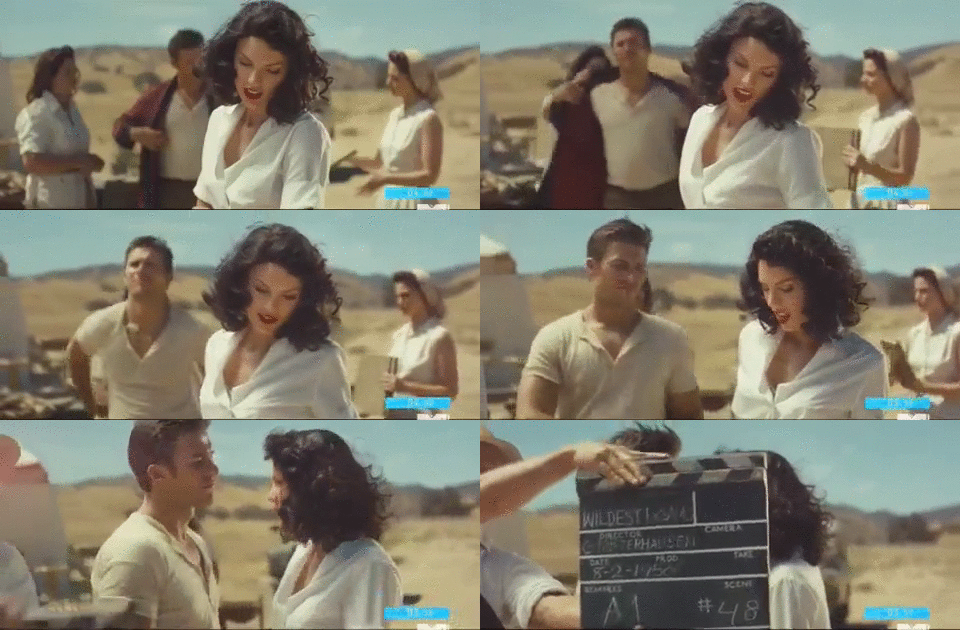
The chemistry between her and her male costar starts onscreen: they recite the words to “Wildest Dreams” as their lines, connecting the romance of the beginning of the song to the high hopes Swift has for this glamorous relationship. When the couple is lounging around a tent they’ve made all their own, the script from their movie still narrates the video: “his hands are in my hair/ his clothes are in my room” literally appearing onscreen. Their romance is interlaced with images of the wildlife landscape that frames their story. Swift’s character feels in control when she internalizes her onscreen romance and presents it as reality. As the audience, we completely believe that Swift and Eastwood are really on location in Africa and having this dramatic romance.
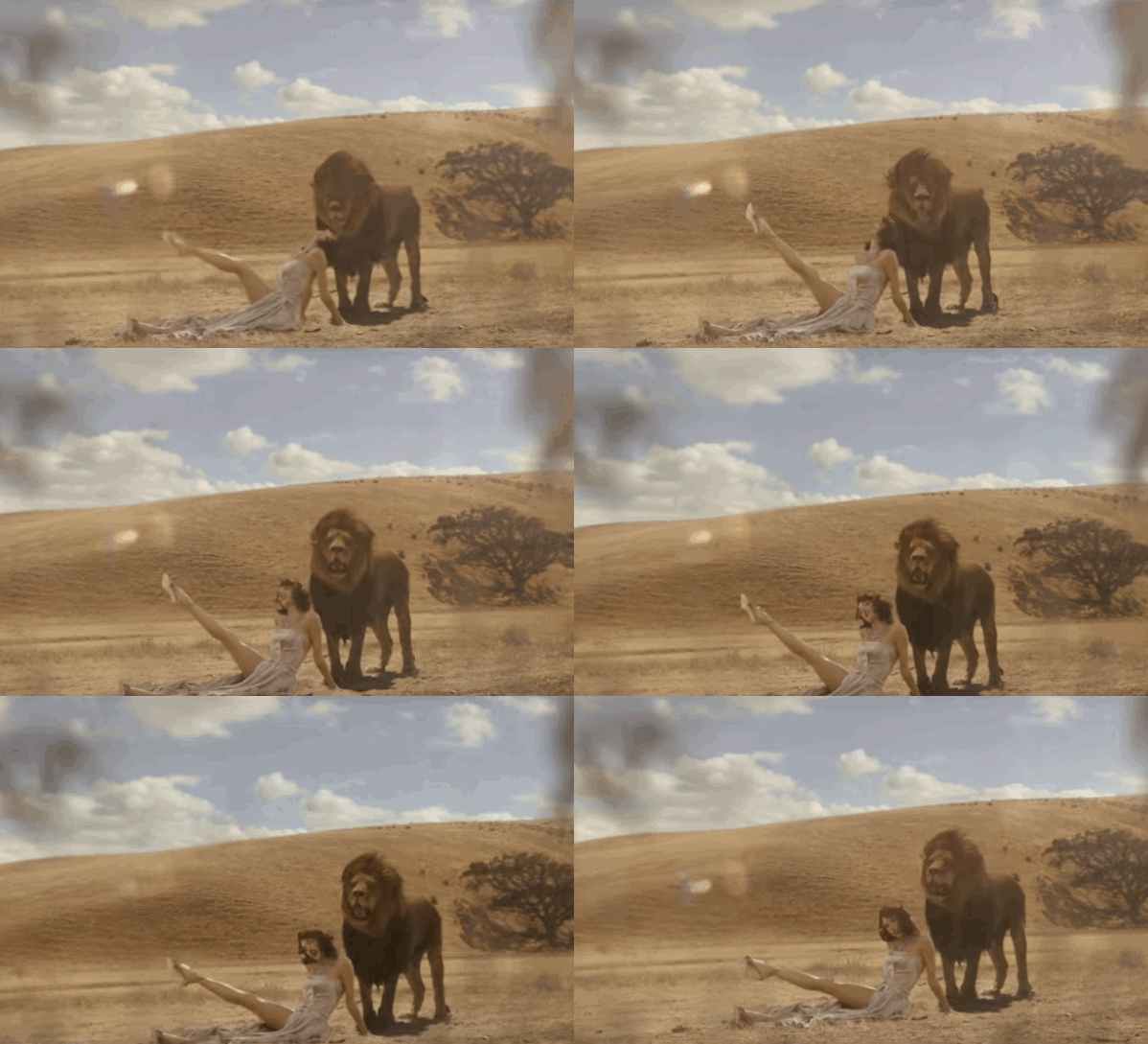
About halfway through, however, the video takes a turn for the surreal when Swift and Eastwood fight on set. Their romance is soon almost overshadowed by a fast collage of natural imagery completely separate from the film set, until the focus shifts to just Swift, the animals, and unsettling jumps from day to night and sunshine to rain, throwing off the viewer and exposing the lack of reality the entire first part of the video was based on.
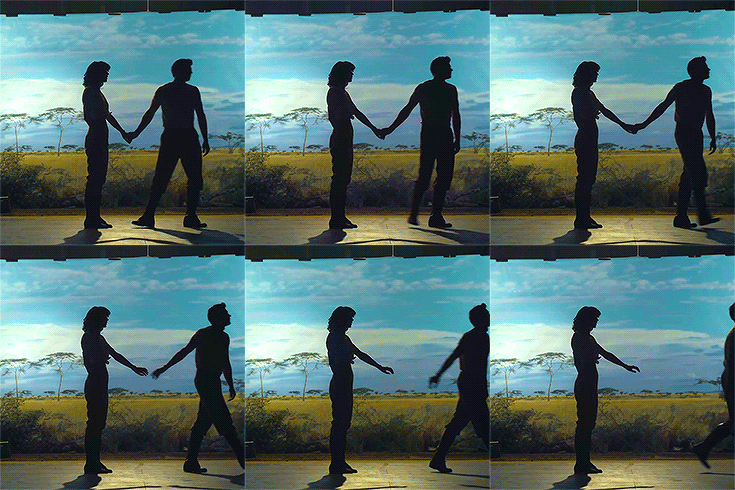
When everything slows down for the bridge, Swift and Eastwood are acting in front of a painted backdrop of Africa, in the middle of a studio. They were never in Africa. The animals on set, the plane rides over fields, and the kissing in the rain were all a part of Swift’s self-manipulation. The story she was acting out on camera was so enticing that she pretended it was really her story, that the romance was more than just a job. After this realization, Swift stops smiling. The lights on set turn off, and her artificial world is gone.
During the premiere, Swift’s character is acting once again when she tries to shake off the fact that her costar’s fiancée is present. The lights are still artificial, Swift is still just as glamorous, but she’s been taken out of the fictional world she created for herself, in the same way waking up from an amazing dream can leave a person disappointed for an entire day. In the end, Swift realizes that she was the one with the “wildest dreams” and leaves the theater, and her made-up romance, behind, but not without looking in the rear view mirror and seeing him again, even if it’s just pretend.
“Wildest Dreams” offers a look into Swift’s songwriting process: throughout her career, she’s offered us storybook endings and romantic anecdotes, but behind every writer there is an element of self-deception between the page and the song, or in this case, the screen. We all manipulate our stories and self-image, but Swift wins in her vulnerable admission of the fact in “Wildest Dreams.”