On Monday, 9/26, delegates from over 150 countries gathered in Johannesburg for a meeting of the Convention on International Trade in Endangered Species of Wild Fauna and Flora (CITES) and voted on (and subsequently passed) an international trade ban on the most trafficked mammal in the world: the pangolin. Great news, right? While it is a major step, it may be too little, too late.
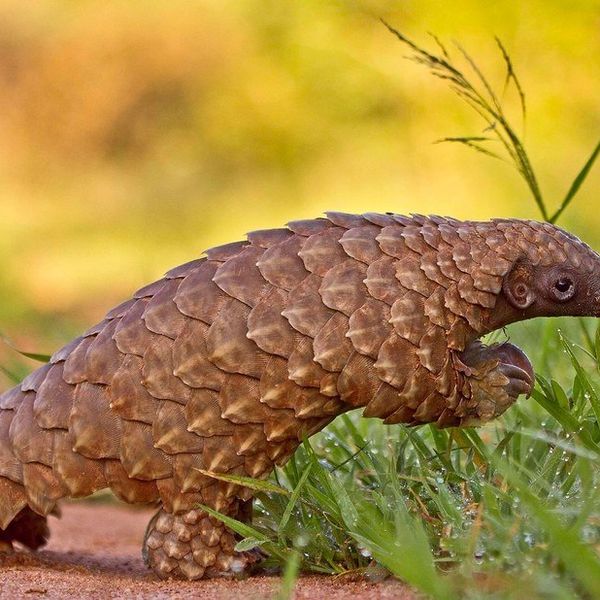
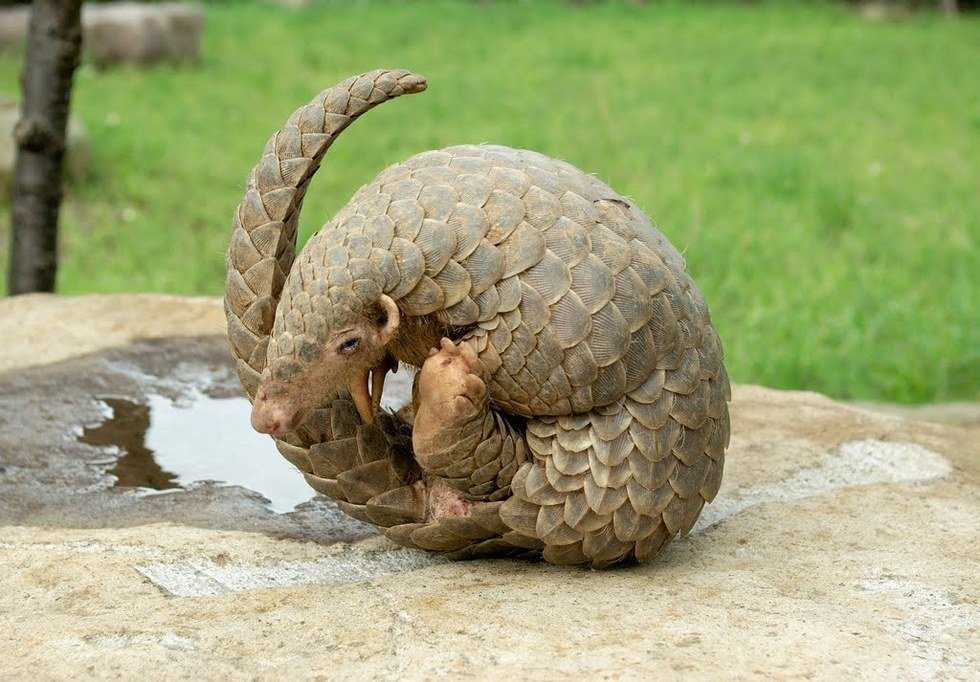
Many of you reading are probably thinking to yourselves "if it's the most trafficked mammal in the world, how come I've never heard of it?". Well, you're not alone. The pangolin is as obscure as the name might suggest. It's frequently described as "an artichoke with legs". Roughly the size of a raccoon, they are covered from head-to-toe with overlapping scales, sort of like a cross between an armadillo, aardvark, and a dragon. These scales look fairly reptilian, but are actually made from keratin, the same substance that makes up your fingernails. It is these unique scales, as well as their meat, which make them so heavily targeted. In some other countries, pangolin meat is seen as a delicacy. In China, their scales are used in traditional medicine practices. Over 1 million have been illegally traded in the last 16 years.
An international trade ban is no small victory. There are 8 species of pangolin in the world, all of which are threatened and endangered. Now, they are all protected by law. The problem is, what good is a law when the enforcement strength is unavailable? The vote was overwhelming one sided in terms of who was for and who was against, meaning countries with a current stake in trade and use were not to happy about this agreement. Now, countries which have the existing stake, illegal trafficking, and tradition, are expected to simply stop, but since enforcement is left to the individual countries, who is to say that a genuine attempt to adhere to the agreement will be made.
A step in the right direction? Yes. Is it perfect and complete? No. It is an inherit problem with situations like these. Look at Japan and its well known continued whaling practices. The nature of these agreements by vote is reliant on the good will and respect of others, as well as sheer willingness of cooperation, particularly by countries who currently see the largest benefit of such a practice. Policy of this nature can increase its effectiveness only when all involved parties are on board and committed. There is still work to be done. The pangolin may be experiencing a taste of the attention usually only seen by the likes of the famously loveable elephants, lions, and panda, but it is our moral responsibility to make sure that the spotlight continues to shine on this admittedly strange, yet adorably unique, "artichoke with legs".