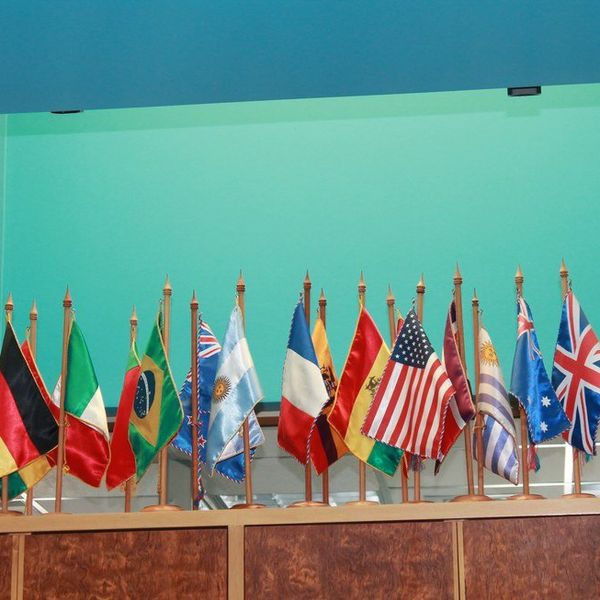

In my article from last week, I talked about the widening definition of ethnicity and how many people (like myself) have grown up in different countries and find that their ethnicity might not be as straightforward as the colour of their skin, the way they speak or what their country of citizenship is. According to the Daily Mail (http://www.dailymail.co.uk/news/article-2418902/Mo...), the number of those who have lived abroad or spent a majority of their time abroad is growing. The Daily Mail stated that the number of people living outside their homeland has surged to 232 million, the UN Population Division also reported that as of 2013, 3.2 per cent of the world’s population live outside their country of origin. The effect of this migration of people from their homelands is causing ripples in society, allowing for a more globalized understanding of the world, more places are becoming acknowledged, more stories getting told! The internet has played a large role in this development, as more videos are going viral and people are seeing more opinions that would have been harder to become aware of before.
Yet what is it like for those who have become so exposed to the world that they no longer feel like they belong to any one culture? These citizens of the world are sometimes known as TCKs (Third Culture Kids) if they have gone through this third culture since a young age. The official definition of TCK according to http://www.tckworld.com/tckdefine.html is the following, an individual who, having spent a significant part of the developmental years in a culture other than that of their parents, develops a sense of relationship to both. These TCKs can be missionary kids, diplomat kids, military brats and many other types of international learners. The great benefits of having this experience are invaluable to their lives going forward, but there are also many negatives. Below I will define five main benefits and negatives to being an international citizen. I would love to find out what you think and whether or not you identify with any of these.
1. Looking different from others around you
Positive- Being unique is not a bad thing. Being the majority race or someone who wears different clothes or ties their hair differently doesn't necessarily mean that you are weird or odd, and it can set you apart as a trendsetter!
Negative- As human beings it can be natural to want to belong or want to blend in with the society you live in. With different cultural ideas of what is the norm, it can suddenly become a lot harder to follow the crowd.
2. Thinking with a different mindset
Positive- Cultural differences and contrasting worldviews can give you an upper hand, especially at college where we are encouraged to evaluate what our own opinions and insights are!
Negative- Not being able to understand humour or the way elders addressed you can be challenging, especially when you would rather be quick at getting the joke just like your friend was.
3. Longing for the past and those left behind
Positive- You have travelled and lived in so many cultures and countries that you feel like you have a broad array of friends and family members around the world. Skype and message apps like Whatsapp are readily available for a natter.
Negative- Longing for what was can become a normal part of everyday life. You miss the people who you left behind, the memories you once shared and the family or siblings that you're missing see grow up.
4. Language cafuffle
Positive- Knowing another language other than the one you grew up with can give you a greater understanding of other people's culture and can also greatly enhance your resume in the future!
Negative- Even as a native English speaker you may struggle with grammar more than is normal because of the languages playing tag inside your brain. Your head whirs with description and experience, yet defining it clearly in a education system you may not have grown up in can be a huge struggle
5. Not fitting in with those around you
Positive- Being outside of the net of fish blindly following each other for the sake of unity can be an insightful, productive place to be. You may just be a person who understands something someone else doesn't, as a part of the experiences you have mastered.
Negative- Those around you have a strong identity in a single country, yet you feel torn between one or two or maybe more. Your heart longs for a place of knowledge in one place, not a mixture of sorts.
Not everyone has the same experience, especially as an international citizen, but some of these defining statements can be somewhat relatable to the majority. I personally grew up in England but traveled to over 10 different houses and three different schools (one of which was homeschooling under an American system!) all due to my parents jobs. After that unsettling movement as a child, we moved to Thailand where we moved house four or five times. This is where I spent my teenage years and developed in Asian society. Working with Thais closely, my family and I became accustomed to Thai culture and language, despite going to an American international school. Lastly, I ended up in America to acquire an undergraduate degree in English and International relations: yet another displacement and a new culture and experience for my young adulthood.
Tune in next week for my next article focusing on tips on being the unique self you are whether you are international or not! The benefits of accepting yourself is both confidence boosting and character building, too.