Like many other young kids, when asked at a young age what my dream for the future was, partly due to parental influence and to the naivety and idealism of my youth, I would respond with, “World peace.” As I grew older and more aware of the illogical hatred and heinous acts of violence around the world, the idea of “world peace” began to drift further and further away, a candle of hope that continued to dim with age.
When I entered college, I tried harder to reconcile why hatred exists in the world despite the shared humanity among us, from analyzing the common jealousy I felt toward some peers to the remorseless massacres and terrorism domestically and in other parts of the world. I soon came to the conclusion that a large part of hatred stems from the unknown. It is much easier to hate and judge what one is not familiar with than to take the effort to approach the situation or person with an unbiased mind, acquire information, and then form a rational opinion. Sometimes it is the fear of the unknown that serves as a catalyst for the ensuing abhorrence. But when we analyze the violence and animosity brewing around the world, and see that a significant percentage of the irrational hatred present in this world stems from religious differences and ill-conceived misconceptions about people of faith, the enigma of “world peace” no longer seems like such a faraway dream. In fact, a huge part of the answer is so close to us; something that we can all be a part of. It’s interfaith — accepting the pluralism of religion we live in, engaging in constructive interfaith dialogue, and reconciling our differences by recognizing the common shreds of our civilization. By simply familiarizing ourselves with the unknown, we can be one major step closer to world peace.
Religious tolerance may be a precondition for world peace, but one may now ask, “Well, we live in a society or at least, college campus, where religious intolerance is not seemingly an issue. So what is the importance of interfaith?” Here’s the thing — a recent and comprehensive study found that while 94 percent of Rice University students felt as if they treat people of other faiths with respect, only 57% felt as if people of other faiths treat them with respect. There is an alarming discrepancy between what we believe is “giving respect to another” and with what respect “the other” actually feels like they are receiving. This can be partly attributed to our internal biases and subconscious predispositions about those practicing or believing in other faiths and this is what interfaith dialogue works to break down. I have biases. I sometimes make presumptions about those of other faiths, none of which may be accurate, and I am constantly working to reduce those internalized prejudices. At the very least, interfaith work is about raising awareness and literacy about central parts of our friends’ and peers’ identities that we may not have any or little knowledge of. How can we expect to work together and understand one another fully without learning and appreciating our respective faiths or lack of?
Interfaith activism if of utmost importance, even on our Rice campus, because religion should not ever be a taboo topic. It just shouldn’t. Our faith or lack thereof should not be something we work to hide or sugarcoat with a façade to be viewed more pleasantly by others, and yet it so often is. We need to accept that we live in a society where religious differences will always exist, and so proudly wear these fundamental parts of ourselves on our sleeves and constructively engage in discussion about them. We risk our productivity and harmony as a community otherwise.
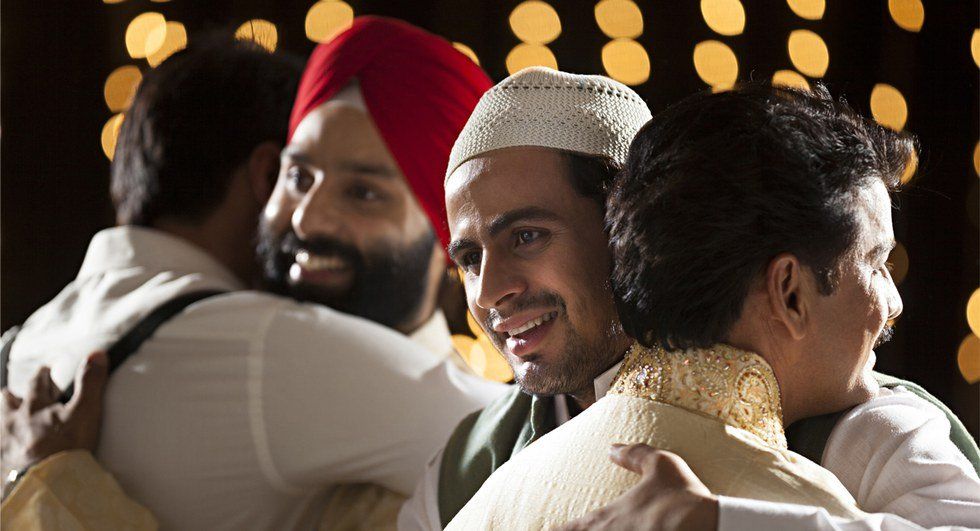
I concede — I feel a blow and almost personal defeat whenever I hear about attacks carried out due to religious differences or when I witness the presence and rise in Islamophobia. It is so hard to dispel the bloodshed, the terror, the perpetrators and victims of hatred that form stark images in my mind and question the efficacy of the interfaith we work so hard to promote. But at the same time, it is the image of Pope Francis in a group hug with Jewish and Islamic leaders, of Christians holding hands to protect Muslims in Cairo, of the candles lit by students of all faiths at a Pray for Paris vigil on campus that remind me, that amid the hatred, there is love. That for every person that first chooses to mark the religious differences among us, there is another who first recognizes our similarities in spirit. That interfaith activism and dialogue is and will always be important, and that within interfaith activism lies our greatest hope toward achieving religious tolerance and world peace.
Let’s stop believing our differences make us superior or inferior to one another. Let’s do more than tolerate our differences — let’s embrace them, cherish them, and defend them without inhibition because within these principles lie the verity of pluralism that our morals and country are so beautifully built on.
"My humanity is bound up in yours, for we can only be human together." – Desmond Tutu