
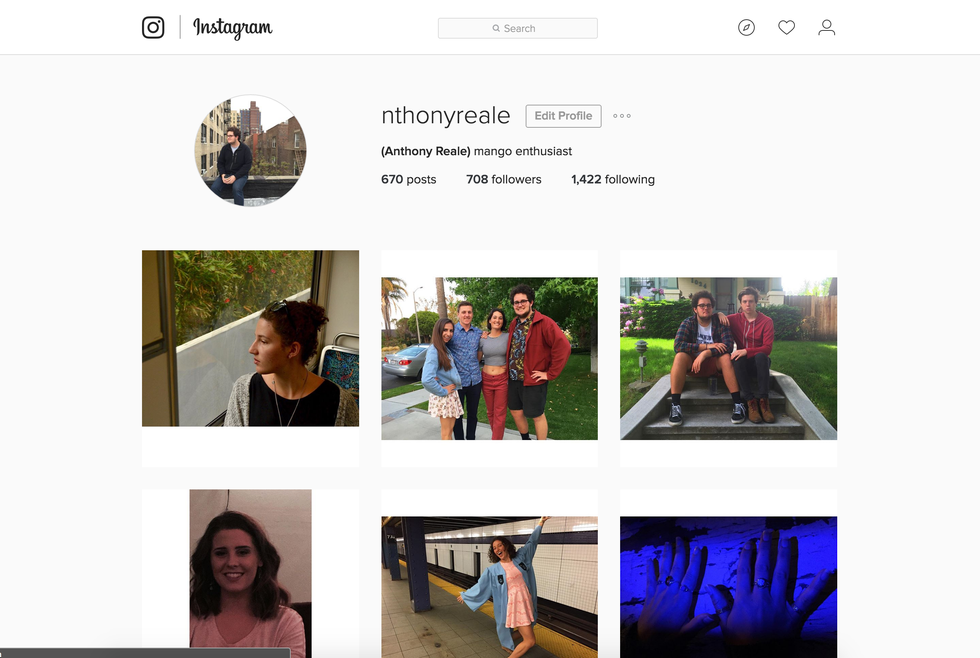
I was mindlessly scrolling through my favorite social network the other day, Instagram, and I was struck by an interesting thought. I realized that I barely talked to half the people coming up in my feed. Now, I, who some would call "the most social of the butterflies," was shocked to find that I hadn’t chatted with my friend’s date to prom in 2014 since, well, that prom in 2014. Suddenly, I found that this characterized most of my interactions on the photo-sharing platform.
So, I looked at all of my followers and who I followed. Besides the classic categories of professional photographers, #indie people, models, food blogs, dog food blogs and squirrel hunters, I found a list of friends too long for any sane person to maintain. I felt bad, seeing as this list of friends (I’m lumping in workplace acquaintances, general acquaintances, my family and the people I’ve chosen to shun) included many people that I have not spoken to in years. Don’t get me wrong, I’m not actively trying to avoid this people; rather, these people merely happen to be outside of my general zone of attention.
Because I sit in the center of not only my universe, but also everyone’s universe, I propose this: Instagram, while being a wonderful platform to share photos, is truly the social network for bad friends. We use it as a way to update ourselves on the lives of people vaguely connected to us instead of striking up a conversation via text, Facebook, etc. It’s so simple to double tap or leave a, "Yes, you look so good!" comment on someone’s photo instead of texting them, "How are you doing? I know your having a hard time right now.” That’s for friends who have the time and, more importantly, an excess of empathy for the person.
Does this make us all bad friends? Do I sound like a giant jerk for writing all this out? Well, yes and no. In this world that emphasizes convenience and efficiency, we use social media as a way to distance ourselves from things we don’t want to deal while also looking like we are "good people." Having a real conversation with someone about a tough topic when they aren’t your ride-or-die friend is difficult. So why do that when you can merely take a left turn away from the hard topics and tell them how good they look in the selfie they posted? I like to think of it as way to define who you want / need to make the time for. We can’t be everyone’s shoulder to cry on, after all.
Don’t think of me as a bad person. I really do care about the well-being of everyone. If someone’s having a bad day, then I am always game to talk with them and try to find a solution or find someone who can help them better than I can. However, it just needs to be acknowledged that some people come before others in the attention spans we have for our friends. The hierarchy of friendships isn’t really a real thing, but it does seem very real when you take a moment to think about it.
(I’m not a mean person, I swear. I just wanted to go with the tribe theme from my last article, so I came up with this. Always talk to me if you need to, friends! Always!)

















