


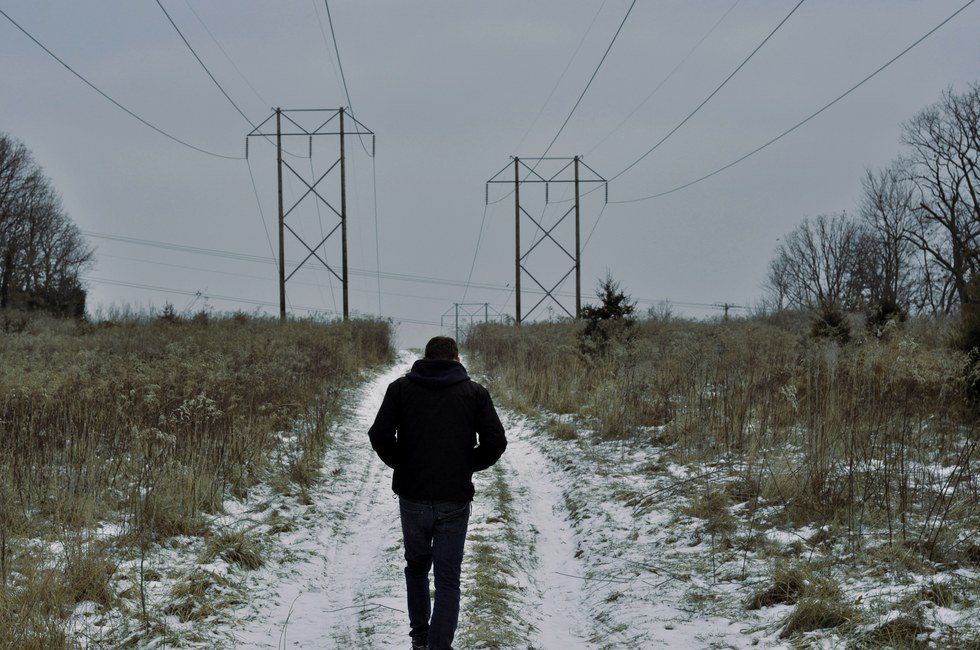
We can always begin with a walk.
Every moment when I feel awkward or at a loss for things to do, my brain thirsts for the comfort of my phone. Check Facebook, Instagram, Twitter… anything to distract me from myself. I am terrified to be alone.
Being scared of my own company is a sentiment that I feel I am not alone in experiencing. I have noticed a lot of kids my age do the same things that I do: obsessively check their phones during lulls in conversation, or watch movies instead of indulging in the company of their own thoughts.
I have found that being alone with my thoughts can be a horrifying notion. It is so much easier to go about your day doing instead of reflecting. Acting and this idea of “doing” is often a distraction, much like the pocket-sized technology that society mandates we are shackled to. Reflection upon action is a matter that I have learned in excess from being educated by Jesuits.
From a 500-year-old tradition of priests, I have learned that, while it is scary, it is OK to be alone with your thoughts. Not a lot of my generation of technology-driven millennials seem to embrace this concept, but it’s not too terribly difficult to do.
My favorite way to be alone with my thoughts is to literally be alone. I unplug myself from the world, put my electronics away, and go for a long walk. My walks and reflections have led me many places, from museums to gardens to abandoned buildings to coffee shops to libraries. It is within these walks of solidarity that I learn the most about myself, the way I think, how I reflect, why I feel certain sentiments, and what I should do about them.
Some of the most puzzling questions, the ones that come with heavy “why?”s, can always be answered with a walk. The fresh air, open sidewalk, and change of scenery, without fail, clears my tizzy mind from its frenzy of questions while providing infinite adventures along the way.
It has been from my contemplative walks that I have journeyed many places, both in my mind (in the crowded cobwebbed corners that I often refuse to address) and on the streets (in the most unexpected of adventures).
The way that I choose to reflect is one that is not original. It was introduced to me by my mother and a little bit stolen from the Jesuits. It’s pretty easy and requires only three simple steps that I will paraphrase here for brevity’s sake: 1. Recall the details of your day (or week, or whatever you are reflecting upon), 2. Identify what sticks out. What troubles you? What has been prominent or changing? 3. Pray from it. Reflection, this Ignatian Examen, has been among the most beneficial methods of pondering my life.
Even though it is scary to put my phone away and indulge in my own company, it is entirely worthwhile. I have learned so many things about myself that I would not have known otherwise.

















