

During my time as an undergrad English major, I was subject to read not only literature, but scholarly articles that prompted us to reconsider characterizations of certain characters. To be honest, I’ve forgotten some of the articles that didn’t really interest me; but there was one that I still reference when writing papers or engaged in a “friendly” debate.
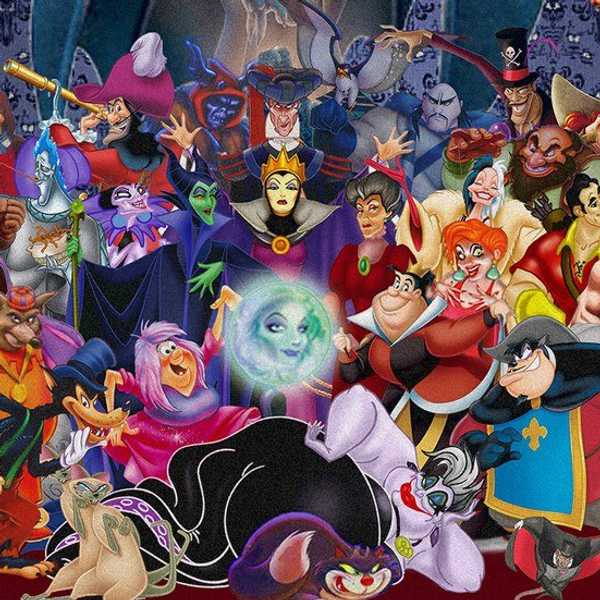
Meet Sandra Gilbert and Susan Gubar. Back in 1979, these two scholars wrote an article titled "The Madwoman in the Attic: The Woman Writer and the Nineteenth-Century Literary Imagination. Now, before you decide to abandon ship and skip out on this week’s article, consider this: What makes the old-school Disney princesses so appealing to their respective princes? Why are the “evil” witches so unappealing —aside from the obvious, that is.
As argued in Gilbert and Gubar’s article, throughout history, the desirable female characters have been presented as silent, subservient and (basically) the living dead. Jane Austen, anyone? Shakespeare? Poe? In each of these writers’ pieces, the female protagonists are presented as pale, subservient to men, and basically brain-dead with love for their male counterparts. And if they don’t begin the literary works as such, I guarantee you they will become so by the final page/act/chapters. Of course, these are all works of at least 150 years old.
Now, in the scholarly article, the authors use the terms “Angel Woman” and “Monster Woman.” Keep in mind that today’s ideals are slightly different from those in the 19th century. So when taking these titles into consideration, remember that back then, women were meant to be seen and not heard. So, think of something you’d watched recently. Or, we can do a throwback and pick apart "Rugrats" from Nickelodeon (thank you, Splat, for bringing me back to my childhood). Remember Angelica Pickles? Sure, she was just a little kid, but how undesirable was she really when compared to the kind neighbor, Suzie Carmichael? Yes, one was a bully while the other stood up for Tommy and his clan, but Angelica was a spoiled, loud, outspoken and crafty. Suzie, however, seemed to be more of a quiet, polite, proper soul. So, when applying these terms, Angelica (this is ironic) would be considered the “monster woman” while Suzie would assume the label as the “angel woman.”
Another example could be Cinderella. Although Cinderella sort of takes matters into her own hands (only to attend a ball, I might add), she is still perceived as the “angel woman”— especially in comparison to her step-sisters. Cinderella serves her step-family, too polite to fight back. Her step-sisters, however, are awarded the term “monster women” due to their boisterous actions and less-than-perfect appearances. Face it, Cinderella is thin and pale. Her step-sisters? Any adaptation of this fairy tale would portray them as “monsters.”
As someone who grew up looking up to characters such as Hermione Granger and other brave, independent female characters of lesser-known series, it’s nice to see that there isn’t much of the standard “angel woman” or “monster woman” portrayal anymore. I guess these authors are keeping up with the ever-evolving society — or are to trying, at least. There are plenty of other examples of this concept out there; I dare you, readers, to read some Fitzgerald or Poe or Shakespeare, Austen, Bronte — anyone. After all, it’s summer. Dig into your mountains of books and analyze some of your favorite characters. You’d be surprised with how behind some authors are in female character development. And, maybe, analyze yourself: Are you an angel or a monster?

















