


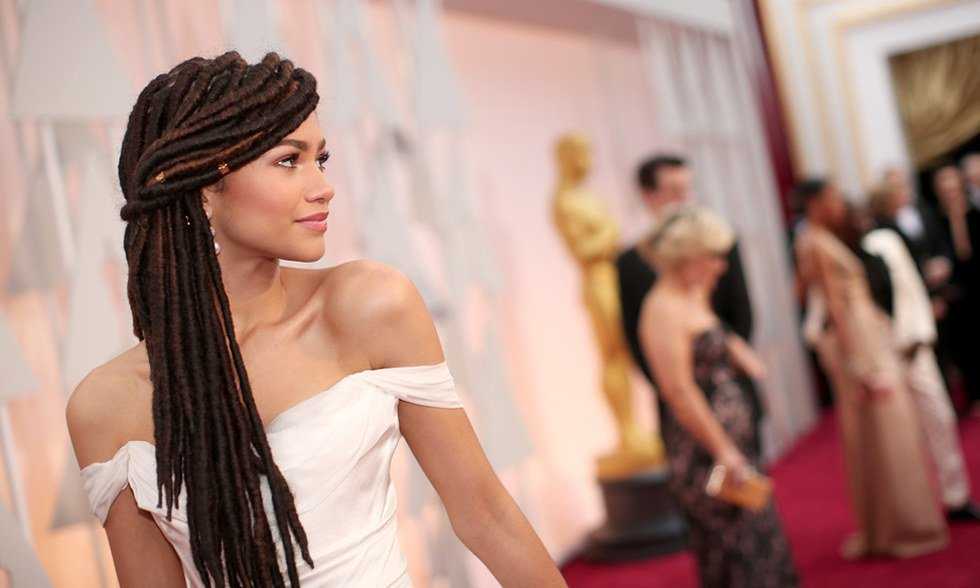
"Fashion Police" on E! TV is notorious for making off-color and offensive comments when it comes to red carpet fashions, but one recent commentary during the Oscars caused quite a commotion. During their "Oscar Special," Giuliana Rancic made a comment about Zendaya Coleman's choice of hairstyle for the event. Rancic, ignorantly joking, asserted that the Disney Channel star probably smells like "patchouli oil" or "weed" based off of nothing but her hairstyle.
This comment, of course, instantly made news headlines and set social media ablaze. In addition, many celebrities and "regular people" came to the aid of Zendaya, including Solange Knowles, Beyoncé's younger sister who is known for her natural hairstyles.
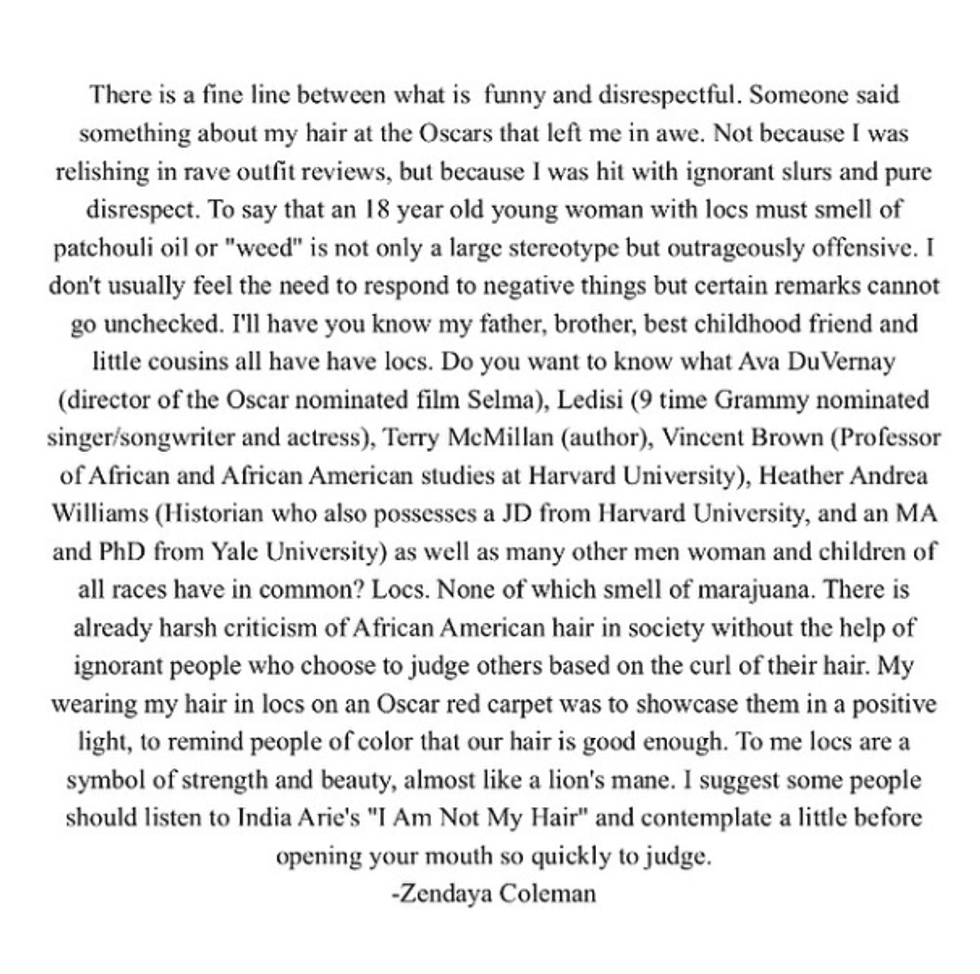
Catching wind of the comments, Zendaya was quick to respond on social media with a classy and educated response:
After receiving a massive wave of negative backlash, Rancic took to Twitter in hopes of clearing the air before making her official apology on E! News (making sure the comment section was disabled on the YouTube version).
With this entire story making its way through the airways, it began to bring up discussion about the social connotations held in western society when talking about particular hairstyles. We are taught there are certain boundaries that cannot be crossed without facing social ridicule, exclusion and/or stereotypes. Why is it considered taboo if someone decides to put their hair (whether it is natural or not) in dreads? To blindly characterize an entire human being by how they style their hair is exemplary of our narrow cultural limits.
From a personal perspective, black hair has always been something that is misunderstood by the collective society. When younger, most individuals believe that black hair is "just like theirs" until they mature a little bit. Then, we are introduced to the idea of weaves and "natural" vs "permed" or chemically treated hair. Unfortunately, due to most people's distance from individuals within this group, there then becomes a disconnect and misunderstanding.
With lack of knowledge, people can easily fall into making ignorant comments or actions, such as touching a person's hair without asking. On the other hand, this ignorance can cause one to go a nastier route in an attempt at comedy (as we have seen in this case with Zendaya and Giuliana).
Within her apology, Zendaya referenced a song by India Arie entitled "I Am Not My Hair." Within the song, India references a multitude of black hairstyles, stressing that the importance of a person lies within their soul, not from what society's expectations of them may be due to their physicality or stylistic choice.
While it is nearly impossible to know everything there is about hair, it is always a safe bet to judge someone based off of their character rather than categorizing them through predetermined schemas. What could seem "messy and unkempt" to one person could be another's way of embracing their culture, which is definitely no easy task within our assimilationist society.

















