It’s always weird to see something local be broadcast on national news. We see Huntington on WSAZ every day, but we rarely see it on CNN. I’m sure many people in our area have, by now, read the CNN article titled “In America's drug death capital: How heroin is scarring the next generation,” offering a detailed look into Huntington’s drug problem. The title breaks my heart and so does the article.
I have so many thoughts. I don’t want Huntington to be portrayed this way, but I also know it’s reality. People suffer in all places, in all different ways, even when we don’t see them ourselves. It’s hard to acknowledge the darkness that happens all around us, especially when this isn’t the Huntington that I see. I want to say that this isn’t Huntington, but we all have to admit that statistics don’t lie. It is part of Huntington.
Pictured at the top of the CNN story is Marcum Terrace, sitting on an eerily empty street with a lone rocking horse, absent of children and adults alike. I’m trying to see this picture from an outsider’s perspective. I would probably get chills, as I always do when I read stories about lonely towns plagued by addiction. But I can’t help but see it from my perspective—as a place where I learned and cemented positive memories. One morning, as I worked on a campaign, I stepped into our office and was handed a walk list for Marcum Terrace. I was scared because of the negative stereotype pinned on the neighborhood. But then I walked through the public housing apartments greeted with “hello’s,” people asking if I needed help finding addresses, and friendly couples inviting me inside. Children were coming home from school and seniors watched them from behind the doors.
That experience fundamentally changed my view of humanity. Even in places like Marcum Terrace, that have a bad reputation and suffer from problems, the majority of people are good. In fact, they were nicer than average. Some were excited that I cared about their voice and their vote. Their faces lit up as I checked for their names on my clipboard. Maybe some of the people I talked to were addicts. Maybe they were fighting their own battles at the time. But they didn’t hurt me. They didn’t try to steal. They didn't say one harsh word. They were just people; flawed, like we all are.
Then, there’s the side of Huntington that locals get to see—the one that isn’t on CNN. Every day, I get up and go to Marshall University, where I get to be around smart, funny, driven, passionate people who make me feel at home. Marshall is the heart of our community. If you go to Huntington and say “We Are…” the people will no doubt yell back, “Marshall!” even though they aren’t students. I got to walk to our convocation this year with a herd of new freshmen and people had their heads out of their windows cheering us on, repeating the chant. Our sense of community always touches me and makes me realize how lucky I am.
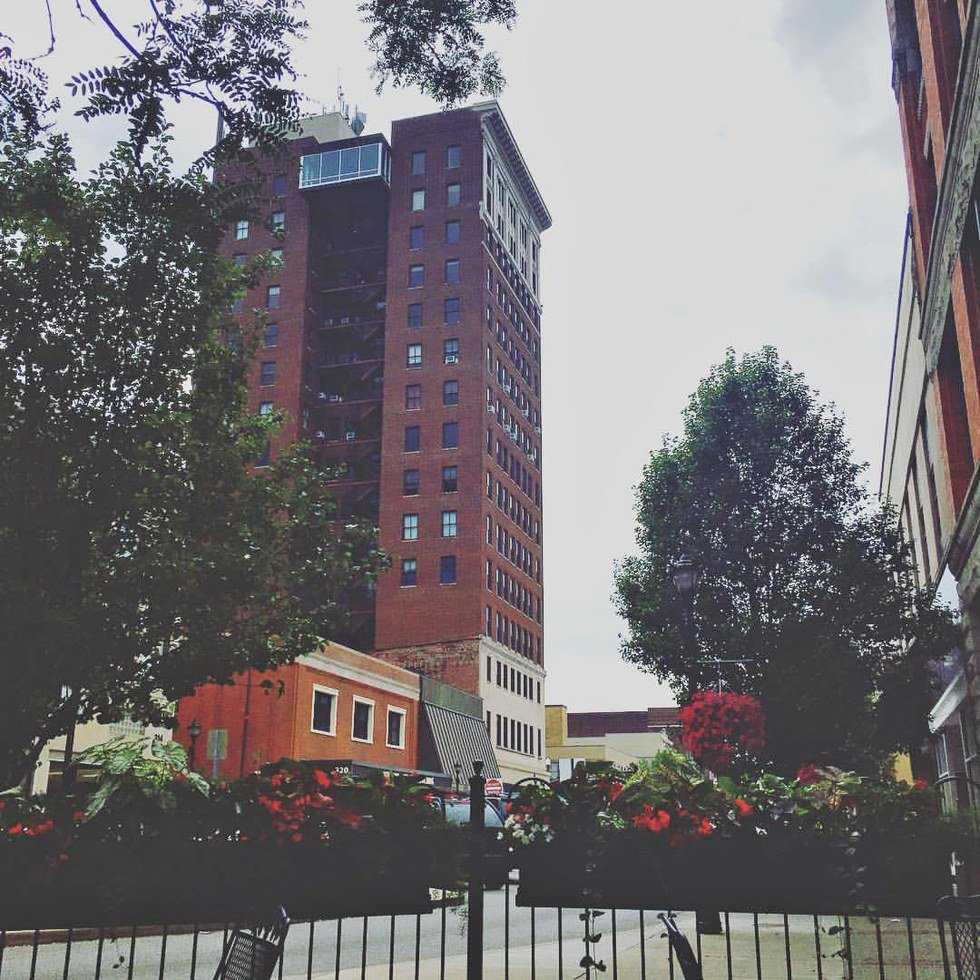
You also don’t see our expanding downtown, local restaurants, innovative medical and research facilities, our local festivals, and our parks. Marshall just got our own bus system and our engineering building has the first green roof in the area. You can have coffee with Mayor Williams on campus each month, and he’ll probably greet you with a smile and a hug. If you go around town or to the parks, you can find little book drop-off boxes when people leave a book for others and borrow one to read. There are always books inside.
After tragedies strike, you often see a quote from Mr. Rodgers being shared: “When I was a boy and I would see scary things in the news, my mother would say to me, ‘Look for the helpers. You will always find people who are helping.’”
When I see Huntington, I see the helpers.