
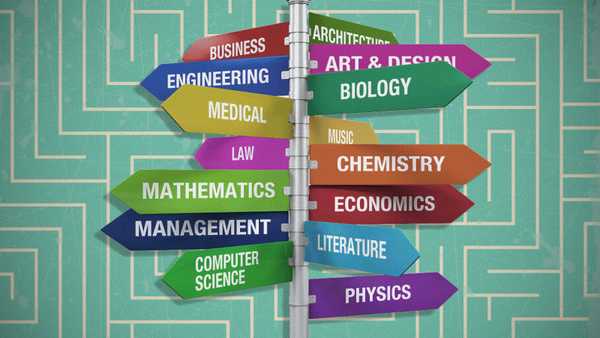

There are all kinds of reasons you might not know what you want to major in. For me, it was the problem of being interested in everything. I had no desire to pick one program of study and I was scared to limit myself to one field of potential career paths. I wanted to try peace studies, social work, economics, art, English, communications and journalism. That sounds like a doable combination, right? My parents thought so too.
First, you should know that many majors are pretty flexible in terms of what you do with them. You can pair almost anything with education and learn how to teach that subject, or you can do research and become a professor, or you can pursue graduate options in that field or a completely different one. Your undergraduate major might give you a great deal of clarity on what to do with your life, but if it doesn't, don't worry: mine didn't either.
So, find a list of your school's majors. Cross out all the ones that you would absolutely refuse to study. Leave all the ones you would ever consider. This gives you some decision-making practice.
Then, do some digging. Which of those programs is the best at your school? Talk to some older students or read online reviews and find out more about the professors and how they teach. Keep in mind, if you don't like the way certain classes are structured or are frustrated by who teaches them, it won't even matter what subject they are about.
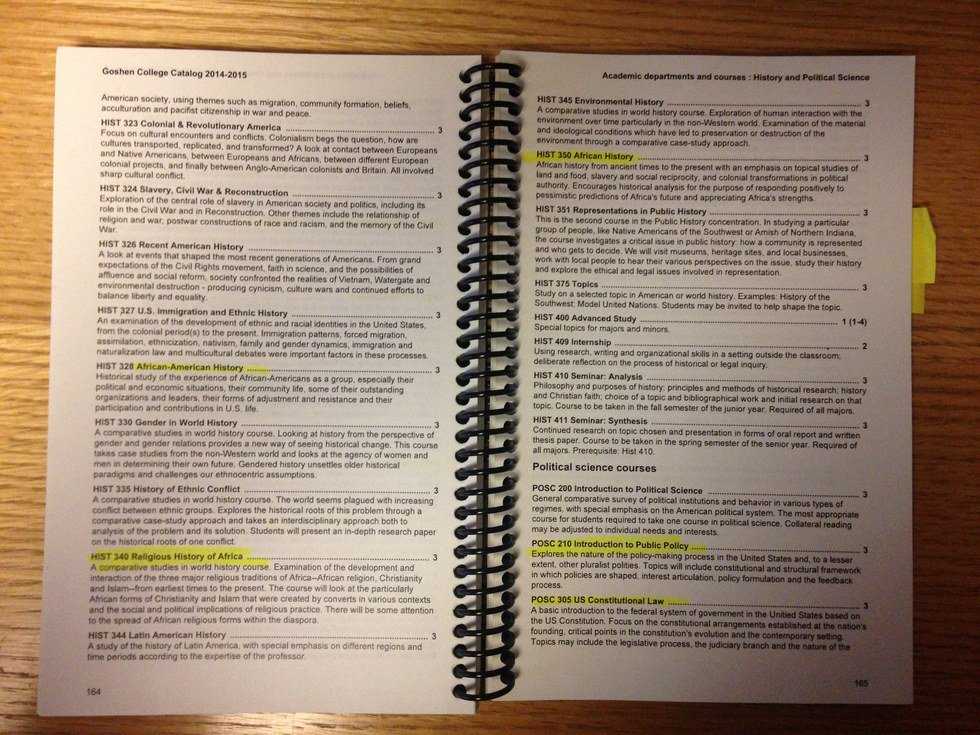
Once you have a sense for which departments to look in, pull out your school's course catalog. Take some time and read the descriptions of all the courses in the majors you're considering. Highlight all the classes you want to take. Afterwards, go back through the course catalog and count them up. Which major has the most classes you want to take? When I did this, it pointed clearly to peace studies, so that's what I declared.
I decided to look into some further options: what about double majoring? Or minoring? This is when it's important to read through the course requirements for the different programs you are considering. How many credit hours do they require? What will you have time for? I've declared and un-declared a whole collection of minors along the way.
Here's another important step: take classes. Figure out how different professors operate. Figure out your own learning style and how sustainable certain classes are for you. Maybe you can do well in lots of types of classes, but which ones do you enjoy the most? Are you better at papers or tests? Which subjects hold your attention? Which professors do you get along with the most?
Finally, don't be afraid to re-evaluate. After a year of college, I had taken classes in peace studies, art, economics, religion, and a couple of other subjects. I started to notice a gaping hole in my knowledge: history. Recent world history is something that I simultaneously knew nothing and cared a lot about. So I went back to my course catalog and highlighted all the classes I still wanted to take (in a different color, of course). I counted them up and this time, things pointed clearly to history. I talked to my parents, I talked to my friends, I talked to my advisers, and I talked to some history students. I figured out that it was possible for me to double-major in history and peace studies, and that's where I'm at now. I'm really excited by how complementary my majors are. How did I ever think I could create peace in the world without understanding the history of conflict? If you're considering multiple programs, think about how they intersect. That might be one place to go for career guidance: what jobs would include both (or all) of your interests?
Throughout the whole process, I got better at understanding myself and my preferences. Keep in mind that it's okay to change your mind - most people do. If you don't like your program after a year or two, talk to your advisor about your options. Practice making decisions based on what's best for you - it's a healthy habit to develop in all realms of life.

















