With social media becoming more popular every year, it is important to recognize the effects that it can have on our mental health. While social media usually has a bad reputation amongst older adults and parents, there are multiple benefits to using social media that can actually help people cope with their mental illness. With 22.1% of young adults aged 18 to 25 having some type of mental illness, it is important to understand how social media affects us (Mir). While young adults may be the group who is most affected by the use of social media, it is important to recognize that the use of social media can affect anyone, including older adults. There is a disconnect in the use of social media between generations, as older adults are less likely to be using social media than teens and children. It is also important for older adults and specifically parents to become more familiar with social media as it will allow them to be more knowledgeable of possible symptoms of a mental health disorder in their children.
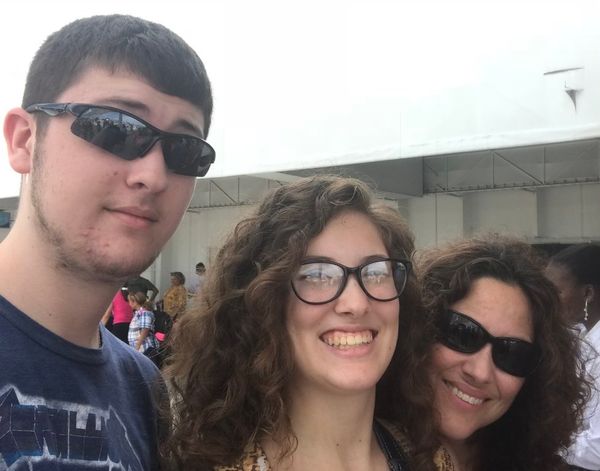
My Story: Throughout my life, I have struggled with social anxiety. As a young kid, I was constantly considered the "shy" kid. I cried everyday in my one year of preschool. While everyone just believed me to be reserved and shy, I was really crying out of fear of being in an unfamiliar situation with people I did not know. This anxiety continued throughout the majority of my life. I could barely order my own food at a restaurant, I avoided going up to cashiers as I feared embarrassment, and I would become extremely nervous anytime I was driving somewhere that I did not know, in fear that something would happen and I would have to talk to strangers.
Social media actually benefited me in coping with my struggle. On the photo sharing site Instagram, I would ask my followers on my more personal and private account advice they had about dealing with anxiety. I received so many replies from my friends and people also reached out to me offering to talk if I needed to. One example is a post I made on August 11th, 2018. While I had made great progress in going out more, I was having a difficult week as I struggled to get outside and connect with my friends and family. I made a post asking my followers for help, asking if "Anyone has some stress relief activities I could start working on?". I did not know what to expect, as it was really only my close friends who knew what I was dealing with. Almost instantly after I made the post, people started commenting ideas to help me. Some were small, such as my friend Evan telling me to shoot the basketball around since it is my favorite sport. While most of the comments were small things to do, my friend Melissa offered me encouraging words for me to push forward. As someone who has had her own battles against both anxiety and depression, her words meant a great deal to me. She commented about different things to do such as napping, going to a gym, taking deep breaths, and to go for a walk around our town. She also wrote, "You're a wonderful person and you deserve to be happy and healthy. It's okay to be selfish sometimes. Take care of yourself". Seeing my close friends like Melissa encourage me to take care of myself and to fight struck a chord in me. I felt meaningful and like I had a purpose. Having always been the one who was helping my friends with their problems, it was such a great feeling seeing these same people help me when I needed it the most.
Social media has also allowed me to meet people online. During my middle school years, I played a lot of video games as it was an escape from the real world for me. On one of the games I played, I met one of my best friends Charlie. Despite not knowing each other and playing a random online video game, it turned out that Charlie only lived 40 minutes away from me. He is about the same age as me and we are now both freshman in college. Without having been online, I would not have met one of the most important people in my life.
I began to feel more confident in being around other people and I started going places more often. One great example is my best friend convincing me to come with our friend group to Boston to try hot pot food for the first time. None of this would have been possible without me using social media. This friend group formulated junior year since we all had a lot of classes together. We used an Instagram group chat to talk and send memes to each other. Over time, we all became very close and I am still friends with all of them today. Without all the long nights of talking and joking around in the chat, I would have been in a much different place in my life. I would not have gained the confidence to go out more with them and to explore the world, as I did when we went to Boston. That day was endless fun with my friends, but it meant a lot more to me since I had gained enough courage to take a random trip to a city without my family. I would not have been able to do it if we didn't use social media to become so close. It gave me a screen to talk to people rather than having to talk in person, which was at the time difficult for me to do so.
Current Conversations: While most people are talking about the negative impacts of social media on young adults mental health, the benefits are often overlooked. Social media is a great platform to stay connected with current friends and family as well as creating opportunities to meet new people. Much of the current conversation surrounding social media use and young adults mental health is that social media does have a negative effect on people's health and that the benefits are small and do not outweigh the negative impacts. This stigma has resulted from a lack of studies completed on the effects of social media use on mental health. The studies that have been conducted have shown negative impacts, such as a University of Pittsburgh study that found that people who use social media more often are 2.2 times likely to report body image and and eating concerns (Primack). With no long term studies done and social media changing everyday, it is difficult to find long term results of social media use on people's health. This stigma has also resulted from older generations of people viewing social media as a negative aspect of life despite not being completely knowledgeable of how it works. Breaking this stigma is important as it will allow for older adults to understand the potential benefits of social media on mental health.
Benefits: Social media is a great way to become more connected with your peers and family, especially for college students since friends from high school probably went to different universities. Being able to keep up with their lives through the posts they make is encouraging and can bring a smile to one's face. An interesting study was done by Brian Primack where he and his colleagues looked at how experiences on social media can relate to depression. While this article showed both positive and negative impacts of social media use, negative experiences were stronger which could contribute more to depression. While this doesn't seem to be a benefit, it is important to know that the study also talks about how people have a negativity bias where bad experiences tend to outweigh the good experiences. A negativity bias is a psychological impact where despite having events that hold the same strength, negative experiences have more of an effect compared to positive experiences. It is important to recognize this bias as it can be used to find experiences online that can have a negative impact. Avoiding these risks and recognizing that people have a negativity bias can help people better understand how to use social media positively, and to understand where their feelings are coming from. With being able to recognize this bias, it'll be easier for people to look for their positive experiences online, helping contribute to a better mental health. It will also allow people to realize the positive experiences in their lives. Social media also allows people to meet new people. The amount of explore pages and communities on social media are extensive, and there's some type of group for everyone. Peer-to-peer support groups allow for people to talk to others who are dealing with the same mental illnesses as them. These groups can work to meet new people, and to help people cope with their mental illness. Another interesting thing some people do will be to post things that make them happy throughout the day, in hopes to promote positivity throughout other people's day. Katie Hurley posted an Odyssey article explaining how she promoted positivity through a facebook group called "Marvel at the Ordinary" where herself and others could post things they were grateful for throughout the day. Using social media as a connection platform can help benefit people's mental health. One interesting development I found in my research is how the use of social media can help treat depression in cancer patients. In a meta-study conducted by Hamid Reza Farpour, he found that "A systematic review of social media use in chronic disease by Patel et al., (2015) showed that using social media to provide social, emotional, or experiential support in chronic disease appears most likely to improve patient care in chronic disease such as cancer" (Farpour/Patel). While social media will not help cure a person's cancer, the use of it may help alleviate some of the emotional struggles of people dealing with the disease.
Parents can use social media to be able to recognize their kid's symptoms of a mental health disorder. PSYCOM writer Katie Hurley writes about how parents should ask more questions about their teen's social media habits. Hurley writes that the parents should ask what types of social media platforms their teens use and when difficult moments arise online, parents should ask how their teens would handle it and why (Hurley). Parents should also make sure to ask questions and to talk often with their teen about social media. Parents can share interesting or funny accounts with their teen on Instagram or Facebook and talk to them about their own social media experiences. Promoting positive use of social media can help parents deal with the risks their teens take when using the different social platforms.
It is also important to create a positive feed for yourself. Following inspirational accounts and accounts that share things that interest you is a great way to create your timeline. Being able to see the things that make you most happy is an easy and effective way of promoting positivity on your social media accounts.
Social media can both benefit and harm people who are struggling with mental health. Finding a balance and using the benefits of social media can help make it easier for people to cope with their illness and become connected with others who may share a similar illness. An educated use of social media can make it easier for a person to find support in dealing with their mental illness.