
When I first came to Williams, I was set on being a chemistry major with a concentration (similar to a minor) in neuroscience. Three summers of chemistry research hadn't turned me off from scientific research and although my favorite subject was only available as a concentration, chemistry was my favorite (or rather, most tolerable) of the three basic sciences. However, the pre-med requirements and their convenient overlap with the chemistry major was what convinced me the most. Overall, it was a sensible and pragmatic choice of a major.
Then I met the Russians.
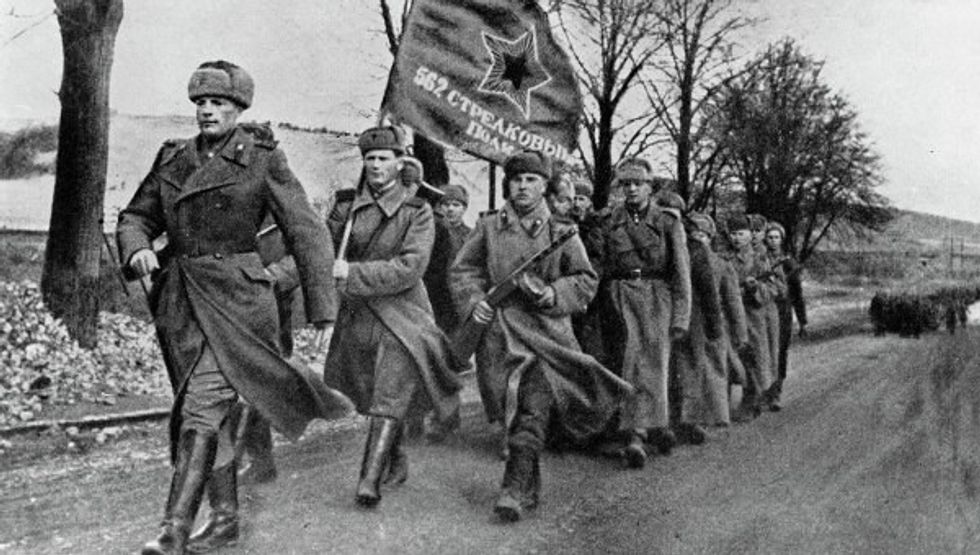
I always had an interest in Russian culture ever since I've played the works of Tchaikovsky, Shostakovich, and Rachmaninov in the orchestra, in addition to reading the novels of Dostoyevsky and Tolstoy. I had learned a little bit of the language and thought that college would be a great opportunity to increase my fluency.
Russian quickly became my favorite class and I found myself wanting to learn more about the language and the culture, and even study abroad. That would make Russian a natural choice for a major, but I found myself hesitant for much of the semester because of the lack of practicality and potential scheduling issues.
It wasn't until I was interested in what appeared so counter-intuitive to my desired career path did I realize the pressures of choosing a major in an economy where a degree cannot guarantee a job. At least for pre-med students, we are technically free to major in anything and humanities majors are even seen as more attractive in the eyes of medical school admissions. Still, there is always the perceived need for a plan B in case pre-med students don't get into medical school or decide medical school is not for them far too late to change their major to something more "marketable." This pressure is only greater for a vast majority of other college students, particularly ones who aren't even sure what they want to do.
Regardless, there are virtues to studying Russian that went beyond my interest in the subject. Beyond the obvious language skills, looking at a culture that is neither completely West nor East allows me to gain another perspective. The means of learning that new perspective range from the way certain sayings differ between English and Russian, mannerisms, themes in literature, food, and history among other means.
Even if I do not work with many Russians during my professional life, I can better understand and communicate with people, skills that are important for any type of career.
Russian might not seem directly relevant to medicine as biology, but the academic material is one part of being a doctor that medical school guarantees a good education, and the biology learned in college is not as relevant to medicine as one may assume, so there's not much point to majoring in such a subject unless one genuinely enjoys it.
Unfortunately, while I might be able to convince myself, convincing others is a different story. Language majors are often seen as a "supplementary" major, something that would help make a Political Science or Business student stand out a little. This is the very core of the problem--the assumption that a major is some convenient label for a resume; that every economics, math, and English student will do something in those fields five or fifteen years in the future. Yes, a math student would likely want to do something involving math, but this is correlation based on interest, not a strict causation. A person should not be defined by one or two academic disciplines. Hence, flexibility with majors and careers is often forgotten as students fret over the looming deadline of major declaration and the more dreadful job search.
With so many other activities in life that go beyond the classroom, it's naive to assume that one's academic interests define an entire person. Even if they did, the plethora of majors all train one's ability to analyze evidence, all in different ways that can be used in countless situations.
It's time to drop the idea that every physics major must be a physicist and every lawyer must be a political science major.