


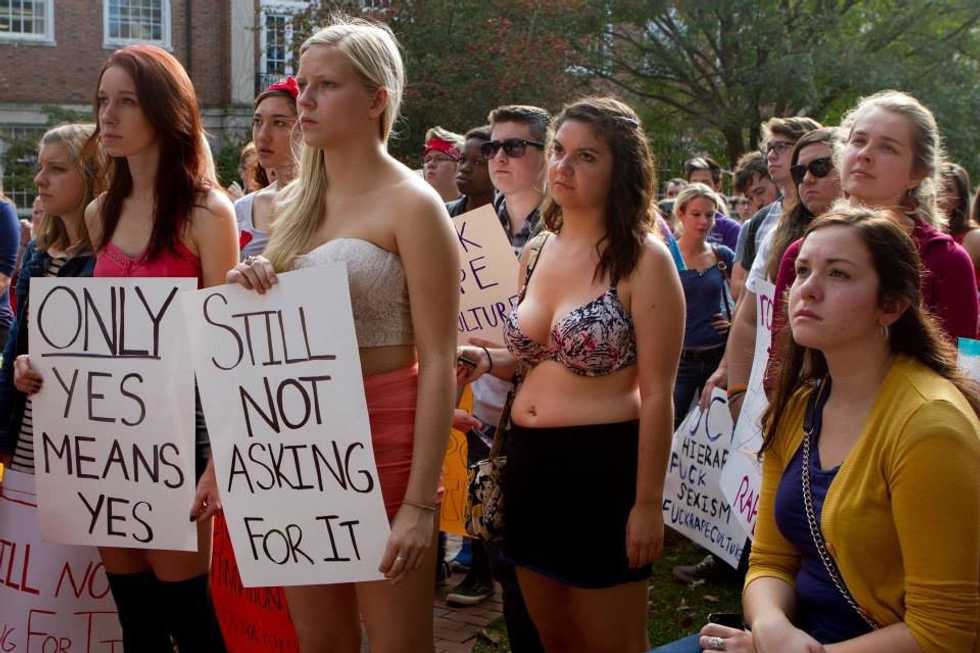
Missoula, Mont. is much more than just a small town. The city, home to the University of Montana, became a symbol for rape culture across the nation when Jon Krakauer published "Missoula" in 2015. The college town is the scene of Krakauer’s exploration of the mishandled rape cases of several women at the university. "Missoula" isn’t the only attention-grabbing story, however; the actions of Sigma Nu, a fraternity at Old Dominion University, also made headlines last year. The members displayed signs that read, “Rowdy and Fun Hope Your Baby Girl is Ready for a Good Time,” “Freshman Daughter Drop Off” and “Go Ahead and Drop Off Mom Too…” at an off-campus house. The fraternity was quickly disbanded, but the damage was done—collegiate rape culture was in the news once again.
The general perception of collegiate rape culture is shaped and reinforced by stereotypes in media. Rape culture, especially on a campus full of thousands of peers, is based heavily on how it’s “acceptable” to shame, judge or even assault someone because of their past sexual activity, clothing, personality or sexuality. The idea of “slut shaming” has been around on college campuses for generations. College campuses are the center of rape culture, its stereotypes and incidences.
The National Sexual Violence Resouce Center reports that one in five women and one in 16 men are sexually assaulted in college. This number is rightfully alarming. This means that, statistically, 20 girls in my sorority of 100, one of the young women in the group of five huddled in the dining halls eating dinner, and with current enrollment statistics, 826.5 Truman students will be sexually assaulted during their time in college. There are certain facets of rape culture that are especially prevalent on college campuses, like a fear of reporting rape and the Cosmopolitan magazine term “grey rape,” which is “sex that falls somewhere between consent and denial and is even more confusing than date rape because often both parties are unsure of who wanted what.” On college campuses, rape culture is continuously changing and continuously being perpetuated.
One main facet of rape culture that is not often discussed is how alcohol affects rape culture. Many colleges, especially dry campuses, have strict rules against coming back onto campus or back into a dorm building while intoxicated. For many students, the only option for a place to go after drinking at a fraternity party or another event is going home with a friend or person who lives off campus, which can then put two intoxicated people in a bad situation. Oftentimes, people that do not know each other well end up going home together with only the best of intentions but the course of events that night do not always go as planned. These strict alcohol rules can force students into a situation that can make them feel it was their fault that they were sexually assaulted, contributing to how over 90 percent of sexual assault victims on college campuses do not report their assault.
The theme that ties together my experiences of rape culture is alcohol. I have seen and even taken care of more intoxicated people in four semesters than I thought was possible. When out with different organizations, I started to realize just how much alcohol alters the decision making processes and mood of those drinking. Every story I heard of a romantic encounter, sober ride or even late night fast-food run had a common element—the involvement of copious amounts of alcohol. College is the only place I have ever experienced people thinking vomiting is equal parts disgusting and cool. I have seen things that will never leave my memory, times when I felt that I should have acted in a different or better way, times when I was disappointed in humanity and times that I was relieved that there are still good people in the world.
College is one of the most confusing times in a young person's life, and I am no different. In so many ways, I feel like an adult, making my own choices and dealing with the repercussions makes me responsible in a way never fully possible when living with my parents. But rape culture reminds me constantly that others can take advantage of my decisions, and that my decisions can render me incapable of helping others. Rape culture is not just perpetuated on a college campus during the nightlife. Students who talk of the weekend's conquests over lunch in the Student Union, joke about sexual assault in the library and those who choose to be bystanders in a potentially harmful situation also perpetuate the spread of rape culture. This phenomenon of collegiate rape culture follows Truman students to every part of campus and throughout Kirksville, and even affects classrooms and the learning environment that we as students are paying for. The idea of men as controllers and women being controlled comes from a view of rape culture being a culture where it is OK to criticize someone's sexual activity, and it is very much shaping the way that people view men and women and live their day-to-day lives, especially on a campus full of thousands of young people. The increase in discussion of sexual assaults is helping to slow the growth and spread of rape culture, but even more needs to be done until, at some point, incoming freshman will experience their first college party in a pressure-free situation, victims will stop being blamed or shamed and consent will be the best part of students' weekend stories.














