

Around the age of seven was when the church started to become a big part of my life. My dad had been raised Catholic, and my mother Protestant, and we decided to go to our local Baptist church (don’t ask me how that worked out because I’m not quite sure either). It was through this diversely Christian background that I got to learn a little from each. And through the church I was taught love and acceptance; I was taught that you should “love your neighbor as yourself,” and support others in a time of need. I had been told that religion was a place of comfort and support to those in need, and I myself found comfort and support through the church community I was surrounded in.
Slowly my love for church and religion grew. I began praying every night and started turning to the Bible and God whenever I faced though times. It was comforting, the idea that there was someone looking out for me, who forgave my mistakes even if others didn’t, and who loved me unconditionally as long as I believed in him.
But as I grew older, I noticed that there was more and more hate being pardoned because of one’s “religious freedom.” You can be against gay marriage because being gay is a sin. You can hate those who have abortions, because God wouldn’t have blessed them with the miracle of life if it wasn’t meant to happen (no matter what the circumstances of the pregnancy are). Transgender people are completely wrong in believing they identify with the opposite gender because God doesn’t make mistakes, especially with a person’s gender.
But how is all of this hate okay? I thought that religion was meant to comfort people, not make them hate. Did that mean I was supposed to hate my 5th grade best friend just because he was bisexual? Should I hate Planned Parenthood because they provide abortions, even though that’s only a fraction of their services? Are transgender people actually confused?
All of these questions swirled around in my head, and I started to question the religion I once found comfort in — maybe Christianity wasn’t what I thought it was. I stopped attending church on Sundays and tried to avoid conversations about religion. No longer did I find comfort in reading passages from the Bible; eventually, I scoffed at anything that even remotely referenced religion.
And as my distance from Christianity grew, our government’s separation of church and state seemed to be growing smaller and smaller. New “religious freedom” laws seemed to be popping up left and right, giving people more reasons to be prejudiced against those that did not follow their ways. Indiana’s Religious Freedom Law allowed business owners to refuse service to openly gay or transgender people in the community — and cite religion in their defense. A judge even ruled that it’s legal for a doctor to deny care to those who are transgender, or women who have had an abortion — under the pretenses of “religious freedom.”

Religion in America seems to be drawing more hate than love out of people, no matter which Christian denomination they follow. Religious Americans swarmed at Donald Trump's rallies because of his promise to elect a pro-life Supreme Court justice, and overturn the original ruling in Roe v. Wade. Add to that his running mate Mike Pence — who signed in the Indiana Religious Freedom Law, and has openly spoken out against the LGBTQ community — and the hatred following the Trump campaign intensifies. But while we are standing our grounds in our religious ways, Pope Francis is preaching to a more liberal and loving Catholic church.
Since he has taken the title of the 266th pope, Pope Francis seems to be one of the most progressive popes we’ve seen. Instead of reinforcing the hate seen across our country, he’s called for more acceptance towards those that the Catholic church typically shuns. In April of 2016, CNN reported that Pope Francis “urged priests around the world to be more accepting of gays and lesbians, divorced Catholics and other people living in what the church considers ‘irregular’ situations.” In May, he suggested looking into women becoming deacons. And in November, he granted all Catholic Priests around the globe the right to forgive the “sin of abortion.” Since Pope Francis took on his role in 2013, he has shown to be more accepting and loving than the examples of religion we see today; and that acceptance and love is what I was taught when I first came to the church.
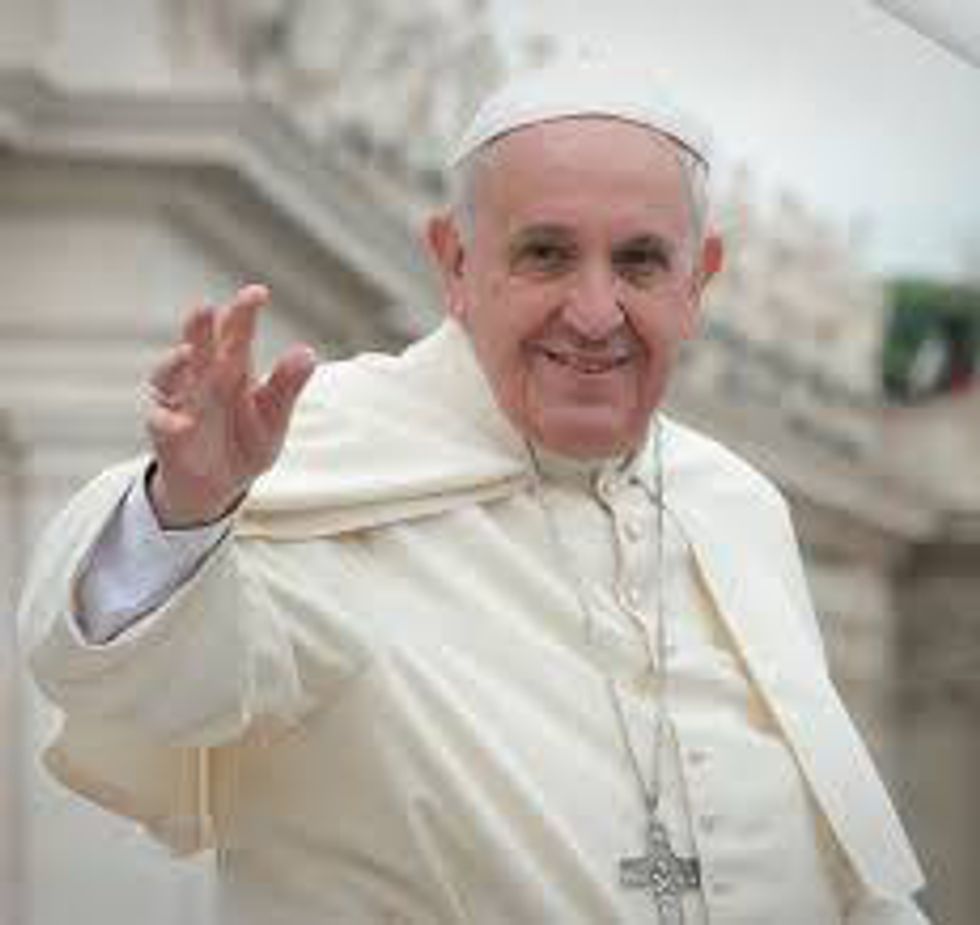
The Pope has extended priests the power to forgive abortion, but our doctors are allowed to refuse service to those women who have had an abortion? LGBTQ discrimination is still legal in Indiana, while the Pope has asked for Catholic priests to be more accepting of those who are gay. And to this day, my bisexual friend is still afraid to come out to her Catholic parents because of the religious stigma surrounding her sexual identity.
There is a drastic contrast between the religion we practice in America, and the progress being made by the global Catholic church. Religion is meant to preach love — not hate; and the hate in America has found its way into the White House. I fled the comfort of Christianity out of fear of being associated with such negative feelings. Discrimination should never be legal, regardless of the religion of their the offender or the victim; by having Trump and Pence in office, we're allowing the hate to threaten the freedom of some of our fellow Americans. Since America’s foundation, those who live here have the freedom to practice whatever religion they please, which means we are not (and never have been) a Christian country. Throughout my time at the church, I had always found Catholicism to be the least welcoming; but if I could find a Catholic church that preaches progress of Pope Francis, I might just reconsider going back to church on Sundays.