
“I love you, I'm just not in love with you.” “I just need to focus on my studies right now.” “We can still be friends, right?” “It's not you, it's me.”

But it isn't you. You don't want to be friends. Your studies aren't that overwhelming, and, in truth, you weren't in love in the first place. But you don't tell them that. He's a good person, once you get past his personality. She can be so sweet when she's not going through your phone. You don't want to hurt anybody, you don't want to be the bad guy, and so you let them down.
Easy.
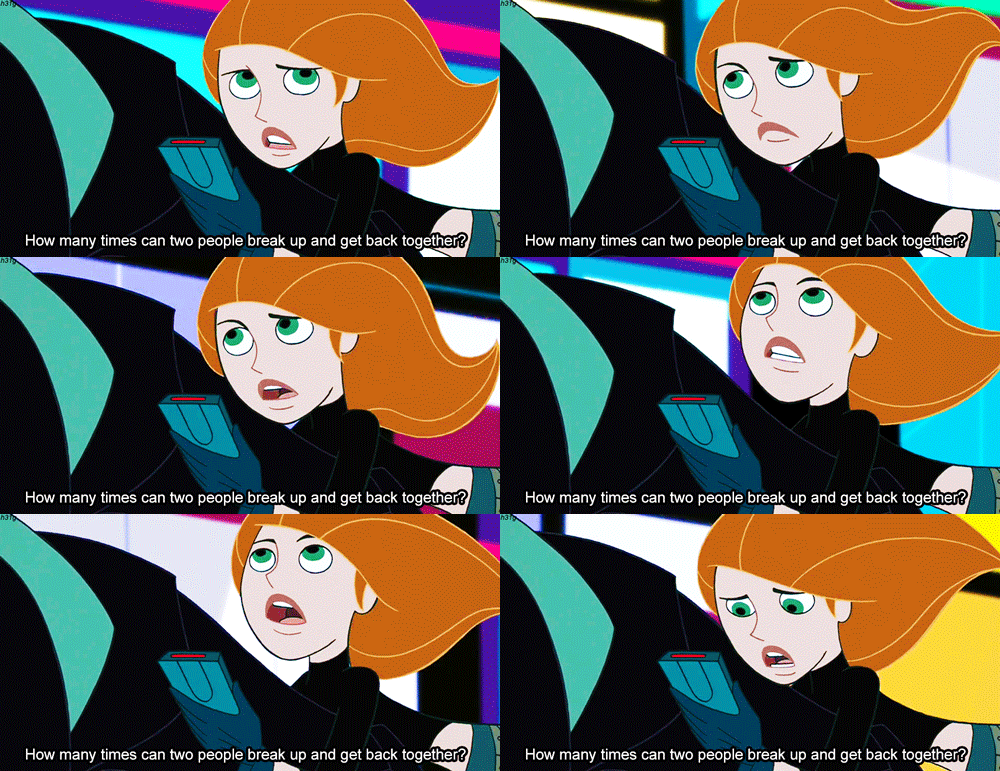
Whether or not you've been at the speaking end or the receiving end, as the poet said, breaking up is hard to do, for everyone. But to make that shift from “taken” to “single” a little more seamless and a little less awkward, here are step-by-step guidelines—some of which you already know—to end a short-term relationship.
Step one:
Set up a meeting place and time, preferably a day in advance. Make sure it's not construed as a date. Don't let him pick you up. Don't offer to pick her up. If you can, set up an afternoon time, and make it very unromantic and public—people are less likely to cause a scene. Ex: “Let's get coffee after class.”

Step two:
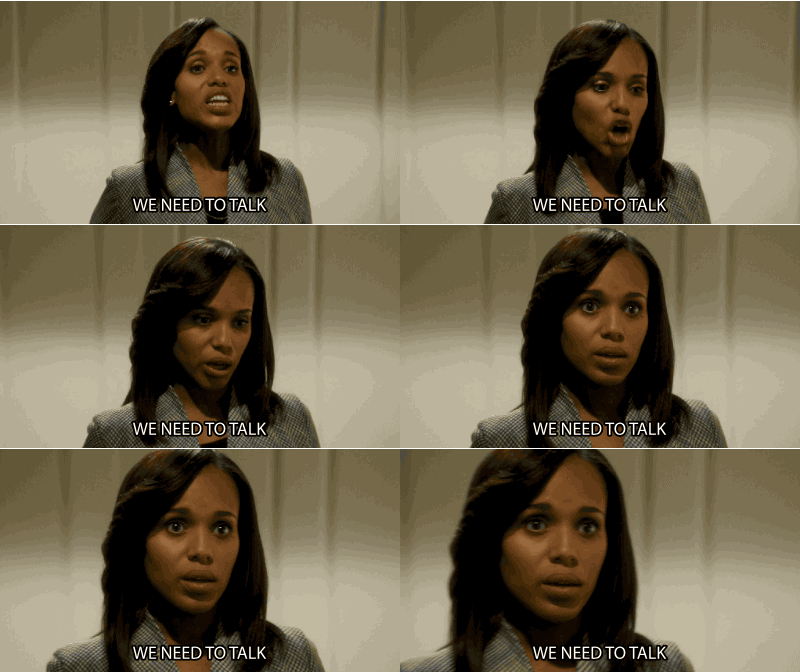
Dress nicely, but not provocatively. You aren't there to incite anything. Don't wear the dress with the sweetheart neckline that you know he likes. Don't wear the dress-shirt she bought you to match her eyes. When you go to meet them, don't exchange pleasantries. Refrain from touching, or holding hands. Use a business-like tone, friendly and relaxed—but detached. You are there for one reason, and it is not actually to drink coffee. Ex: “We need to talk.”
Step three:
Preface. This is vital. You need to try to get them on the same page. Ex: “I've noticed we've been arguing a lot.” or “I feel like we're going very different places.” Reflect on the problems in your relationship, and present them. However, be mindful of your verbiage. Your aim is end things amicably. Be careful not to accuse. When criticizing something in the relationship, use an inclusive “we.”

Step four:
State your decision. Ex: “We need to break up.” or “I don't see us together anymore.” Don't use the phrase “I think.” This communicates an uncertainty in your decision as well as an ability to be swayed by the opposite party. Be respectful, but stern. If you're not able to end things, the you need to rethink breaking up. Don't complete this step if you're still confused about what you want. Use this as an opportunity to work through whatever issues you guys are having. Otherwise, say what's on your mind, and continue to step five.

Step five:
Don't patronize. Don't just give them a half-assed excuse. Tell them why and how you've come to this conclusion. It can be blunt: ex: “I've been seeing someone else.” or “I talked things through a couple things with some friends, and I realize I'm not built for a relationship like ours.” Avoid using phrases like “I hope we can still be friends.” The phrase “still be” is irrelevant. You were not their friend when you were together. You are not friends now that you are broken up. The phrase “I hope” is kind of condescending. Either be there for them in the future, or admit to the fact that there is no future between you. No use lying about it.

As a courtesy to the male ego and female pride, try not to console the person you just broke up with. No parting hugs. Don't give back all his stuff right away and leave it in a box to the left outside his dorm. Don't apologize for ending things. It's embarrassing for everyone.

There's no doubt that “letting someone down” easy is no easy feat, nor should it be.
Relationships, no matter how short or how terrible, are opportunities to learn, and learning requires work. Being a semi-decent person requires an effort that not many people are willing to make.
But whether or not you choose to use these guidelines yourself, at least you'll be on high alert when your girlfriend or boyfriend says “we need to talk.”