“No, no, no, no, no! Don’t dip the whole thing in the sauce! You will get burned!” my friend Robert screamed as he saw me dipping half of the baby carrot into the “spiciest hot sauce he ever had." I was terrified as I held the carrot half way to my mouth. The gritty, light-colored red hot sauce cozily covered the tiny, cute carrot and I could smell the fresh piquancy of the chilly. I threw it in my mouth and kept my eyes closed, ready to embrace the burning fiery blast in my mouth. My tongue first sensed a slight flavor of sweetness, followed by a sense of numbness. However, I didn't feel any strong burns in my throat, or the “heat” from the sauce burning my tongue.
I started questioning myself: “what is the American standard for spicy?” In Chinese cooking, spiciness is a significant component. However, I don't find much “spicy culture” in American food. Most of my American friends have less of a tolerance for spicy food, not to mention the Sichuan Spicy food, which is famous for its spicy level among all kinds of spicy food in China.
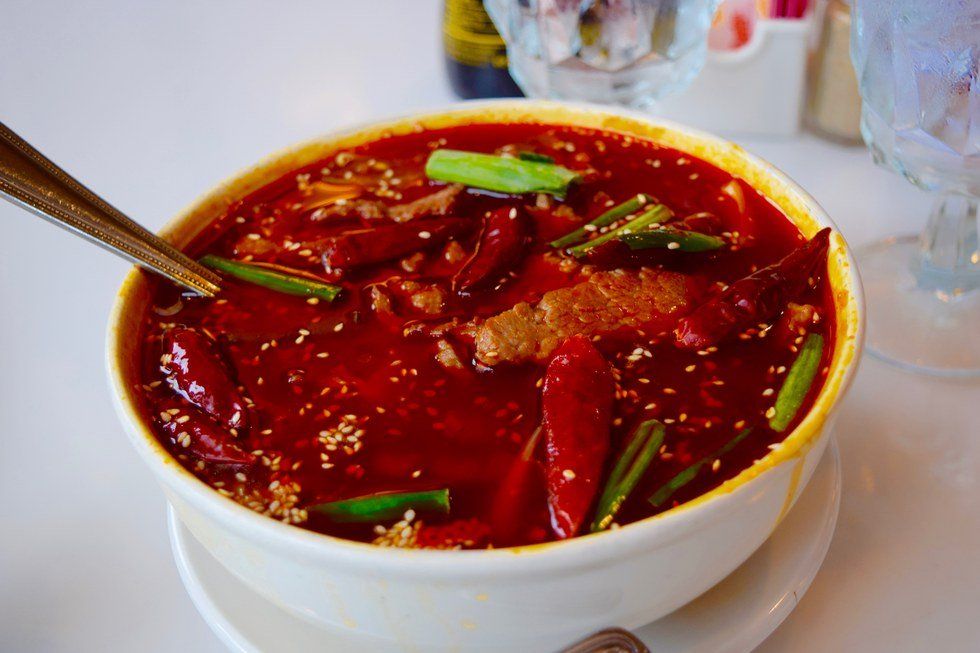
When I was in China, I never thought of myself as a spicy taster. All types of hot food were all over the food court in the mall, and the red oil over the soup always drew customers’ appetites. The Sichuan spicy food not only has chili or pepper to enrich the scent but also mixed with the herbs and spices. Just one taste of the soup and all of the flavors float into your mouth and enrich every taste buds on your tongue. It might be way too spicy and can keep your body warm and squeeze the sweat out of your pores, however, you can’t help but eat it.
What I saw here in America was quite different, most of my friends were complaining about how “hot” the Chinese food was (it is seriously not that spicy compared to the Chinese standard). At first, since I didn't know about the “American Spicy,” I even thought my friend was being dramatic. We were eating Chinese food at the dining hall and he was eating slowly at the beginning with a high frequency of drinking water, soon he stopped and kept his tongue out breathing heavily. I was just quickly shoveling food into my mouth and watching him drinking cups of water, one after another.
However, not every American friend of mine was like that. My bestie, Harrison, was an exception. He shares the same tolerance for spicy food as me, or maybe even better than me. We went to the Chinese restaurant in Chinatown of Washington D.C. and ordered a few spicy dishes. He seemed unbothered by the spiciness. He kept carrying the beef slices under the red oil into his mouth without a pause, not even taking a sip of water. That was the first time I saw him eat more than me because normally he eats the least among three of us (Harrison, Wendy and me). I was glad he liked the spicy food, at the same time, I felt happy for him that the hot food could draw his appetite.
My tolerance to spicy food was not born with me, but a developed bearing. I ate the spicy food with my mom, who was a super fan of Sichuan food. Day after day, I reached a level that can tolerant most types of spicy food from a level barely can eat spicy food. In China, people believe spicy food helps warm their bodies and keep them from the cold. So spicy food became a dietary trend during the winter. In the meantime, eating hot food helps to accelerate one's metabolism. I like the feeling of my body being warmed by the heat produced by the spicy food, and letting myself sweating until I feel the relief from the pressure (eating too much spicy food might cause the opposite effect).