
Religion is primarily expressed through acts of worship of a deity(s). We see this worship of a god/s in virtually all major religions; Islam, Judaism, Christianity, and Hinduism. Jainism is an intriguing religion in the fact that the adherents do not worship a deity. This is important to society because religion is defined as “the service and worship of a god or the supernatural” according to the Merriam Webster Dictionary. If religion is defined based on the adherents’ worship to the supernatural, how can Jainism be considered a religion? This could pose as a problem in studies of World Religions. Should Jainism be studied comparatively with the other religions when it does not include god worship? Should society start to recognize Jainism as just a lifestyle more than study it as a religion? If Jains do not worship a god…do they recognize a god? Jains believe that matter is eternal and humans were never created, “gods cannot help humans in their search for release”, making prayer and worship of these deities worthless.
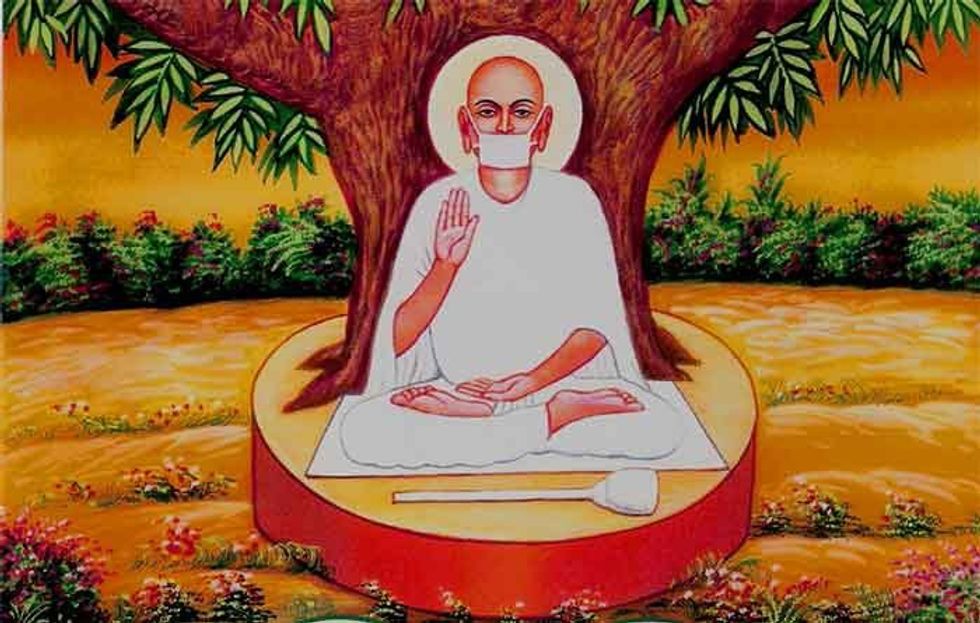
The next question to address is if Jains don’t rely on a god, whom do they worship? The answer is that they worship the 24 Tirthankaras, who are the people who have been released of ignorance and worldly possessions. The Tirthankaras are considered to be the founders of Jainism and are who the adherents worship. Since Jains don’t recognize a creator god, we needed to look into if/how the Tirthankaras are considered holy. In a way, they are holy to Jains because they have “forged a bridge between this life and Nirvana”. The word Tirthankara itself actually means “cross builders”[1], which could give them a mythical identity.
Now is where one needs to evaluate just how holy a Tirthankara can be considered. The answer to this question once again comes down to opinion, as do many of the questions asked. Tirthankaras are considered holy in the sense that they are the ones who have forged the path between this life and release. They are worshiped as if they are holy, which gives them the sense of holiness.
If religion is based solely on the dictionary definition, then many people would argue that Jainism should not be studied comparatively with the other world religions. A strong argument could be made in regards to Jainism being considered more of a lifestyle.
The most useful resource to this article was an interview, which was conducted with Priyal Gandhi, the Director of Education of Young Jains of America. Gandhi believes that “Religion is about following a certain set of values or ideology, and that Jainism is most certainly a religion in that sense”. This way of viewing religion is different from the hard, dictionary definitions that we are used to reading, and can give a broader definition to religion. “People often mistake atheism for agnosticism. Jainism is atheistic, meaning we do not believe in a God or creator. However, agnostics are people who do not believe in religion.” This was an interesting point, one that non-Jains wouldn’t normally think about.
Since this new, more interpretative definition of religion has been made evident, one must consider the “set of values or ideology” that Jains follow. According to Priyal Gandhi, “It (Jainism) isn't something I follow for just a few hours on Sunday, but rather something I can practice 24/7”.
The values of ahimsa (strict nonviolence) and vegetarianism are the core values of Jainism. Because these values are so important and followed by all adherents, this gives Jainism a more valid reason to continue being studied with the other world religions. All religions have core beliefs that define them and make them unique. Vegetarianism and ahimsa are the beliefs of Jainism that make them unique and justify them as a religion.
Something that we commonly see in religion is that all religions have a founder. This is true for Jainism as well. Mahavira[2] is commonly known as the founder of Jainism. With Jainism having a recognized founder, one could have more of an understanding why Jainism is accepted as a religion. Jainism is a lot similar to other religions in the fact that they have these values, have guidelines and rules to follow them, and have a founder. With these taken into consideration, it is understood why many people consider it a religion.
Through these studies, it becomes clearer that one would need to broaden the definition of religion to a more interpretative sense in order for Jainism to be considered a religion to everyone. With the information gathered from the research, it becomes evident that this topic does not have a direct answer.
One person does not have the authority to declare whether Jainism can be defined as a religion or not. The thing that stops us from having a concrete opinion on this topic is that we perceive things in our own ways, incorporating our emotions within these studies. We don’t all accept the same definition of religion and some have more narrow opinions than others. One can perceive religion as simply the act of god worship, while others will consider a more broad definition based on a set of values.
[1] “Tirthankaras are similar to the Avatars of Hinduism in that their function is to instruct and inspire humankind while protecting the world from demonic forces. Like the 'tirthas' of the Hindu Avatars, the Jain Tirthankaras have sanctified specific places on the earth by their birth, great miracles or attainment of enlightenment” http://www.newworldencyclopedia.org/entry/Tirthank...
[2] Mahavira is the founder of Jainism. “ Mahävira was the twenty-fourth and the last Tirthankara of the Jains. None of the recitations studied in this book have been composed in praise of Mahävira. However, it is worth mentioning Mahävira as the religious principles, code of conduct and the entire philosophy, which is followed by present day Jains, is based on the direct preaching of Mahävira” http://www.jainworld.com/jainbooks/Books/EXPLAIN.htm.