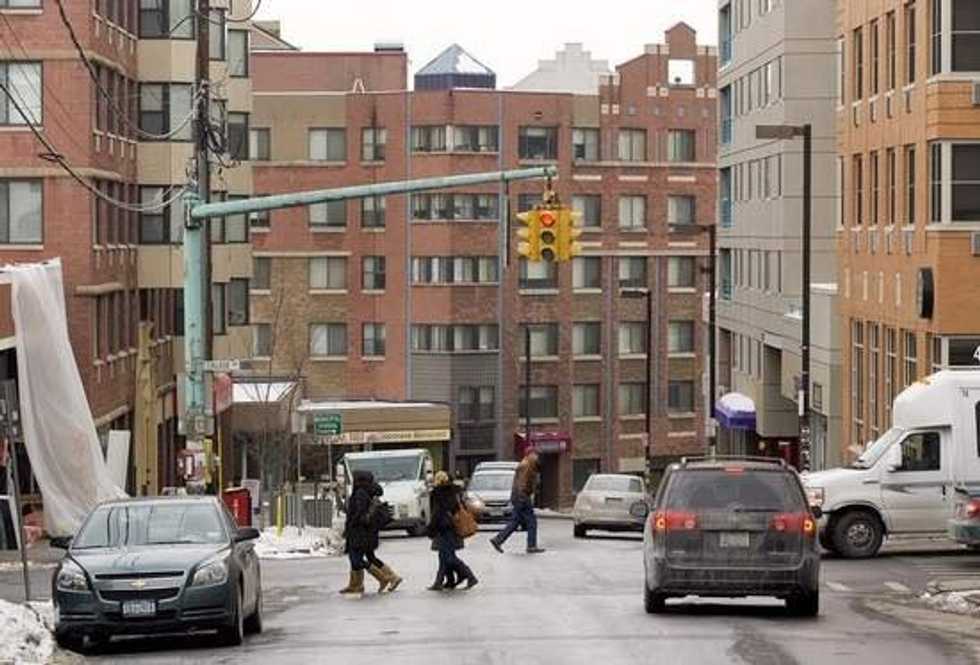
Here at Cornell, the journey to find housing begins almost immediately following the return to campus. The echoes of “how was your summer?” are still lingering in the air as the “where are you living next year?” begins. Planning a year in advance may seem excessive to students at many other universities, but it is the norm, and a necessity, in order to land a decent place in Collegetown.
The first step to securing almost any apartment or house is finding roommates to search with. Living with a group for a year is a big commitment, and finding the perfect group dynamic can be difficult. Who will you live with? Freshman year friends? Greek organization friends? Maybe you’re on a sports team? Will anyone bail at the last minute? Who is going abroad? Are YOU going abroad? The sub-letting inherently linked to an experience abroad adds a whole new fun layer to the search. The stress is typically neatly compressed into a couple of intense days of scrambling, after which you may have pissed some people off, but at least you will have a place to sleep next year, right?
Unfortunately, the next step can be even more difficult.
Following the basic laws of supply and demand (Intro Econ anyone?), the thousands of Cornell students looking for a place to live, with very limited options, gives the power overwhelmingly to those landlords possessing space in prime locations. Students are willing to pay exorbitant amounts for rickety houses without air conditioning, often contingent upon signing a 12-month, rather than 10-month lease. Some lucky students will take over housing from older friends, but others will be left to email and call what may feel like every landlord in Ithaca, desperately searching for something somewhat affordable, on a “relevant” street. Long lines often form outside of the Ithaca Renting Company hours before leases are available to sign, as Cornell students compete, in their signature competitive way, for prime apartments.
It is difficult to blame the high cost of housing solely on “greedy slumlords.” High tenant turnover rates and high -- but still rising -- property taxes in Ithaca continue to drive up the cost of renting in the area. An amendment to city code approved in 2013 ensures landlords give at least 60 days notice before renewing the current rental agreement, or showing and leasing the apartment to new tenants. This is supposed to give students more time to explore who and where they would like to live, and at the very least put off the housing scramble until October. However, with a 12-month lease landlords can notify in June or July, and begin renewing contracts as soon as the school year begins. 10-month leases, thanks to this change in policy, can only be signed in October, giving students more time to make decisions, but banking on these more limited options can be stressful and uncertain.
Fortunately, new zoning laws now allow for new higher buildings to go up in Collegetown. This has led to new construction, like Collegetown Crossing and the Dryden Eddy Apartments (perhaps better known as the apartments replacing Pixel). This measure has major pushback from the town as a whole, as many residents wish to keep the charming historic feel of Collegetown’s older residential streets rather than fill the area with mid-rise apartment complexes. Regardless of this sentiment, the growth of Collegetown housing density is undoubtedly good news for the wallets and stress levels of Cornell students in the years to come.
In the meantime, keep scrambling, students, and good luck with your security deposits!