

In the wake of black history month, jazz singer, pianist and civil-rights activist Nina Simone is turning over in her grave- and I am turning in my bed. I am angry, disappointed and a bit mystified by the release of the upcoming Nina Simone biopic, "Nina," starring "Avatar's" own, beautiful Zoe Saldana- in black face.

Needless to say, I am not "Feeling Good" about this trailer.
It opens with a luke-warm rendition of "Black Is The Color of My True Love's Hair," as Saldana sits by the piano singing a song without the emotional depth needed for the performance. Bluntly stated, I don't believe she has the capacity for emotional depth at all- especially for a black icon such as Nina Simone. Yes, before you ask, I am quite bitter- and rightfully so.
Now, I am deeply rooted in the world of jazz music. As a worshipper, if you will, I have always been captivated by how such beautiful music could be created in a place as ugly as mid-20th century America. In a world obsessed with Africana music, the same people who "birthed the blues" were being raped, lynched, tortured and discriminated against. Within the white-washed, Frank Sinatra-ed history, black jazz musicians often used their concerts as platforms, conveying covert and overt messages about the turmoil faced during segregation.
Billie Holiday's "Strange Fruit" captured an integral moment. But the Billie Holidays, Sarah Vaughans, and Lena Hornes cannot compare to the revolutionary force that was (and is) Nina Simone's career.
As a black woman- a thick-boned, big-lipped, wide-nosed and dark-skinned woman- Simone faced numerous hurdles in a racist industry that could barely tolerate black artists who could pass the paper-bag test.

Although she could have been depicted as another "angry, black woman," Nina Simone drew crowds- Scandinavian white crowds- with her classically trained pianist skill, soulful and witty lyrics, and engaging performance style. Iconic songs such as "Mississippi Goddamn," "Black is the Color of My True Love's Hair" and the revolutionary "Four Women" reflected the harsh realities of being a dark-skinned black woman. Many black jazz musicians, such as Ella Fitzgerald and Sammy Davis Jr., aimed to be palatable to white crowds in order to open doors for future black artists. Nina Simone, however, did not feel the need to minimize or hide her blackness for community acceptance. She did not care if she made others feel uncomfortable with her blackness because that was who she was, no denying it. Her soulful music was the cry of an unheard nation, and, for that, she deserves her high honor.
The blunt lyrics to "Mississippi Goddamn" were delivered to crowds that were primarily white:
"Picket lines
School boy cots
They try to say it's a communist plot
All I want is equality
for my sister my brother my people and me."
The activist song describes the current struggles of being degraded and called "slow" while the only thing that was "slow" was the progress to equal rights.
"You don't have to live next to meJust give me my equality
Everybody knows about Mississippi
Everybody knows about Alabama
Everybody knows about Mississippi Goddamn.
And what better way to honor this legendary singer/civil-rights activist that with a biopic documenting her amazing life? Only, the biopic- based on Simone's later career, during which she battled alcoholism, stumbling from grace- stars Zoe Saldana as Simone. Light-skinned, thin, conventionally beautiful (according to white beauty standards), self-disassociated from her own blackness, Zoe Saldana.

See the resemblance?
No? Well, how about now?
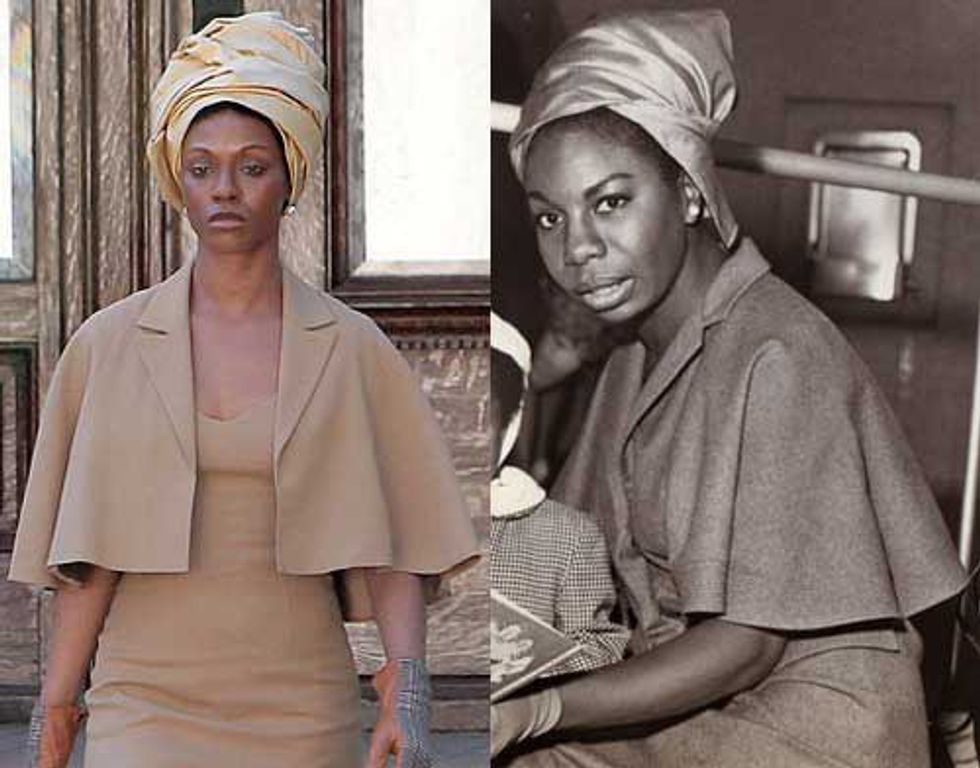
Here, we have Saldana in blackface- yes, blackface, not blue- and a facial piece to widen her nose. Even with these additions, the 37-year-old actress is not fit to portray Simone later in her career. Yes, actors are often drastically different in age than characters they play, as evidenced by good-looking, acne free 26-year-olds playing high schoolers (looking at you "Glee"). But, if you're going to portray an icon, especially after a well-reviewed Netflix documentary was beautifully done (I highly recommend), I suggest you cast it much more carefully.
Perhaps I'm being too harsh on Saldana by saying this, but I value honesty so I will say it anyway: what business do you, a person who denies her own blackness, have playing a black icon. If you're going to deny us, you cannot claim our history for the sake of your monetary capitalization.
I admonish her, but I also admonish the casting director- or the system- for disrespecting the black entertainment community, who- correct me if I'm wrong- has gone through quite enough lately.
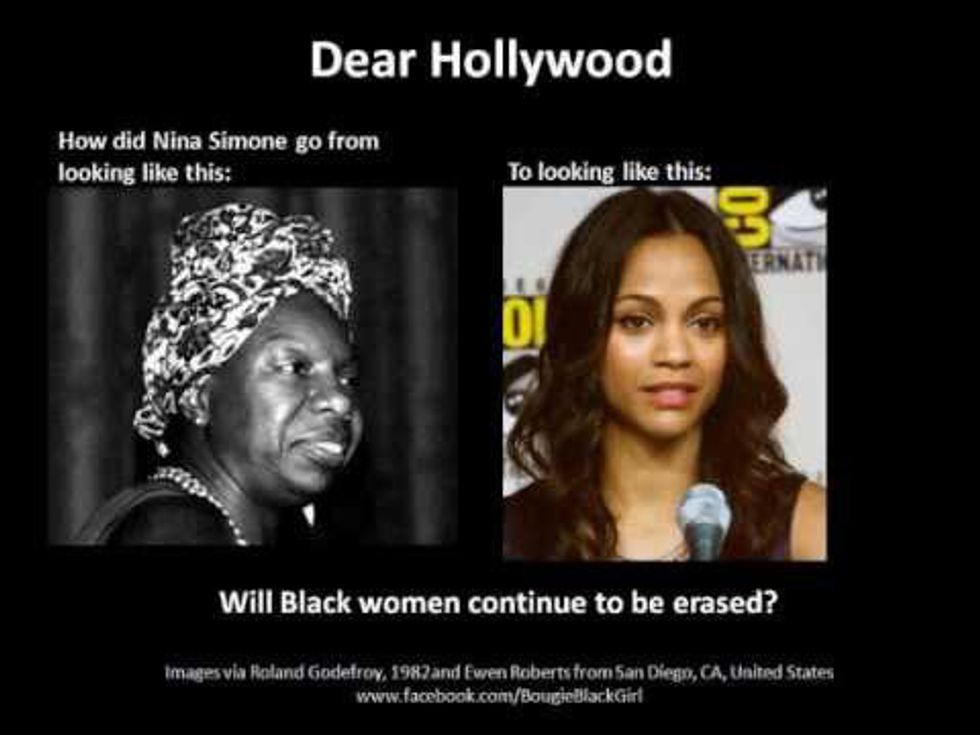
Sure, it's not overt racism. After all, Saldana is, at least, brown, so, perhaps we should still consider this an industry win, right? Wrong. Once again, we see an example of the only "acceptable" blackness there is in the industry, alienating the type of women Nina Simone paved the way for in such a Eurocentric image-based industry.
Simone's image- heavyset and dark-skinned- is not an inconsequential facet of her career; it was key to her struggle to be successful, incorporated in her deepest messages. In "Four Women" she describes her own image:
"My skin is brown. My manner is tough. I'll kill the first mother I see--my life has been rough.
I'm awfully bitter these days because my parents were slaves.
What do they call me? My name is peaches."
I know that there is little I can do, and I accept that the choices have already been made, the movie has been filmed, and that the film industry will continue to white-wash every golden nugget of black culture until we have nothing left but prison statistics and chicken wings. But, I want to sit on this, let our collective anger simmer, as Hollywood white-washes black history, and sing a song the only way Nina taught how, "Hollywood, Goddamn."
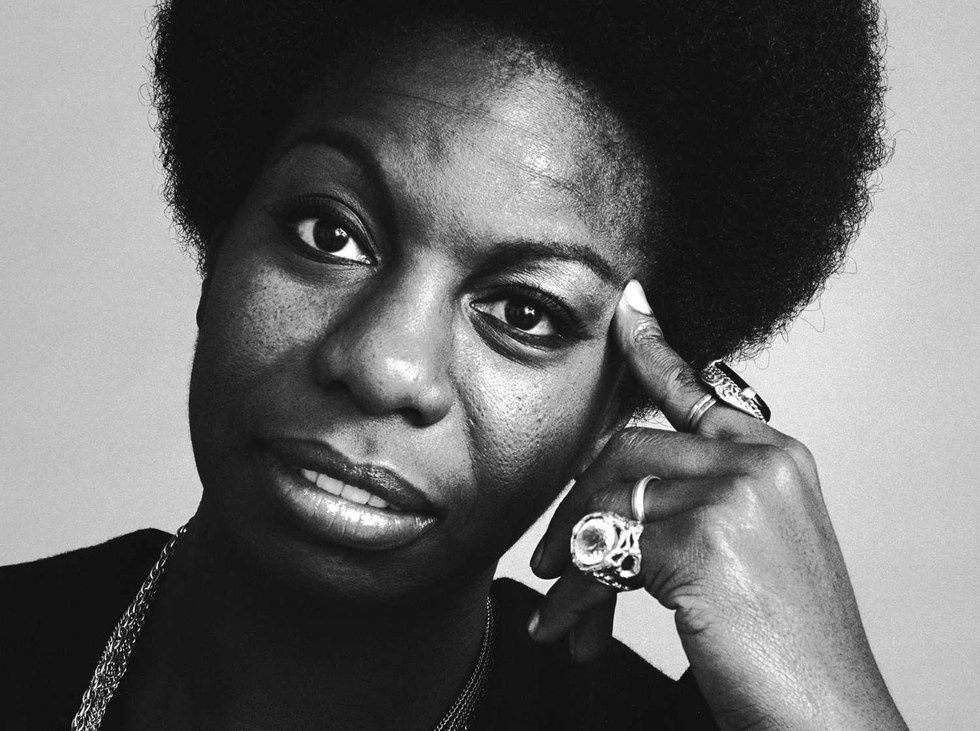
"Alabama's gotten me so upset. Tennessee made me lose my rest. And everybody knows about Mississippi Goddamn."