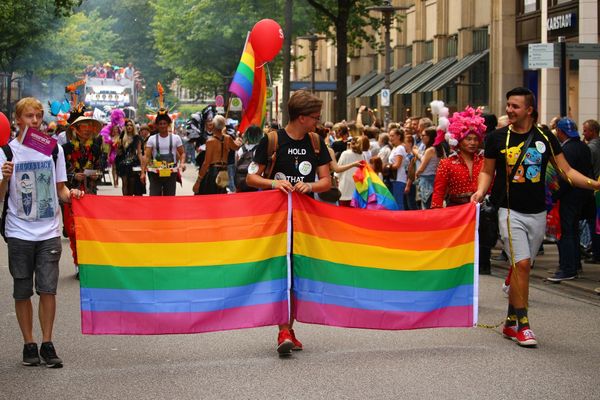
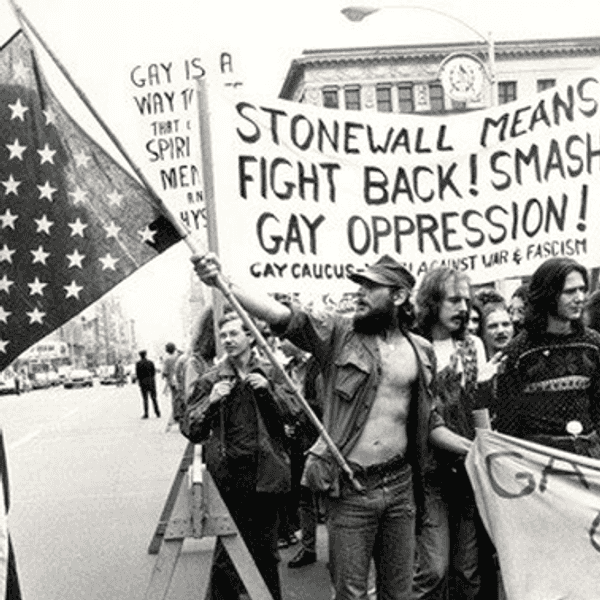
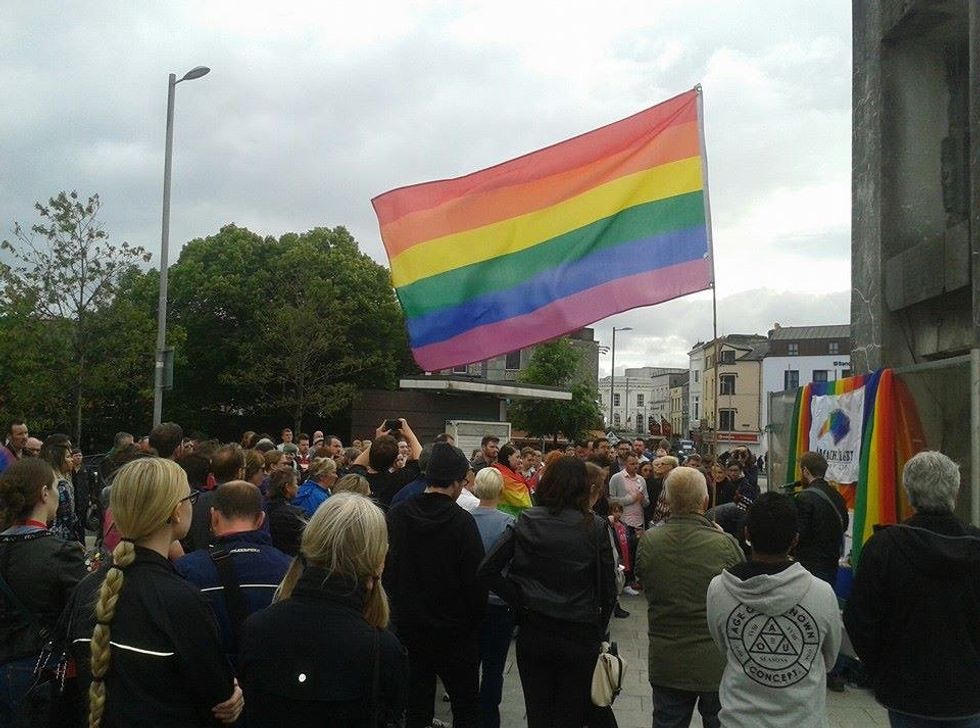
I remember when I was younger, probably in about fourth or fifth grade, I had this book that gave the history and meanings of the American flag throughout history. It started with the classic tale of Betsy Ross sewing together the original flag during the American Revolution, and continued to follow the history of the flag as new states entered into the Union and new wars were waged. In light of the recent tragedies in Orlando and throughout the nation, I’d like to take this opportunity to present the history of the Rainbow Flag, a symbol of unity and love that has flown over the heads of LGBTQ+ folks since the 70s as they fought their own revolution for recognition and liberty.
The first recording of the Rainbow Flag is tied to early Judeo-Christian religious symbolism. According to the Old Testament, God used a rainbow as a sign of his promise to Noah to never again wipe out the Earth with a flood. A German religious reformer named Thomas Müntzer is often depicted carrying a rainbow flag, using it as a symbol for the social change he called for. The rainbow flag popped up again during the German Peasants’ War of the 1520s with a similar meaning. Since that time, the rainbow flag has popped up in a variety of movements with different agendas, from Italian anti-nuclear protests to international cooperative business. You’ll notice that the one major uniting factor between all these emergences of the Rainbow Flag is a constant tie to social and political change, making the flag well-suited to the needs of the LGBTQ+ rights movement.
The LGBTQ+ edition of the flag appeared in Northern California in 1978, after being conceived by San Francisco based artist Gilbert Baker. Baker came to San Francisco in 1970 as an army draftee. After an honorable discharge, Baker elected to stay in San Francisco and met Harvey Milk, the first openly gay man to be elected to office in a major American city. Three years later, Milk would be the one to challenge Baker to create a flag for the LGBTQ+ movement. After borrowing influences from the hippie movement and influential poet and activist Allen Ginsberg, Baker came up with the final design. This Rainbow Flag had eight stripes, each with a specific meaning: hot pink to represent sexuality, red to represent life, orange to represent healing, yellow to represent sunlight, green to represent nature, turquoise to represent magic and art, indigo to represent harmony, and violet to represent spirit. Baker and his team of 30 volunteers hand dyed and stitched this flag together. On June 25, 1978, the Baker’s first Rainbow Flag flew over the San Francisco Pride Parade.
After Harvey Milk’s assassination in November 1978, demand for the Rainbow Flag soared. The Paramount Flag company began mass production of Baker’s design using the stock rainbow colors of red, orange, yellow, green, turquoise, blue, and violet. Baker soon dropped the hot pink stripe as well, due to a lack of hot pink cloth with which to make the flags. In remembrance of Milk, the seven stripe Rainbow Flag was hung on both sides of Market Street in San Francisco. However, the light poles obstructed the middle stripe, so the flag needed another adjustment. In 1979, the flag changed again, this time with the removal of the indigo stripe. In 2003, Baker encouraged members of the LGBTQ+ community to return to the original eight stripe flag in honor of its 25th anniversary, but the six-stripe flag had already become so embedded in LGBTQ+ culture that the change never really took hold. Other variations, such as the Rainbow Flag featuring the stars of the American Flag have made their way into the movement, and LGBTQ+ activists around the world adapt their nations’ flags to include the rainbow.
To me, the Rainbow Flag is just as important of a symbol as the American Flag. It adorns balconies, cars, coffee mugs, and a wealth of other goods. It reminds us of the struggles that sexual and gender minorities have undergone, and of the fight that the community must continue today. Under it, we are called to stand together as a stronger, unified collective against hate.