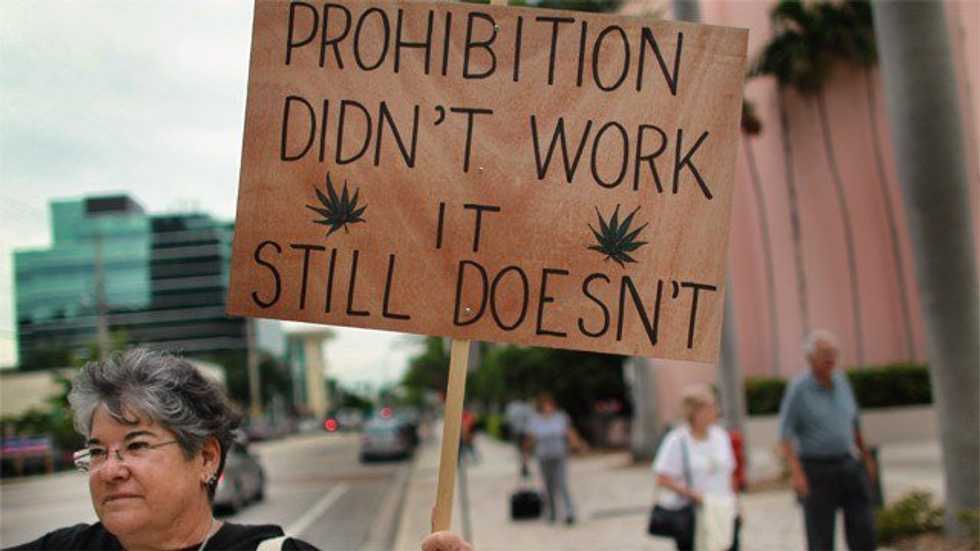
This country has a serious drug problem: one that leads to mass incarceration, violent crime, and skyrocketing poverty rates. The problem, however, is not with drugs themselves, but instead with the laws in place to keep them illegal. With the US accounting for less than 5% of the world’s total population, but 25% of its total prison population, our penchant for locking up drug offenders is costing us in more ways than one.
As of 2014, over half of the prison population in the US was made up of drug offenders; the majority of which (27.6%) were related to nonviolent marijuana use, possession, or distribution. Of the $40 billion that the US spends on prisons yearly, almost $24 billion goes towards incarcerating nonviolent offenders. Not only is this incredibly wasteful (when one considers that the money spent on keeping youths in jail for getting caught with a joint could be spent on a plethora of productive social programs) but it is also deeply disquieting, especially when one considers that of drug-related incarceration affects people belonging to select groups more than others.
The reality of the justice system in the United States is that as a minority, one faces longer sentences and an increased likelihood of imprisonment than a white offender in the same circumstances. African Americans are 20% more likely, and Hispanics, 40%, to receive a prison sentence for a drug offense committed similarly by a Caucasian. And when it comes to time in prison, wildly longer sentences are given to minorities. Just take a look at this terrifying statistic: "African Americans now serve virtually as much time in prison for a drug offense (57.2months) as whites do for a violent offense (58.8 months)." It's utterly reprehensible that an offender who poses little to no risk to the population by committing a drug-related crime is held to the same sentence standards as an offender recognized as violent and threatening to society.
And this (systematic) phenomenon extends beyond the reach of sentencing, to disproportionately affect the social structures that exist in minority-majority communities. When families in impoverished neighborhoods are broken apart by a parent or family member being incarcerated for a nonviolent crime, the cycles of poverty and criminality are perpetuated, preventing low-income and underprivileged communities from being able to elevate themselves. This, in turn, promotes the same offenses and justice-system-injustices that harm low-income populations.
But rather than being concerned with productive spending, balancing the scales of a white-favoring justice system, and finding an end to the poverty that plagues this country, the laws in place to enforce the illegality of drugs (particularly marijuana), hold fast to dated and ill-informed fears. Instead of spending billions of taxpayer dollars to keep recreational drugs illegal and lock up nonviolent users, legalize and regulate use and spend tax revenue on intoxication education and economically stimulating programs in underprivileged and systematically oppressed communities. Rather than letting mass incarceration continue to be the norm, end the culture of drug persecution and replace it with one of acceptance and support. The sooner we recognize drug law reform as the most productive path to solving some of our most serious social problems, the sooner we can start fixing them.