
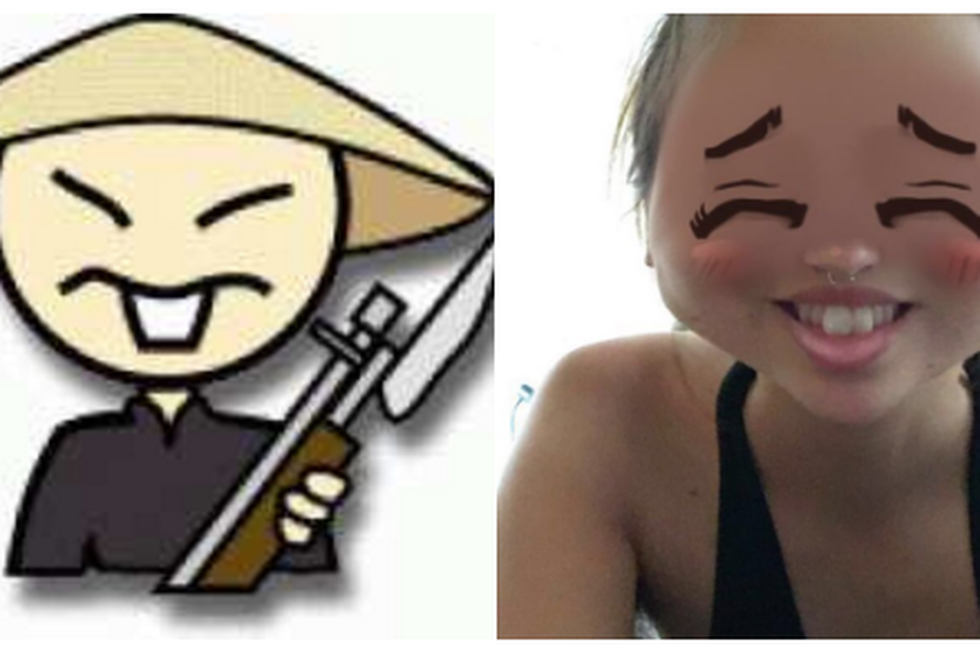
This week Snapchat released, and then promptly retracted, a racist selfie lens that made users’ faces pale, their eyes appear slanted and have buckteeth.
Yeah, they went full-on Asian rice paddy worker on us.
Snapchat, in an apparent defense of its lens, told sources the look was anime-inspired, and was intended to celebrate the popularity of the medium. Funny, because I’ve watched my fair share of anime, and this rice paddy caricature looks nothing like any anime character I’ve ever seen.
However it did look pretty racist.
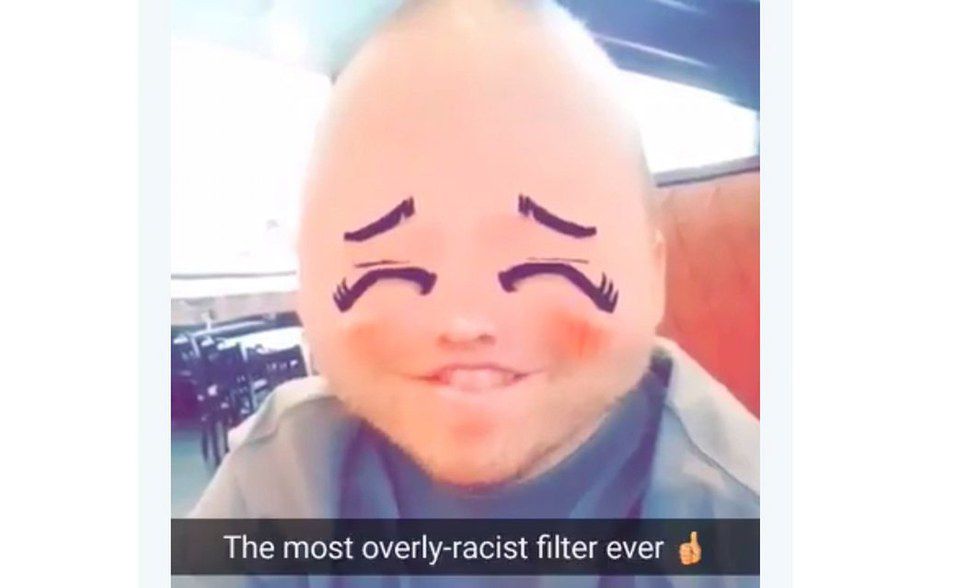
So in light of this apparent lack of judgment, I’m offering Snapchat, creator of the 24-hour story that forces users to relieve every badly-chosen drunken makeout the morning after, another story.
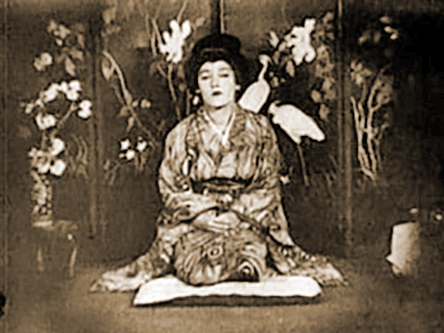
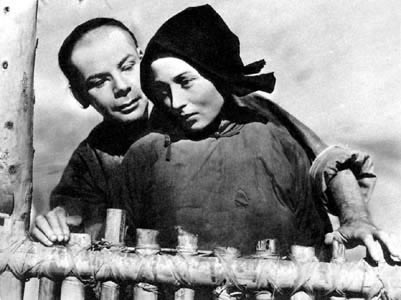
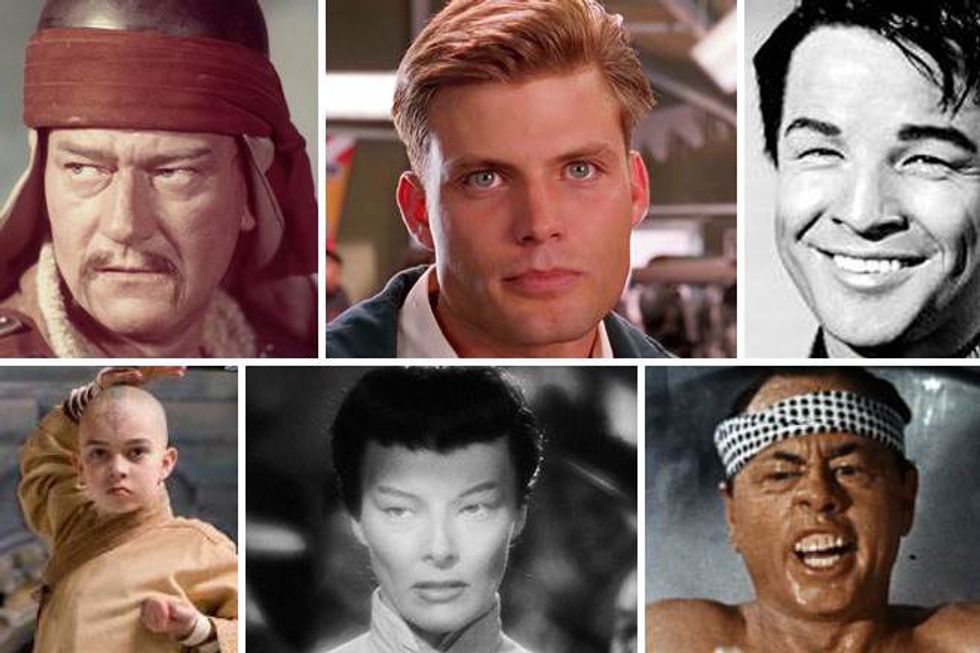
Yellowface (the racist thing Snapchat did by making people look “Asian”) can trace some of its modern roots back to Hollywood. One of the earliest displays of yellow-face came from Mary Pickford, a white Canadian-American actress. She starred as Cho-Cho San, a Japanese geisha, in the 1915 film adaptation of “Madame Butterfly.” So began America’s endless obsession with slighting Asian Americans on every screen: big, small, silver and now, smartphone. Two white Americans playing two Chinese people in 1937’s “The Good Earth (which won a couple Oscars for its bigotry);” Mickey Rooney portraying Mr. Yunioshi, a bucktoothed, stereotypical Japanese man in the 1961 film “Breakfast at Tiffany’s;” and the all-white cast of “How I Met Your Mother” donning kimonos (in 2014!) are just a few examples of the many times Hollywood decided to go Asian tone deaf.
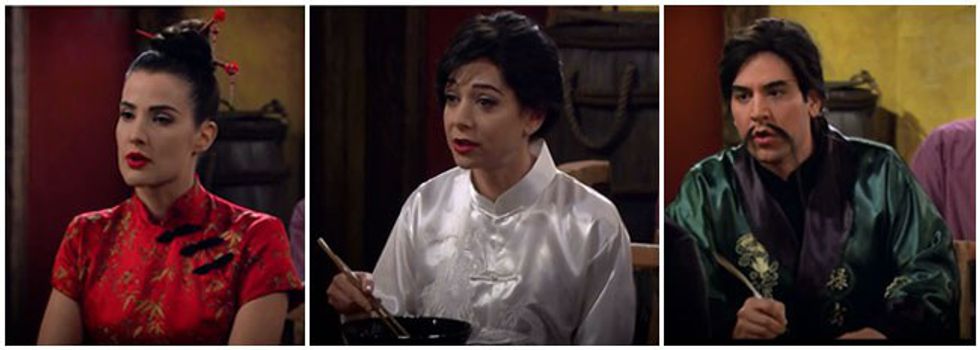
Berthed out of these portrayals were stereotypes Hollywood still uses today for Asians on screen: the zen-like Asian, full of wisdom and stock Confucianistic phrases, the villainous Asian mastermind high on opium, the overzealous studious Asian who cannot crumble to the pressure of getting a B-minus, the Kung-Fu master Asian and of course, the silly-looking bucktoothed rice farmer Asian. And yes, they let women into the act too with the mysterious, exotic, kimono-dressed maiden act.
But that was the 1900-somethings, right? Shouldn’t we just get over it?
Apparently, in the 2000-somethings, Hollywood, in one way at least, has gotten over Asians, excising pretty much every trace of them from the stories Asians created themselves. Meet the entertainment industry’s other not-so-subtle slight on people of color (POCs): “whitewashing,” the replacement of POCs from their own narratives with white actors. There’s “21,” the story of a team of Asian American card counters replaced by not-so-Asian actors Jim Sturgess and Kevin Spacey; Emma Stone’s casting as a mixed-race Chinese American in “Aloha;” Rooney Mara in “Pan;” Matt Damon in “The Great Wall;” and Scarlett Johansson channeling her inner Japanese in the upcoming film “Ghost in the Shell.” This is to say nothing of other non-Asian people of color being whitewashed out of their own stories.
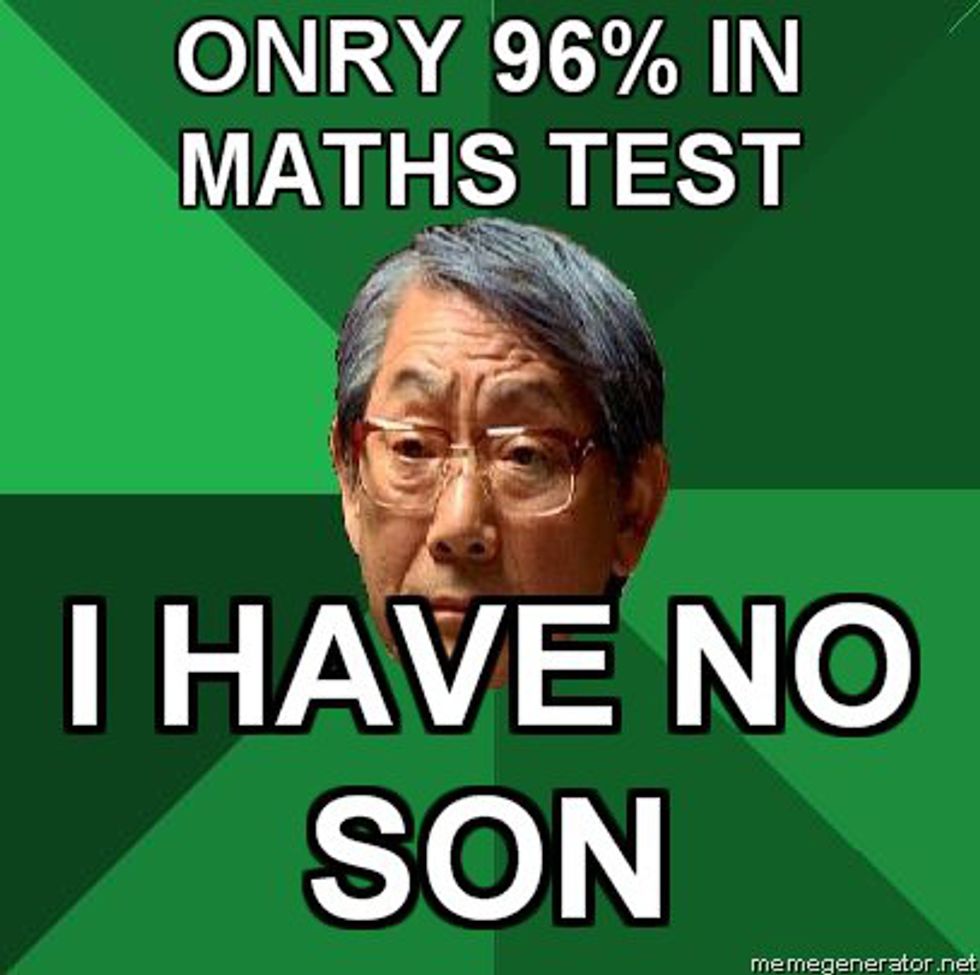
But let’s not stop there! The media and entertainment has lovingly granted Asian Americans even more demeaning stereotypes: they can’t drive, they only do martial arts or play ping pong, they’re all socially awkward, they no-speak-a-no-Engrish and they’re just the best at anything academic (save that last one for a future article).
So why does this matter? I mean Snapchat CEO Evan Spiegel doesn’t see things that way. Why should we care?
What Snapchat’s lens has done, apparently unwittingly, is contribute to America’s long history of demeaning Asian Americans (who have a long history of positive contributions to this country themselves) into the Other. Regardless of the apparent non-intention of racism, it doesn’t absolve the company from its poor judgement, or its role in perpetuating the past. That filter didn’t look like an anime character, but it did make people look like someone else: foreigners.
Even after centuries of living in this country, contributing to society, paying taxes. serving in our military and living as citizens, Asian Americans are still viewed as perpetual foreigners. Outside of a few good TV shows, Asian Americans still struggle to break through the bamboo ceiling in entertainment, media, academia, politics and the workplace. You know, like the workplaces Snapchat techies clock into everyday. Because they’re not Americans. They don’t belong here. And when you’ve told an entire people they permanently don’t belong, it becomes a lot easier to tell other people the same thing.
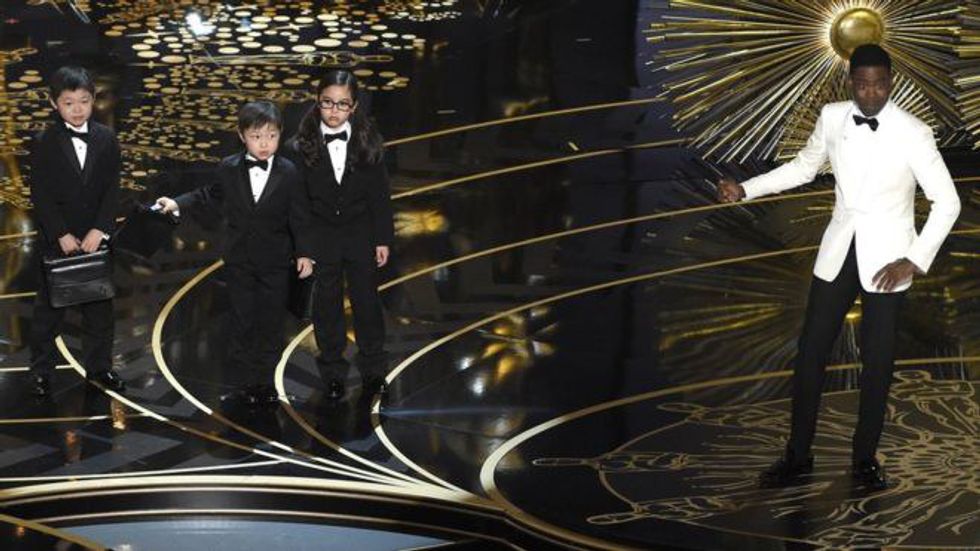
Talk about racial warfare.
Snapchat has reduced the dignity of Asian Americans to a simple swipe and tap of a screen, even as the app simultaneously celebrates diversity in Rio another swipe and tap away. It whittled Asian Americans down to an arbitrary set of stereotypes invented centuries ago. And when you trivialize people to a stereotype, it presents dire consequences for anyone who self-identifies with such people--issues that reach far beyond a filter.
Asian Americans aren’t a set of stereotypes. They’re people.
What’s most shocking about this practice is how normal stuff like this seems to non-Asian Americans. Banking on the hope that Asian Americans will play to their stereotypes and be quiet, the entertainment industry subtly shelled out their bigotry in every channel of American society, hoping no one would notice or say anything. Fortunately, not everyone has gone down in silence.

Yet, the most vulnerable, malleable and important set of people in all of this might not get to see the story this far. Young people, the group of Americans most likely to use Snapchat, have already gotten the impression that it’s OK to yellowface (and for a while, blackface). And when they turn on the news, they’re going to get the impression that it’s OK to be a bigot too.
Although Snapchat let its “Asian” filter expire, the story can’t end here. Unlike one of Snapchat’s ephemeral stories, the racist past of America towards Asian Americans--and the fight against it--is not going to disappear in 24 hours.[Sources (from top): Twitter, L7 World, Salon, Memegenerator, Associated Press, Asian American Student Collective]