
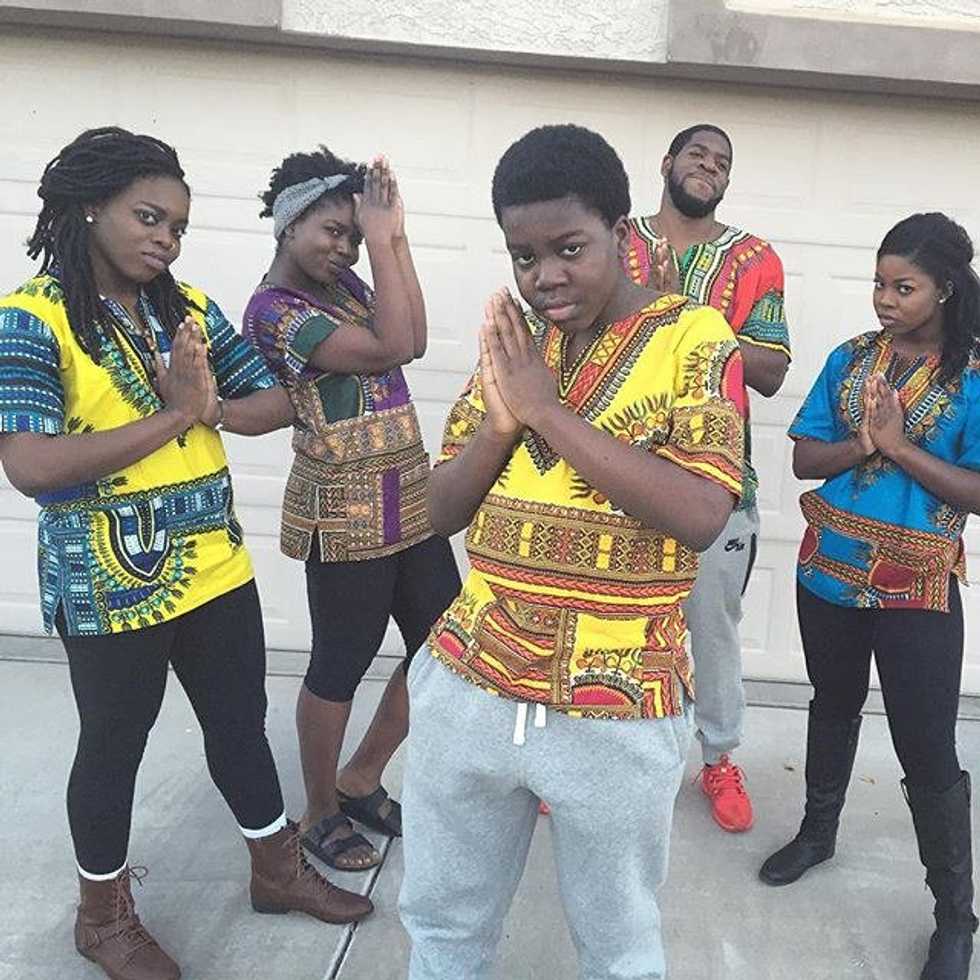
I remember being young and wondering why I always felt different than other kids and how my relationship with my parents differed from theirs. Here’s a summary of what it was like for me to be first-generation American in a West African household:
My family originated from Ghana and my parents moved to the United States before having my siblings and me. Growing up in Arizona, I always felt as though my experiences strongly differed from some of the kids I was going to school with. Hearing them talk about their parents and how their family was structured really made me wonder what it was about being in a household with immigrant parents that differed from American parents.
When I began playing basketball I became friends with a good amount of players, some that were first generation, as well. It wasn’t until I was in high school I realized how similar the experiences in my household were to my Nigerian friends. Being first generation American, you are given a list of demands, some standard ones include: Do well in school, don’t embarrass their family name, be home before the sun even thinks about setting and become a doctor.
Rule 1:
If you have parents like mine you will know the struggle of having to plan all your days early because you know if you’re not home by a certain hour you’ll be getting a phone call. In high school, my curfew was 11 p.m., which I wouldn’t have minded except that Arizona is so hot that most people didn’t even want to leave their house until 10 p.m.
I remember my siblings and I always having to schedule our days around an 11 p.m. curfew, knowing that if we asked our parents to go to a party or a friend’s house late at night the answer would be an automatic no. My mom always watched the news and worried that if we were out too late something terrible would happen to use like the tragedies that she was watching on television.
Talking with my African friends, I realized they all had similar experiences. In my making a Twitter account, I was able to connect with other African teenagers and laugh with them about some of the similarities.
Rule 2:
My parents always stressed the importance of school and seizing opportunity. The expectation of getting good grades was installed in my and my siblings' brains from any early age. When I was younger, I wondered why my parents always were so hard on me when it came to grades.
In my head, I was always thinking, “I’m getting all A’s, why are they still scolding me to study, read and stay in the house on weekends?” Now I am in college, I can see why they always enforced the importance of education. I’ve seen people go from doing very well in school to dropping out or even choosing a harmful life instead.
My parents were aware of how often teenagers may fall off-track and were worried if they did not remind me to do well, I may have, too. My mom mentions to me often that her reason for wanting to come to America was to have a better life for my siblings and me, so we may be granted the opportunities that she never was when she was my age.
Rule 3:
Don’t embarrass the family name is an important one! This is the reasoning behind all the madness. Everything you do is a reflection of them so if you do anything that is dishonorable of them they will make sure you don’t forget it.
With this, I have found that my parents believe that in following this practice the end result will be successful children. In college, I have met a multitude of people that have parents that are from Africa. When asking them what their major is I am never surprised when I hear something along the lines of chemistry, biology, physics, or math.
This isn’t just a coincidence either, African parents have a habit of convincing their kids to major in a science in hopes that they will become a doctor. As a chemistry major and biology major I can confirm that my parent’s convincing worked well for me.
I now see why my parents raised me the way they did. I am thankful for the amount of effort they put into making sure I would become someone honorable.