


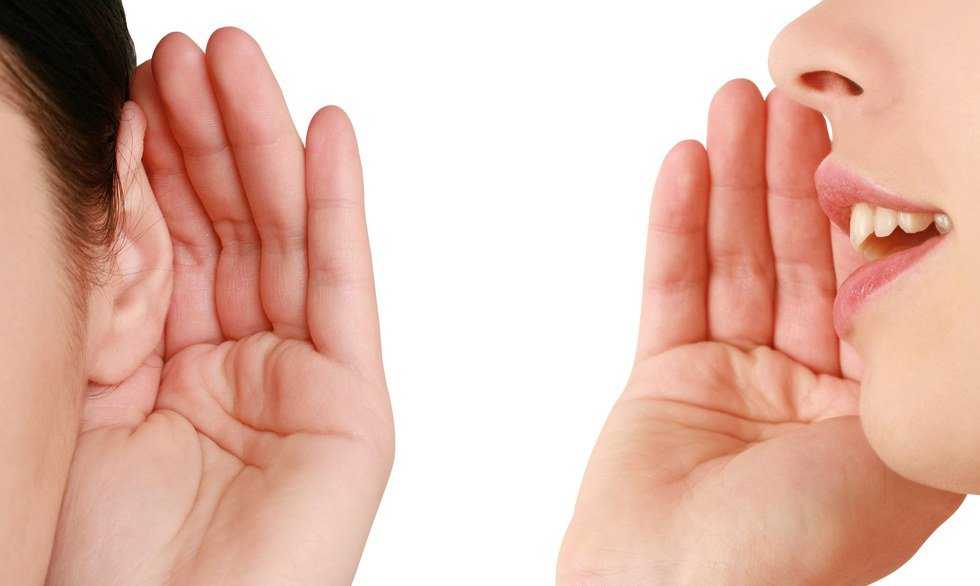
Do you ever hear something, and as soon as you hear it, it makes you mad? Not because what was said was bad, but because what was said was so true and convicting. It's something that you know you need to work on, or is going to cause you to look at things in a different but better way. This has happened to me quite a few times lately, but one statement I read online this summer has continued to stick with me. The sentence reads...
"Most people do not listen with the intent to understand; they listen with the intent to reply."
Essentially, this is saying that when we listen in a conversation we only listen until we know how we are going to respond. Once we get what is going on, we automatically start thinking about what our opinion is on the matter and exactly how we can share it. You might not think you do this, but I urge you to keep that quote in mind the next time you have an in-depth conversation, a discussion in class, or in a meeting. Are you listening and processing everything the other person is saying all the way to end? Or are you only listening a little and then spending time preparing your well-thought out response to be ready as soon as your friend stops talking? Does another thought ever pop into your mind to the point where you become so focused on remembering what you want to say that you stop listening all together? Maybe you even interrupt someone else because you really just want your point to be hear. These are just a few of the many ways that I have begun to notice my faults in listening since hearing this quote.
At first, paying attention to this was really frustrating. Being conscious of what I am thinking about while listening has made me realize that I often like hearing my own voice more than even some of my closest friends and care more about what I am going to say than what my friend is sharing. Even when a friend is having a hard day and needs to talk it out. I will give them time to talk, but I realize now that although I might not be talking, it doesn't necessarily mean that I am actively listening.
I looked up the definition of active listening, and here are two results from the search...
"Active listening means, as its name suggests, actively listening. That is fully concentrating on what is being said rather than just passively ‘hearing’ the message of the speaker."
"Active listening... requires that the listener fully concentrate, understand, respond and then remember what is being said."
"Passively 'hearing' the message of the speaker" sounds like such a mean, unfair thing to do. Not only is it passive, but the writer of that definition also put the word "hearing" in quotes which I can only assume means that what is being referred to as hearing, isn't actually hearing. Writing about this has reminded me of one of my all time favorite quotes...
"People won't care how much you know until they know how much you care."
Let's say your friend is going through a breakup. You have, unfortunately, experienced several and learned lots through them. Knowing what you have to say could be so helpful to your friend. While this may be true, if you have a reputation of always wanting to talk and share your opinion no matter what she says. Your words may mean absolutely nothing. She might not care about how much you know because your actions make it seem like you really don't care. Even in the situation of someone who knows how much we care like a sibling or best friend. Don't they still deserve the decency of being listened to and understood especially by those who claim to love them the most?
I know this may seem like a stern article, but I'm not just saying all of this to you because I am a pro at listening. I wrote half this article yesterday and then went to a meeting last night and found myself constantly being so focused on what I thought was best that I hardly remember what any of the other leaders shared. It is not easy to be a good listener. It will take time and discipline, but it is definitely worth it. Your relationships will benefit immensely as you begin to care more about others and less about yourself. Lastly, to all of my friends who are active listeners, thank you. Thank you for always listening and really being present during our conversations. Thank you for trying to understand how I feel and for caring so deeply. Thank you for inspiring me to do so as well. Also, thank you for showing me grace in any situation where I failed to do the same.
"A fool takes no pleasure in understanding, but only in expressing his opinion. If one gives an answer before he hears, it is his folly and shame."
- Proverbs 18:2,13