
Disclaimer: This article has a lot of spoilers. So, if you haven't read "The Cursed Child" yet and are not good at taking spoilers, then this article is not for you.
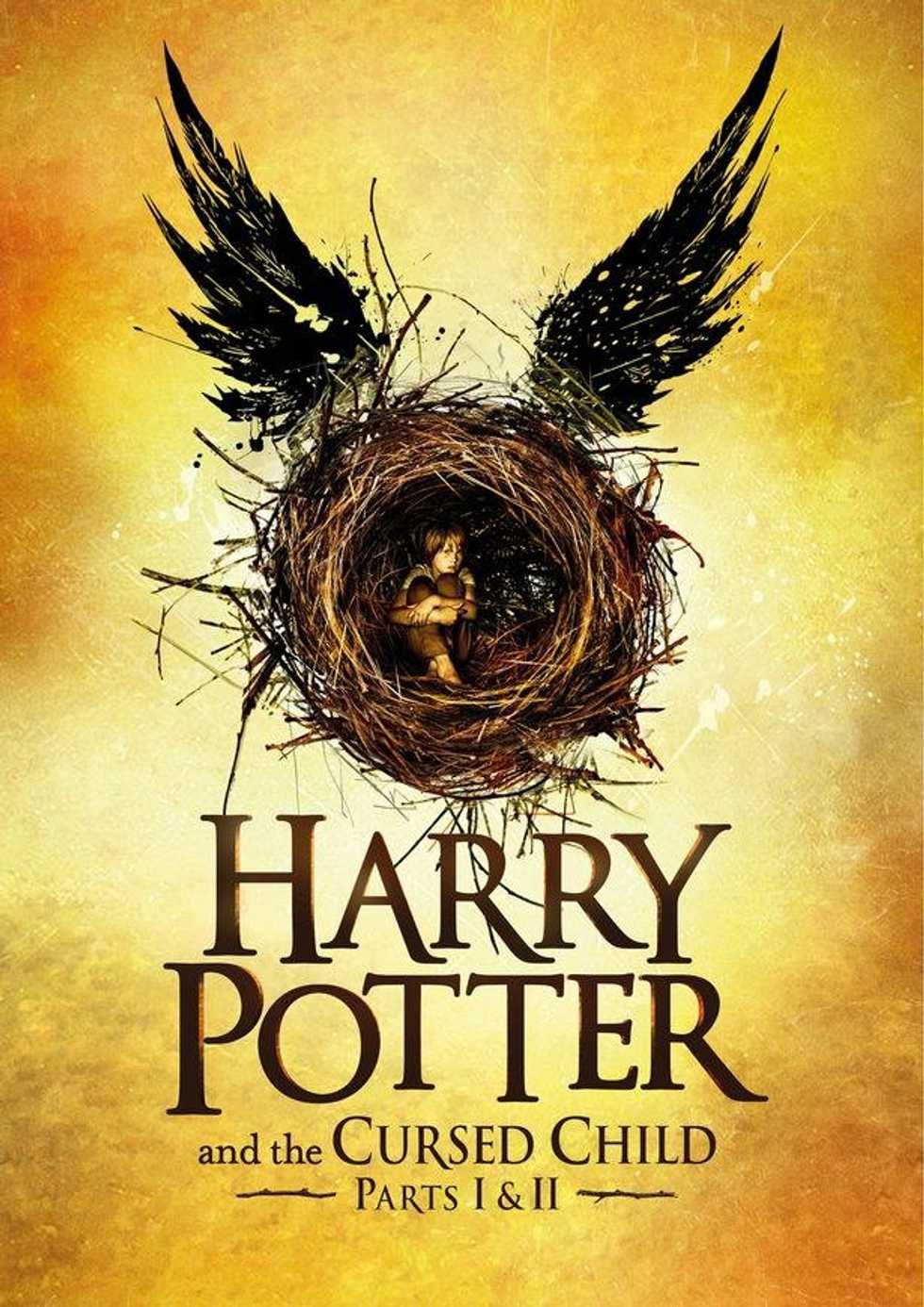
It has been just over a week since "The Cursed Child" written play was released and, as expected, the wizarding world has gone haywire to read it ever since. The original play was officially premiered at the Palace Theater, London on July 31 and it was quite a hit among the critics, who rated it a five. When the written play was released, everybody started pre-ordering the original copies. But soon after reading it, their reaction on the play was, we'll just say, not remarkable. It would be an understatement if I said that they were disappointed, as they claimed that the book had “ruined their childhoods."
Nonetheless, despite their constant criticism, I could not help but know the story because after all, I am a Potterhead aren’t I? Three hundred and 33 pages worth of book took me a day and a half to complete. Usually that would mean that I was addicted to it. But in reality that wasn’t the case. In fact, it took me a lot of strength to drag myself to the end because Albus Potter’s constant lack of judgement and irresponsibility sort of crumpled every remaining ounce of patience and perseverance in me. But in the end it was worth it.
The book/play starts 19 years after Voldemort’s death, with Harry married to Ginny Weasley and the father of three children: The arrogant and academically brilliant James Sirius Potter; the self-loathing Albus Severus Potter; and the not-so-mentioned Lily Luna Potter. Hermoine and Ron are the proud parents of Rose Granger Weasley -- ambitious and proud like her mother but stereotypes Scorpius Malfoy (son of Draco Malfoy) who is an absolute sweetheart (unlike Draco), pretty obviously in love with Rose and presumably Voldemort’s son.
Before we jump to the main story, let’s discuss the professional careers of our lead characters. Harry is the head of magical law enforcement, Ron owns a joke shop and Hermoine is the minister of magic (that is actually not surprising). However, didn’t Harry and Ron always prepare themselves to be aurors? Are you telling me that even after fighting the darkest wizard of all time, they were not qualified enough to pursue their favorite profession? OK, Harry’s choice was still acceptable, but since when did Ron have a knack for joke items from Weasley’s Wizarding Wheezes? He might have been a cheerful customer, but no one can create those brilliant items other than Fred and George, OK?
The entire story more or less circulates around Harry and Albus’ father-son issues. Albus, despite being the son of famous Harry Potter, is portrayed to be nothing like his father. He is sorted into Slytherin and hates Quidditch by the name. Unlike his father, he despises Hogwarts because he is constantly humiliated there. Despite Harry’s tireless efforts to fix their relationship, Albus keeps blaming Harry for everything. Albus’ constant misjudgment made me despise him in the beginning, as despite being a fourth-year Hogwarts student, he was really inconsiderate of Harry’s sacrifices. Harry, on the other hand, remains to be continuously guilty for all the lives lost at the battle and fails to look through Albus and understand his perspective.
Albus’ sole companion remains to be Scorpius Malfoy. Despite his share of trouble and humiliation, Scorpius stands out to be the most sensible and positive character in the play. He teaches Albus to appreciate his life more and to start caring about others except for just himself (everyone needs a friend like him).
However, as we read further, we witness more and more similarities between Albus and Harry. Albus, like his father, is very impulsive, has good intentions, values friendship and is unbelievably brave and diligent. Although he foolishly tries to bring back Cedric Diggory with the help of a Time Turner in order to “correct” one of his father’s mistakes, he manages to set everything right in the end with the help of Harry, Ron, Hermoine and, surprisingly, Draco.
In this book one of the things I loved was how J.K. Rowling surprised us all, yet again, with her amazing plot making skills. Even after such a well-constructed ending in the last book, she somehow managed to extend the story. Although the writing style was not nearly as beautifully narrative as her previous works, she still managed to surprise me with some of the twists. For example, the play brilliantly constructed the possible return of Voldemort, without any lame spiritual ritual, but rather with the creation of a new prophecy and the help of a Time Turner. The story showcased how the misuse of the Time Turner in order to bring back Diggory (twice) gives rise to two different alternate dimensions, one in which Voldemort is alive and Harry is dead (you can imagine how pathetic that can be.) This teaches us, quite importantly, that meddling with time or trying to control your fate is never a good option. Every little incident in our past was necessary to bring us where we are now and this is how it is supposed to be.
However, this book is also a lesson of how you should never want an extension to a story which already has a perfect ending. Even though J.K. Rowling amazed me with some parts of the story line, she did make some of it extremely absurd just to finish it. For example, Voldemort turns out to have a daughter with Bellatrix Lestrange. The idea of that nose-less snake-loving man being romantically involved with someone else was disturbing in itself, but with Bellatrix? I mean, Nagini would have made more sense according to me. Nevertheless, his daughter, (imitating non-existent Delphi Diggory) single-handedly tries to change the entire prophecy in order to bring her father back. Albus finally comes to his senses when he reveals her true identity, but only to realize that it was too late. Delphi’s possible end is led by Harry shockingly transfiguring into Voldemort (I don’t know how) in order to trick her, just to give rise to a clichéd ending.
All in all, "The Cursed Child" could be termed (as my friend said) as a well-written fan fiction. It had a good story line but not as great as the usual Harry Potter standard. Despite being a little childish and unacceptably cheesy at some parts (Harry and Draco’s bonding), it could be categorized as a good read for those willing to look past all the plot holes to just relive the Harry Potter world.
Harry potter is a fantasy series about a wizarding world which basically built a lot of our childhood happy memories. If our favorite author wanted bring the magic back slightly, I think we should appreciate it. If you want, don't consider it a part of the franchise but just read it for fun. No, it is not up to our expectations, but I think it's better to not over analyze it and rather leave the questions unanswered. Otherwise, like my friend said, "it just ruins the magic of it" (pun intended).

















